The Future of Biofeedback: Trends and Innovations
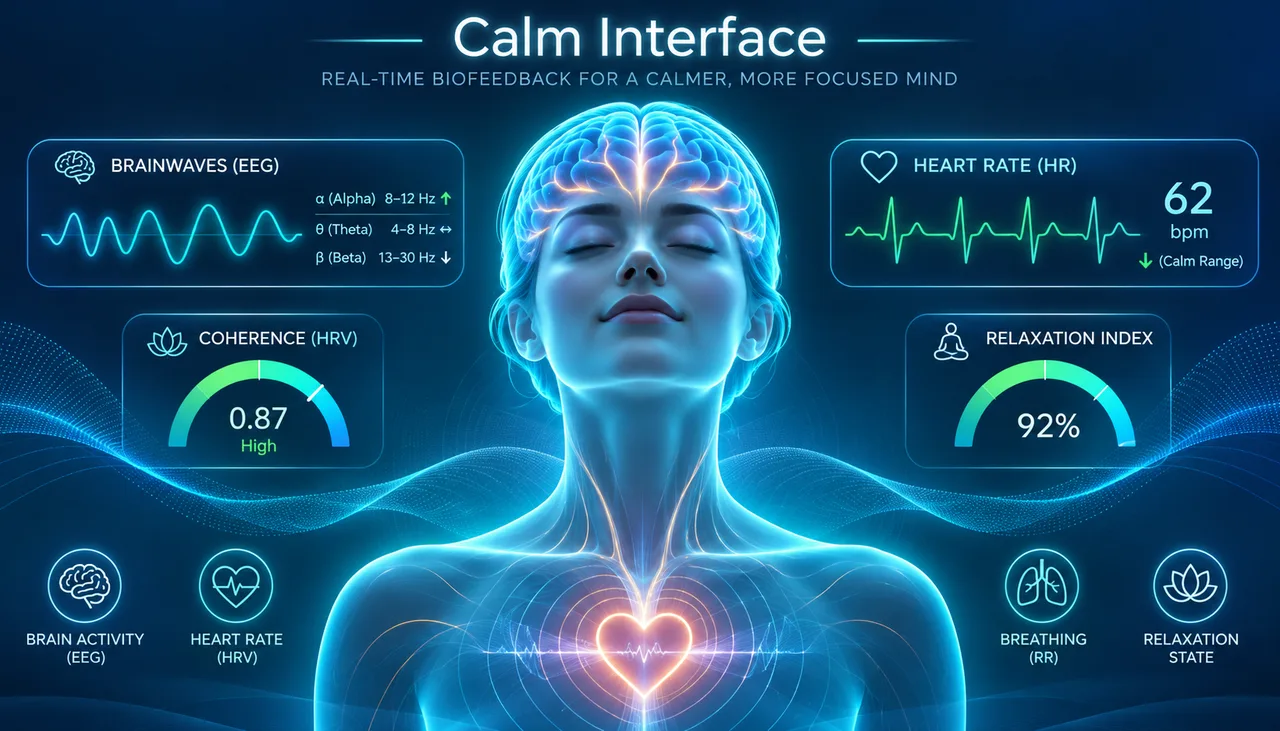
Biofeedback has existed for over half a century, but technology is changing it rapidly. Smaller sensors, smartphones, artificial intelligence and immersive media are making real-time physiological feedback available to millions, while researchers are working to prove what works.
Wearables and everyday sensing
Smartwatches, rings, patches and earbuds now track heart rate, HRV, skin temperature, electrodermal activity, sleep and breathing. Soft, skin-like sensors, textile electrodes and sensors embedded in clothing will make continuous monitoring more comfortable. Challenges include accuracy during movement and with different skin tones, and the proliferation of unvalidated "stress scores."
Smartphone and app-based training
Apps pace breathing and give feedback from phone cameras or paired sensors. They lower cost and expand reach to rural or underserved communities. Telehealth allows clinicians to supervise biofeedback remotely, which grew quickly in recent years.
Artificial intelligence
Machine learning can detect patterns in physiological data, personalize breathing paces or protocols, predict stress or pain episodes and provide adaptive coaching. Risks include opaque algorithms, bias, data privacy and over-reliance on automated advice.
Virtual and augmented reality
Immersive environments can make feedback engaging, for instance by changing a virtual landscape as heart rhythm calms. VR biofeedback has been tested for anxiety, pain, phobias and stress in early studies, and gamified training can motivate children and teens.
Closed-loop and adaptive neurotechnology
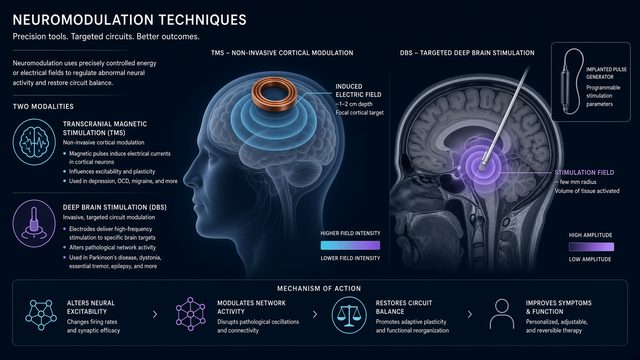
- Closed-loop neuromodulation adjusts stimulation in response to brain signals, such as responsive neurostimulation for epilepsy and adaptive deep brain stimulation for Parkinson's disease.
- Real-time fMRI neurofeedback has been explored to teach regulation of brain regions for pain, depression and addiction, but remains experimental.
- Combining feedback with noninvasive stimulation such as TMS or tDCS is being researched.
Multimodal biofeedback
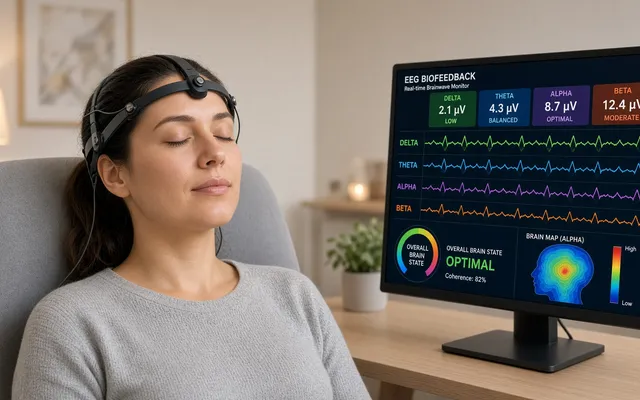
Integrating EEG, heart, breathing, skin and movement data may give richer feedback than single signals, and may make individualized training possible. Imaging and wearable EEG may allow neurofeedback outside the clinic.
Applications on the horizon
- Mental health: anxiety, depression, PTSD and ADHD as adjunct to therapy
- Pain and headache
- Cardiovascular and respiratory conditions, such as hypertension and asthma
- Rehabilitation, using EMG and movement feedback after stroke
- Pediatrics, with game-like training
- Performance and well-being, for athletes, students, workers
- Aging and cognitive health
What's needed
1. Rigorous trials with proper controls, adequate samples and standardized protocols. 2. Validation of devices against clinical-grade measurement. 3. Transparent algorithms and reporting. 4. Standards for training and certification of practitioners. 5. Data protection, with clear ownership and consent for physiological and brain data. 6. Equity, making tools affordable and culturally appropriate. 7. Integration into healthcare, with reimbursement for evidence-based use.
Cautions for consumers
Beware of products promising to optimize your brain or cure conditions. Check for peer-reviewed evidence, clinical oversight and privacy policies. Technology should complement, not replace, qualified care.
Looking ahead
Expect biofeedback to become more seamless, personalized and widely integrated into healthcare and daily life. Its core principle, that seeing your body's signals helps you learn to regulate them, will remain. Those who combine it with sound clinical practice stand to benefit most.
Further reading from authoritative sources
- National Institute of Neurological Disorders and Stroke (NINDS)
- National Institute of Mental Health (NIMH)
- National Center for Complementary and Integrative Health (NCCIH)
This article is educational and does not replace advice from a licensed clinician. See the medical disclaimer. Looking for specialist care? Browse the neurology clinic directory.