How to Communicate Brain Science to the Public

Public interest in the brain is high, and so is the temptation to oversimplify. Good communicators help people understand real findings, without false promises.
Principles
- Know your audience: Ask what they already know, what they worry about, and what decisions they face. A parent, a patient and a policymaker need different information.
- Lead with the main point, then support it. Use plain words in place of jargon, and define technical terms when needed.
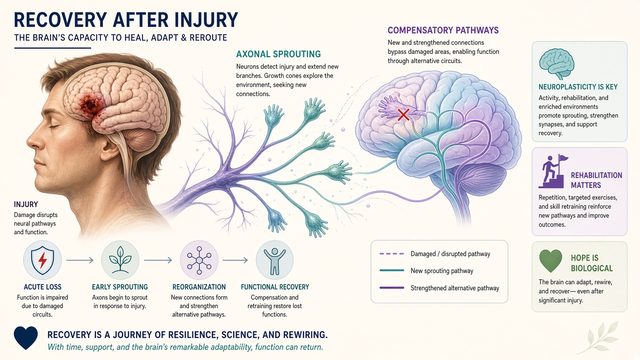
- Use accurate metaphors: The brain as a muscle for plasticity can help, but the computer metaphor can mislead. Check that the picture clarifies rather than distorts.
- Tell stories alongside data. Stories build understanding and memory, but should be representative and not the only evidence.
- Be honest about uncertainty: Say what is known, what is probable, and what is not known. Avoid both false certainty and vague hedging. Express risk with absolute numbers, such as 2 in 1,000, as well as relative changes.
- Avoid neurobabble and neuroessentialism: Irrelevant brain terms make explanations seem more convincing, as shown by research from Deena Weisberg and colleagues. Statements such as "your brain made you do it" can oversimplify behavior.
- Beware of reverse inference: A region lighting up on a scan does not mean a specific feeling.
- Use visuals responsibly: Colorful brain images can seem more authoritative than they are. Explain what they show, and label them clearly.
- Correct myths gently: Lead with the fact, name the myth briefly, explain why it is wrong, and offer a better explanation. Repeating myths without care can strengthen them.
- Be transparent: Disclose funding, conflicts of interest and limits of studies, such as small samples, animal models or correlation rather than causation.
- Mind the headline: Press releases and headlines often inflate results. Researchers can help by reviewing how their work is described, and journalists by seeking independent experts.
- Encourage action carefully: If giving advice, offer realistic steps, not miracle cures.
- Listen and dialogue: Public engagement, citizen science, science cafes and community forums build trust more than one-way lecturing.
- Make it accessible: Plain-language summaries, captions, translations, and formats for different abilities.
Checking a brain claim
Ask: Who did the study, and in whom? How large was it? Was it published in a peer-reviewed journal? Does it show cause or only association? Has it been replicated? Who is selling something? Do experts outside the team agree?

Different settings
- Classrooms and parent groups: use hands-on demonstrations and short examples, and address common myths directly.
- Clinics: give one or two key messages, repeat them, and use teach-back, asking patients to explain the plan in their own words.
- Media interviews: prepare three clear points, offer an analogy and an honest statement of limits, and avoid speculation beyond the data.
- Social media: short posts can point to sources, add context to striking images, and invite questions, though nuance is limited.
For scientists
Training in science communication, collaboration with journalists, and rewards for public engagement improve the quality of public understanding. Plain-language summaries of papers, open access publication and community events help people reach the evidence themselves. Ask a non-expert to read your explanation, and revise based on their questions.
Takeaway
Good communication gives people tools to think about the brain for themselves. Clarity and honesty are the foundation.
Further reading from authoritative sources
- National Institute of Neurological Disorders and Stroke (NINDS)
- National Institute of Mental Health (NIMH)
This article is educational and does not replace advice from a licensed clinician. See the medical disclaimer. Looking for specialist care? Browse the neurology clinic directory.