Neuroethics: The Moral Questions of Brain Science
Neuroethics asks how we should use what we learn about the brain, and what that knowledge means for society. As neuroscience gains the ability to read brain activity, alter mood and cognition and treat disorders in new ways, questions once confined to philosophy become practical and urgent.
Mental privacy
Brain imaging and EEG can reveal information about mental states, such as whether a person recognizes a face or is paying attention. Decoding techniques have reconstructed rough images, words or semantic content from brain activity in controlled research settings, though they require extensive individual calibration and cooperation. Consumer neurotechnology, including wearable EEG headbands, collects neural data from people outside medical settings.
The central questions include who owns neural data, who may access it, how it can be used by employers, insurers, advertisers or courts, and whether a right to cognitive liberty or mental privacy needs legal protection. Some jurisdictions have begun to address this. Chile amended its constitution to protect neural data, and several U.S. states have added neural data to privacy laws.
Brain-based lie detection and the law
Courts and the public are interested in using brain scans to detect deception or assess guilt. Most scientists consider fMRI lie detection unreliable for individuals, given errors, countermeasures and the difference between laboratory and real-world lies. Neuroscience evidence can also be influential for juries, sometimes more than it deserves, since colorful images feel authoritative.

Responsibility and punishment
If brain differences contribute to behavior, how much responsibility does a person bear? Frontal lobe injury, brain tumors and developmental factors can affect impulse control. Courts consider evidence of brain injury or immaturity in sentencing, for instance in rulings limiting the harshest punishments for juveniles, citing adolescent brain development. Neuroscience can inform these decisions without replacing legal and moral judgment.
Cognitive enhancement
Healthy people sometimes use stimulants prescribed for ADHD, caffeine, or experimental brain stimulation to boost performance. Ethical questions include:
- Safety: long-term effects are poorly known
- Fairness: will enhancement widen inequality?
- Coercion: could workplaces or schools pressure people to use it?
- Authenticity: does enhanced achievement count as one's own?
The evidence for strong benefits in healthy users is limited.
Consent and vulnerable patients
Brain interventions such as deep brain stimulation, brain-computer interfaces and psychiatric surgery require careful informed consent, particularly when the condition itself may affect decision-making. People who receive implants also raise questions about long-term support when companies close, as well as identity and agency, since some patients report feeling changed by stimulation.
Disorders of consciousness
Patients in vegetative or minimally conscious states may sometimes show covert awareness on brain scans. This raises questions about end-of-life decisions, pain management and communication, and how to interpret evidence about a patient's wishes.
Children and the developing brain
Brain imaging and neurotechnology in children raise special concerns about consent, labeling and long-term effects. Early screening could help support children who need it, but it risks stigma if misused.
Neuroscience of morality
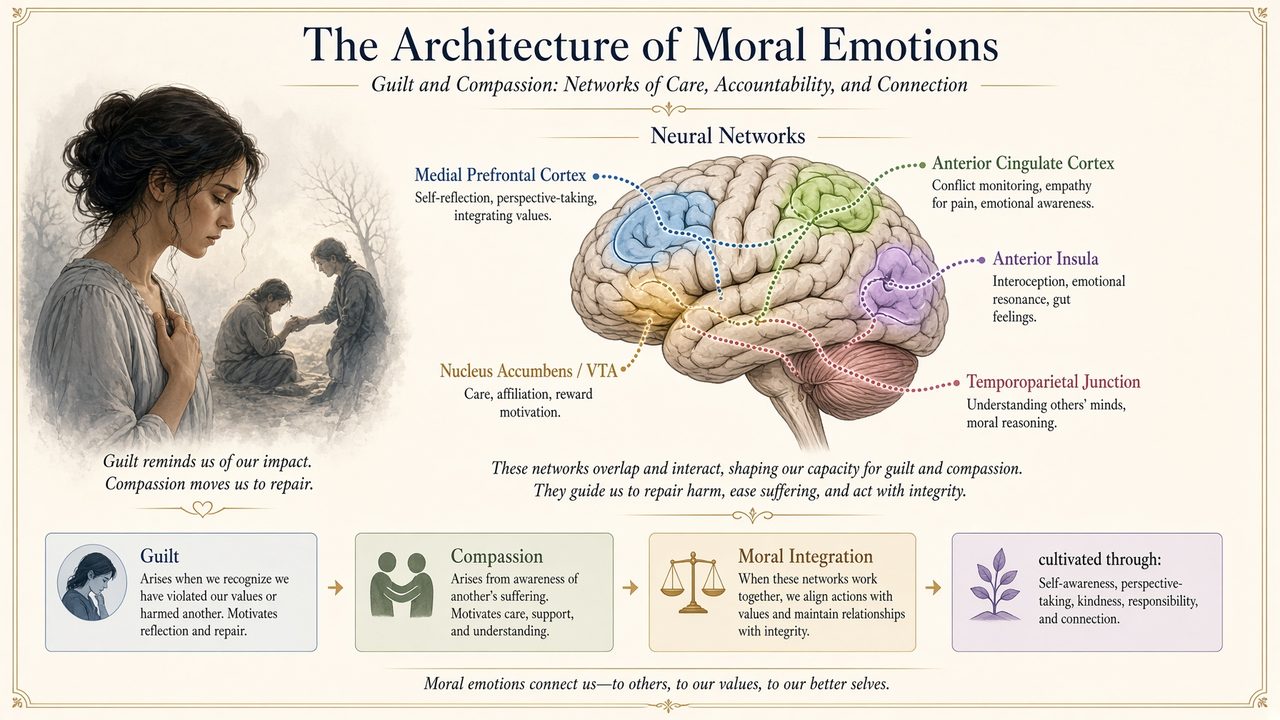
Researchers also study how the brain supports moral judgment. Studies show that emotion, empathy and reasoning all contribute, with regions such as the ventromedial prefrontal cortex, amygdala and temporoparietal junction playing roles. These findings are descriptive and do not by themselves tell us what is right or wrong.
Hype and responsible communication
Neuroscience findings are easy to oversimplify. Phrases like "the brain lights up" or "the love hormone" mislead. Responsible communication means describing limits, uncertainty and sample sizes honestly.
Guidance and principles
International organizations including the OECD and UNESCO have issued recommendations on responsible neurotechnology. Common principles include respecting autonomy, protecting privacy, ensuring safety and equity, promoting transparency, and involving the public in decisions. Researchers and clinicians use ethics review boards, informed consent and data protection to uphold them.
Why you should care
Brain technologies are increasingly part of medicine and consumer life. Understanding the issues helps people make informed choices about their own data, their health and the policies that shape these tools.
Further reading from authoritative sources
- National Institute of Neurological Disorders and Stroke (NINDS)
- National Institute of Mental Health (NIMH)
This article is educational and does not replace advice from a licensed clinician. See the medical disclaimer. Looking for specialist care? Browse the neurology clinic directory.