The Hard Problem of Consciousness Explained
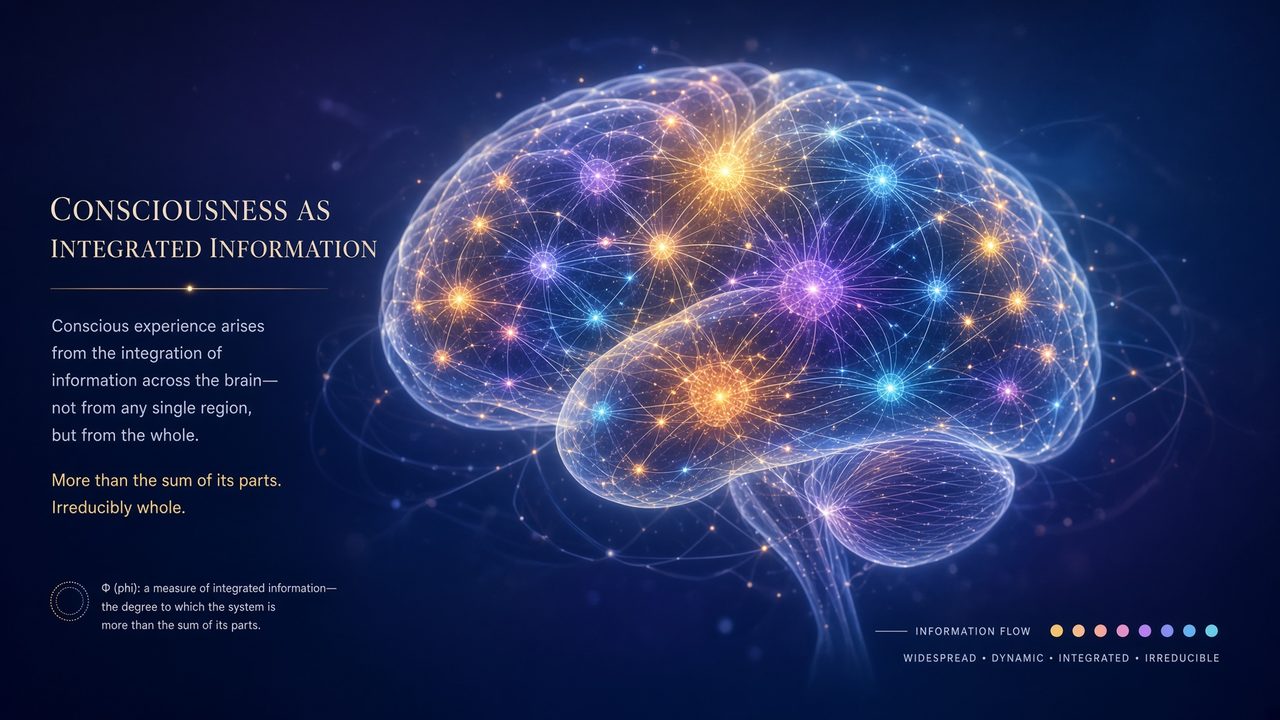
Why does seeing red feel like something? Why isn't the brain's activity simply processing information in the dark? This question, posed sharply by philosopher David Chalmers in 1994, is known as the hard problem of consciousness, and it is one of the deepest puzzles in science and philosophy.
Easy problems versus the hard problem
Chalmers distinguished:
- Easy problems: explaining cognitive functions such as discriminating stimuli, focusing attention, reporting mental states and integrating information. These are "easy" only in principle, since they are open to standard scientific methods, even though they are far from solved.
- The hard problem: explaining why there is phenomenal consciousness, the "what it is like" quality, or qualia, such as the redness of red or the pain of a toothache.
Thomas Nagel's 1974 essay "What Is It Like to Be a Bat?" captured the intuition that subjective experience cannot be captured by describing physical processes alone.
Why it is considered hard
Even a complete account of neural activity, from photons to firing neurons to behavior, seems to leave open why any of it feels like something. Mary the color scientist, a thought experiment by Frank Jackson, imagines a person who knows all the physical facts about color vision but has never seen color. Does she learn something new upon seeing red? Another thought experiment imagines "philosophical zombies," beings physically identical to us but lacking experience. Whether such zombies are even conceivable is debated.
Main philosophical positions
Physicalism and reductive explanation
Many scientists hold that consciousness will be explained by neuroscience, as life was explained by biochemistry. Some argue that the hard problem will dissolve with progress.
Illusionism
Philosophers such as Daniel Dennett and Keith Frankish argue that the sense of a special, ineffable experience is itself a misrepresentation by the brain. The task is to explain why we believe we have qualia, the "meta-problem" that David Chalmers also endorses as a worthwhile research question.
Dualism
Mind and matter are different substances. Few scientists accept classical substance dualism, though property dualism, in which consciousness is a fundamental property, has defenders, including Chalmers.
Panpsychism
Consciousness is a fundamental and widespread feature of reality, present in some form in all matter. It has gained renewed attention, partly because integrated information theory has panpsychist-like implications. Critics argue that it faces the "combination problem" of how micro-experiences combine into a unified mind.
Mysterianism
Colin McGinn proposed that human minds may be cognitively closed to understanding consciousness, just as a dog cannot understand calculus.
How scientists approach it
Most researchers focus on the neural correlates of consciousness and on testing theories such as global workspace, integrated information, higher-order and recurrent processing theories. These theories offer explanations of when and how experience arises, though critics say they address the easier problems. Whether such approaches can ultimately bridge the explanatory gap is debated.
Why it matters
- Medicine. Detecting awareness in patients with severe brain injury depends on understanding consciousness.
- Animals. Judging which species feel pain bears on welfare.
- Artificial intelligence. Whether machines could ever be conscious depends on the answer.
- Ethics. Experience underlies questions of moral status.
A humble stance
The hard problem remains unresolved, and thoughtful people disagree whether it is a deep mystery or a confusion. It is a reminder of how much about the mind remains unexplained, and of the value of careful thinking and humility.
Further reading from authoritative sources
- National Institute of Neurological Disorders and Stroke (NINDS)
- National Institute of Mental Health (NIMH)
This article is educational and does not replace advice from a licensed clinician. See the medical disclaimer. Looking for specialist care? Browse the neurology clinic directory.