The Science and Ethics of Brain Reading
Brain reading, also called neural decoding, uses recordings of brain activity and statistical models to infer what a person is seeing, imagining, intending or even trying to say. Progress has been rapid, and so has concern about mental privacy.
What can be decoded
- Images and categories: Jack Gallant, Kendrick Kay, Shinji Nishimoto and colleagues used functional magnetic resonance imaging to reconstruct approximate images and movies that people were viewing, and Yukiyasu Kamitani and colleagues decoded imagined and seen images and dreamed content categories in sleep.
- Words and meaning: Alexander Huth, Jerry Tang and colleagues in 2023 built a semantic decoder that reconstructed the gist of continuous language that people heard or imagined from functional magnetic resonance imaging data, but it needed many hours of training in each individual, and failed if the person did not cooperate by thinking of other things.
- Attempted speech: implanted electrodes allowed people with paralysis to communicate at speeds approaching conversation. Edward Chang's group at the University of California, San Francisco, decoded attempted speech into text and synthesized voice in a woman with stroke-related paralysis, and Frank Willett, Jaimie Henderson and colleagues at Stanford decoded attempted speech from signals in the motor cortex in a person with ALS. A team at the University of California, Davis developed a speech neuroprosthesis for a person with ALS.
- Intentions and decisions: John-Dylan Haynes and colleagues found that patterns in the frontal cortex could predict simple choices several seconds before people reported making them, though accuracy was modest.
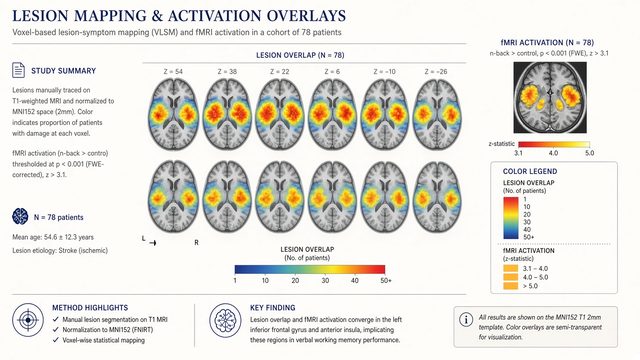
- Consciousness in patients: Adrian Owen and colleagues showed that some patients thought to be vegetative can follow commands by imagining tennis or navigating their home, as detected by functional magnetic resonance imaging, which provided evidence of covert awareness.
- Lie detection: attempts to detect lies from brain activity or EEG have not proven reliable enough for legal use.
- Emotion and preferences: coarse inference of mood, attention and preferences
Limits
Decoding requires cooperation, extensive individual training and expensive equipment, and works for limited categories. Brain signals are noisy and idiosyncratic. Models trained on one person do not generalize to others, and people can resist. Decoders recover content related to what the person is attending to, and do not read secret thoughts at will. Consumer neurotechnology collects only crude signals, though machine learning is improving.
Ethical issues
- Mental privacy: neural data may reveal health, emotions or preferences. Rafael Yuste, Marcello Ienca, Roberto Andorno and others proposed neurorights: mental privacy, personal identity, free will, fair access and protection from bias. Chile amended its constitution to protect brain activity data in 2021, and several U.S. states, including Colorado and California, passed laws in 2024 to include neural data as sensitive personal data.
- Consent and coercion: use in interrogation, employment, insurance or schooling would be troubling.
- Accuracy and misuse: overclaiming in courts could lead to injustice.
- Benefits and access: communication restored to people who cannot speak
- Commercial data practices: companies may collect and sell brain data
- Security: hacking of brain implants
- Autonomy and identity: especially for devices that shape behavior
Safeguards
Clear informed consent, data minimization, local processing, strong encryption, independent oversight, bans on certain coercive uses and regulation of consumer neurotechnology are recommended by bodies such as the UNESCO and the Organisation for Economic Co-operation and Development.
Takeaway
Brain reading is real but limited. Protect mental privacy now, before the technology matures.
Further reading from authoritative sources
- National Institute of Neurological Disorders and Stroke (NINDS)
- National Institute of Mental Health (NIMH)
This article is educational and does not replace advice from a licensed clinician. See the medical disclaimer. Looking for specialist care? Browse the neurology clinic directory.