The Neuroscience of Hope
Hope is more than wishful thinking. Psychologists define it as a belief that a better future is possible and that one can take steps to reach it. Research links hope to resilience, recovery and well-being, and neuroscience is starting to illuminate how the brain supports it.
What hope is
C. R. Snyder's hope theory describes three components: goals that matter, pathways (the ability to generate routes to reach them) and agency (the motivation and belief that one can follow those routes). Hope differs from optimism, which is a general expectation that good things will happen, and focuses on one's own capacity to influence outcomes.
Brain systems
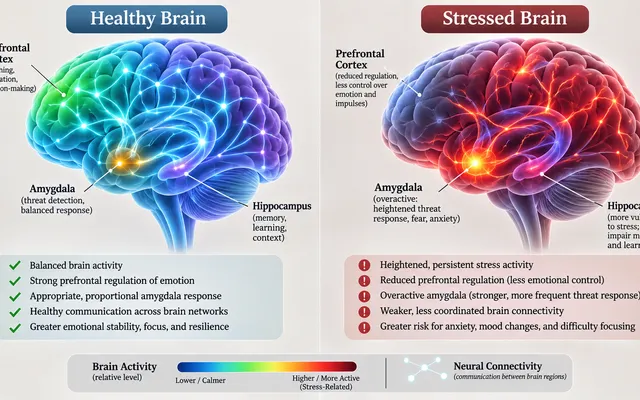
- Prefrontal cortex: supports planning, goal setting and flexible problem solving, and the ventromedial prefrontal cortex assigns value to future outcomes.
- Hippocampus: the system that recalls past events also builds imagined future scenarios, and impaired hippocampal function reduces vividness of future thinking, as studies by Daniel Schacter and Eleanor Maguire show.
- Striatum and dopamine: anticipation of reward fuels motivation and persistence.
- Anterior cingulate cortex and amygdala: link emotion and expectation.
- Sense of control: research by Steven Maier and Martin Seligman on learned helplessness found that the ventromedial prefrontal cortex detects control over stressors and inhibits the brainstem stress response, so that having control fosters resilience while uncontrollable stress can produce passivity. The discovery shifted views, suggesting that passivity is a default response that is overridden when control is detected.
- Depression: hopelessness is associated with reduced prefrontal and reward activity and difficulty imagining positive futures.

Hope and health
- Higher hope is associated with better coping with chronic illness, pain and cancer, greater adherence to treatment and better psychological adjustment.
- In a large Harvard study by Eric Kim and Tyler VanderWeele, higher hope was linked to lower mortality and better health behaviors in some analyses.
- Hope is associated with academic achievement, athletic performance and workplace resilience.
- Hope also interacts with placebo effects, since expectation of benefit influences symptoms, discussed elsewhere.
- Excessive or false hope can lead to disappointment or avoidance of needed action. Realistic, flexible hope adapts goals as circumstances change, a skill emphasized in palliative care, where hope can shift from cure to comfort and meaningful time.
Building hope
- Set clear, meaningful goals and break them into steps.
- Generate multiple pathways, planning for obstacles, as in WOOP or if-then planning.
- Strengthen agency: note past successes, use positive self-talk, celebrate progress.
- Find role models and stories of recovery.
- Connect with supportive people: hope is contagious, and communities can sustain it.
- Practice future-oriented imagery, such as visualizing a good day in the future and the actions needed.
- Care for basics: sleep, exercise and nutrition support motivation.
- Use therapy: hope therapy and CBT techniques such as behavioral activation reduce hopelessness.
- Find meaning through values, faith, creativity or service.
- Take action even small, as action builds a sense of control.
When hope is lost
Persistent hopelessness can signal depression and is a risk factor for suicide. If you or someone you know feels hopeless or is thinking about self-harm, reach out for help right away. In the United States, call or text 988, or contact local emergency services.
Takeaway
Hope is a skill and a state of mind supported by brain circuits for imagining and pursuing the future. Cultivating it adds strength to recovery and everyday life.
Further reading from authoritative sources
- National Institute of Mental Health (NIMH)
- National Center for Complementary and Integrative Health (NCCIH)
This article is educational and does not replace advice from a licensed clinician. See the medical disclaimer. Looking for specialist care? Browse the neurology clinic directory.