The Science of Aha Moments
Sometimes the solution to a problem arrives suddenly and with a surge of certainty. Psychologists call it insight, and neuroscientists have identified patterns of brain activity that accompany it.
What insight is
In an insight problem, a person reaches an impasse, then suddenly reinterprets the problem and sees the answer. Gestalt psychologists such as Wolfgang Köhler described insight in apes, and Karl Duncker studied problem restructuring. In contrast, analytic problem solving proceeds step by step. Insight solutions feel sudden, obvious and pleasant, and are often accompanied by a confident feeling that the answer is right, although aha moments are not always correct.
What happens in the brain
Mark Beeman, John Kounios and colleagues studied insight using word puzzles, such as remote associates tasks, in which participants find a word linking three others. They found:
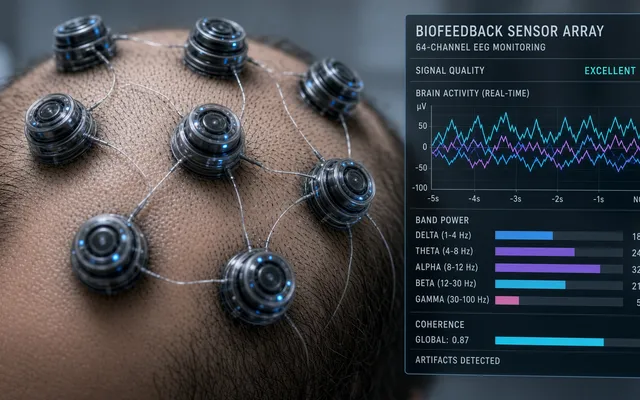
- A burst of high-frequency gamma activity about 300 milliseconds before participants reported a solution, localized to the right anterior superior temporal gyrus, a region involved in making distant semantic connections.
- Alpha activity over right occipital areas about a second earlier, which suggests that the brain briefly reduces visual input, as when people look away or close their eyes, to let weak associations come forward.
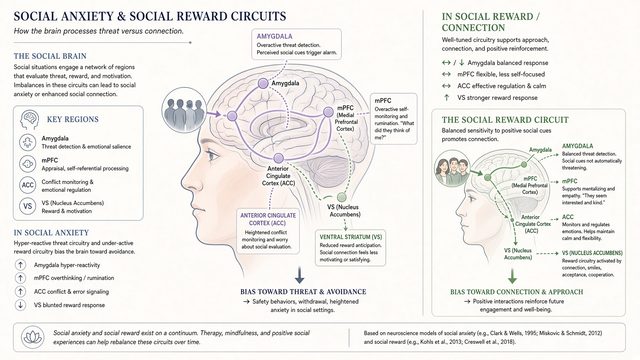
- Anterior cingulate activity before the problem, associated with conflict detection and switching, which may signal readiness to shift strategy.
- Preparatory states: people who showed a relaxed, diffuse attention state with higher resting right-hemisphere alpha were more likely to solve by insight than analytically.
The right hemisphere may be better at coarse, loose semantic coding, which fits distant associations, while the left tends to focus on close associations.

Reward
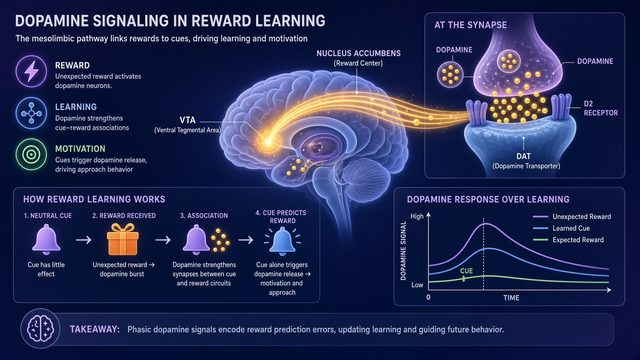
The sudden solution activates reward systems, which explains the pleasure of the aha experience and may help memory. Research by Amory Danek and colleagues found that insight solutions to magic tricks were better remembered than noninsight solutions.
Sleep and incubation
Ullrich Wagner, Jan Born and colleagues reported that sleep after learning a hidden rule in a number task made people more than twice as likely to discover it than staying awake. Taking breaks or working on other tasks allows unconscious processing to continue, though evidence for the benefits of incubation is mixed.
How to invite aha moments
- Prepare: immerse yourself in the problem so that you have material to work with
- Take a break: walk, shower, nap or do something undemanding
- Sleep on it
- Relax and use positive mood, which broadens attention
- Change environment or perspective: explain the problem to someone else, or rephrase it
- Look away or close your eyes to reduce distraction
- Avoid fixation: if stuck, drop your first assumptions
- Capture the idea quickly before it fades
- Check solutions, since confidence is not proof
Aha moments in everyday life
People report insights while showering, driving, walking or waking up. These are moments when attention is relaxed and the mind is free to connect pieces. Keeping a notebook nearby captures them before they vanish.
Takeaway
Insight is the visible end of hidden work. Prepare, step back and give your brain a chance to connect the dots.
Further reading from authoritative sources
- National Institute of Neurological Disorders and Stroke (NINDS)
- National Institute of Mental Health (NIMH)
This article is educational and does not replace advice from a licensed clinician. See the medical disclaimer. Looking for specialist care? Browse the neurology clinic directory.