The Science of Perception: Beyond the Senses
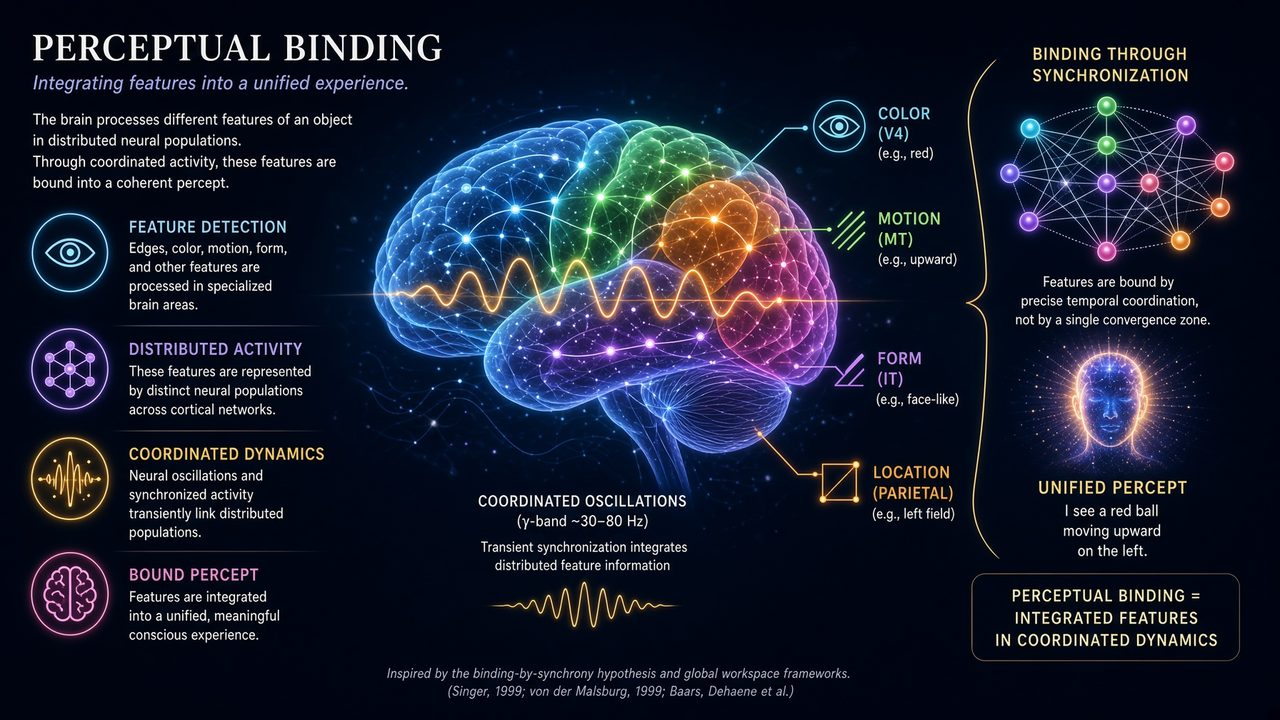
We commonly list five senses, but human perception is far richer. Our experience blends many channels of information, and the brain integrates them into a coherent whole.
More than five senses
Beyond the classic five, humans have senses for balance, through the vestibular system, body position, called proprioception, temperature, pain, itch, and internal states such as hunger, thirst, breathing and heartbeat, known collectively as interoception. These internal senses help create emotions and sense of self, as described by Bud Craig and Antonio Damasio, with the insular cortex playing a central role. Each sense has dedicated receptors and brain pathways, and the brain combines them.
Multisensory integration
The brain merges information from different senses to improve accuracy, as in understanding speech better when you can see the speaker's lips. Studies by Barry Stein and Marc Ernst show that the brain weights each sense according to its reliability, approximating optimal statistical combination. When senses conflict, illusions arise, such as ventriloquism, in which the voice seems to come from a puppet, and the McGurk effect. Taste is actually a blend of taste, smell, texture, temperature and sound. Flavor depends heavily on smell, and background noise can dampen sweetness.

Cross-modal plasticity and sensory substitution
When one sense is lost, the brain reorganizes. In blind people, visual cortex responds to touch and sound, including reading Braille. Paul Bach-y-Rita developed sensory substitution devices that deliver visual information through touch or sound, such as tongue stimulation or the vOICe system, allowing users to interpret scenes through other senses. This shows that the brain interprets patterns of information and not particular sensory organs.
Senses we lack, and others have
Some animals sense magnetic fields, electric fields, ultraviolet or infrared light, and ultrasound. Humans lack many of these, though some research has explored whether the human brain responds to magnetic field changes, and wearable devices, such as a belt that vibrates toward north, can create new sensory experiences with training.
Attention and expectation
We perceive what we attend to and expect, and miss much else. Attention enhances neural responses in sensory cortex. Perception also depends on emotional state and context.
Individual differences
Supertasters, with many taste buds, experience stronger flavors. People vary in sensitivity to pain, sound, light and touch. Autistic people often report sensory differences. Synesthesia, color blindness and absolute pitch are examples of variation. Aging reduces sensory acuity, and hearing and vision loss affect cognition.
Training perception
- Perceptual learning: practice improves discrimination, as seen in wine tasting, radiology and music
- Mindfulness and attention: attending to sensations enhances awareness
- Interoceptive training: noticing heartbeat or breathing may improve emotional awareness
- Sensory care: hearing aids, glasses and good lighting support the brain
- Novel experiences: nature, art and music enrich perception
Perception and aging
Hearing, vision, smell and touch often decline with age, and untreated sensory loss is linked to social withdrawal and a higher risk of cognitive decline. Regular hearing and vision checks, and using hearing aids and glasses, keep the brain well supplied with information.
Takeaway
Perception is a rich, integrated experience. Care for your senses, and practice attending to them.
Further reading from authoritative sources
- National Institute of Neurological Disorders and Stroke (NINDS)
- National Institute of Mental Health (NIMH)
This article is educational and does not replace advice from a licensed clinician. See the medical disclaimer. Looking for specialist care? Browse the neurology clinic directory.