Heart Rate Variability Biofeedback and Cognitive Performance
Your heartbeat is not perfectly regular. The time between beats varies slightly, and that variation, called heart rate variability (HRV), reflects how flexibly the autonomic nervous system responds. Heart rate variability biofeedback teaches people to increase it, and researchers are examining whether doing so can support focus, memory and mental performance.
What HRV reflects
Healthy hearts speed slightly when you inhale and slow when you exhale, a pattern called respiratory sinus arrhythmia. Higher HRV is generally associated with stronger parasympathetic (calming) activity and better capacity to adapt to stress. Lower resting HRV is linked with chronic stress, anxiety, depression and cardiovascular risk, though it is influenced by age, fitness, medications and many other factors.
How the training works
A sensor, such as a finger pulse sensor or chest strap, measures heartbeats. Software displays a live graph. The trainee breathes slowly, typically about six breaths per minute, though the optimal rate varies by person. At this pace, the heart rhythm oscillates strongly, producing a smooth wave that reflects resonance between the heart and the baroreflex, the body's blood pressure regulation system. Paul Lehrer and colleagues developed protocols to find each person's resonance frequency.

Possible cognitive mechanisms
- Reducing stress reactivity, which frees mental resources
- Improving emotional regulation through connections between the prefrontal cortex and autonomic control
- Stimulating the vagus nerve and baroreflex, which communicate with brain regions that regulate attention and mood
- Better sleep and relaxation, which support learning
What research shows
Studies in students, athletes, workers and older adults have reported benefits of HRV biofeedback on perceived stress, anxiety and test anxiety. Some trials report improved attention, working memory or performance under pressure, while others find little effect on cognition beyond relaxation. Meta-analyses suggest moderate effects on stress and anxiety, and the cognitive findings are more preliminary. Small samples, varying protocols and the difficulty of sham controls limit conclusions.
Research also suggests that practice matters. Benefits tend to appear after several weeks of regular training.
A typical program
1. Assessment. A practitioner may measure baseline HRV and find your resonance breathing rate. 2. Sessions. Often 4 to 10 weekly sessions of 20 to 45 minutes. 3. Home practice. About 10 to 20 minutes daily, with a handheld device or app. 4. Transfer. Applying paced breathing during real-life stress such as before an exam or presentation.
Doing it at home
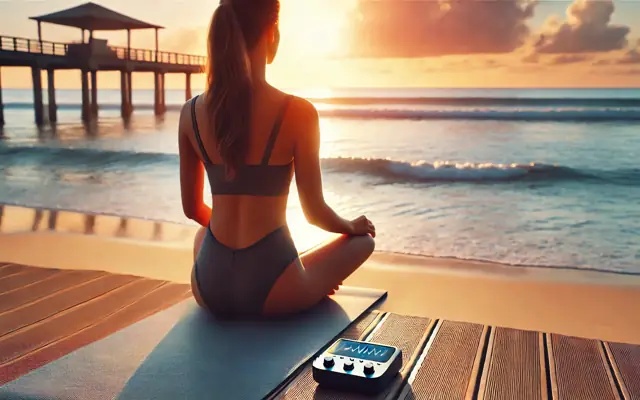
- Sit comfortably with a straight back.
- Breathe in through the nose for about four to five seconds and out for about five to six seconds.
- Keep your breathing smooth and relaxed, not forced.
- Follow a pacing display if you have one.
- Practice at the same time each day.
Consumer wearables report HRV, but accuracy varies. Treat the numbers as trends, not diagnoses.
Safety and cautions
HRV biofeedback is generally safe. People with heart rhythm disorders, respiratory conditions, pregnancy or other medical issues should consult their physician first. Some people feel lightheaded when breathing deeply, and should ease off.
Realistic expectations
HRV biofeedback is not a "brain booster" pill. It is a trainable skill that may help you stay calm and focused when stress would otherwise interfere with thinking. It is best used alongside sleep, exercise and good study habits.
Further reading from authoritative sources
- National Institute of Neurological Disorders and Stroke (NINDS)
- National Center for Complementary and Integrative Health (NCCIH)
This article is educational and does not replace advice from a licensed clinician. See the medical disclaimer. Looking for specialist care? Browse the neurology clinic directory.