Using Biofeedback to Improve Study Habits and Concentration
Studying well requires managing your own state: calm enough to think, alert enough to engage. Biofeedback makes invisible signals visible, so that students can learn to regulate arousal and concentration. Evidence is encouraging in some areas, and still developing in others.
What biofeedback measures
- Heart rate variability (HRV): the variation in time between heartbeats, reflecting autonomic balance. Sensors include chest straps, finger sensors or smartphone-linked devices.
- Respiration: rate and depth, measured by belts or sensors
- Electromyography (EMG): muscle tension, such as in the forehead, jaw or shoulders
- Skin conductance (electrodermal activity): sweat gland activity, which rises with arousal
- Skin temperature: cold hands can indicate stress.
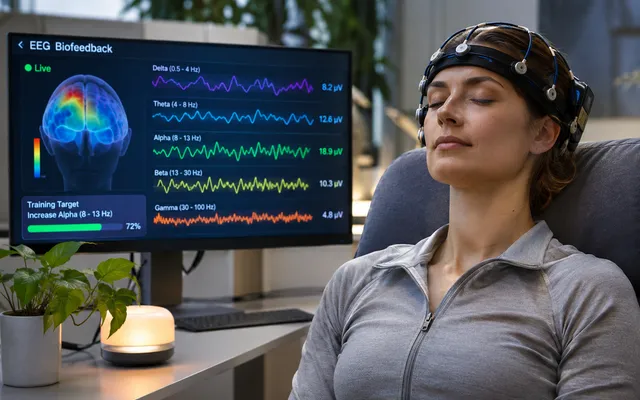
- EEG: brain waves, used in neurofeedback
Techniques
HRV biofeedback (resonance breathing)
Users breathe slowly, around 4.5 to 6.5 breaths per minute, while watching their heart rhythm on screen. This pattern maximizes the oscillation of heart rate with breathing and increases vagal activity and baroreflex gain. Studies, including meta-analyses, show that HRV biofeedback reduces anxiety and stress, and some show improvements in test performance and attention. Practicing 10 to 20 minutes a day for several weeks yields the best results.
Respiration training
Slowing breathing, using diaphragmatic breathing, and lengthening exhalation reduce arousal. Biofeedback of breathing helps people avoid over-breathing, which can cause lightheadedness and anxiety.
Muscle relaxation
EMG biofeedback shows muscle tension, helping you learn to release it. This is useful for tension headaches, jaw clenching and neck stiffness while studying.
Thermal and skin conductance feedback
Warming hands or reducing skin conductance is used for relaxation and stress management.
EEG neurofeedback
Targets attention-related rhythms. As discussed elsewhere, evidence is mixed.
Evidence for students
- Test anxiety: studies of HRV biofeedback and EMG biofeedback with students show reduced anxiety, with small to moderate effects. Meta-analyses of biofeedback for anxiety found benefit.
- Academic performance and attention: some studies of university students, such as those with HRV training, report improved cognitive performance, though many are small and short.
- Stress and sleep: HRV biofeedback is associated with improved subjective stress and sleep quality.
- Limitations: variable protocols, small samples, lack of rigorous controls. Biofeedback should be viewed as a self-regulation skill-building tool with modest evidence.
How to build a biofeedback study routine
1. Start with a baseline: note your stress, attention and sleep for a week. 2. Choose a simple method, such as a smartphone HRV app with a chest strap or a breathing pacer. 3. Practice daily for 10 to 20 minutes, ideally at a consistent time, while seated and relaxed. 4. Use it before study sessions to settle into focus, and in breaks to recover. 5. Practice before exams, and use slow breathing at the exam if nervous. 6. Combine with good study methods: retrieval practice, spacing and planned breaks. 7. Monitor progress, noting changes in comfort, concentration and performance. 8. Be patient: skills improve over weeks.
Quality considerations
Consumer devices vary in accuracy, and chest straps are generally more accurate than wrist-based sensors for HRV. Some apps make unsupported claims. Look for products with transparent methods, and consider working with a certified biofeedback practitioner if you have significant anxiety, headaches, or other conditions.
Safety
Biofeedback is generally safe. People with heart rhythm problems, panic disorder with breathing sensitivity, or taking medications that affect heart rate should consult a clinician. Do not use biofeedback as a replacement for treatment of significant mental health conditions.
Takeaway
Biofeedback can help students tune their body and mind for learning. Pair it with solid study habits for the best results.
Further reading from authoritative sources
- National Institute of Neurological Disorders and Stroke (NINDS)
- National Center for Complementary and Integrative Health (NCCIH)
This article is educational and does not replace advice from a licensed clinician. See the medical disclaimer. Looking for specialist care? Browse the neurology clinic directory.