Episodic Memory: Revisiting the Past in Your Mind
Remembering your last birthday, your first day at a job or what you ate for breakfast uses episodic memory, the memory for specific events in your life, with their time and place. Endel Tulving, who named it in the 1970s, described it as a kind of mental time travel.
What makes a memory episodic
An episodic memory typically includes the what, where and when of an experience, plus the sense of reliving it from your own perspective. This distinguishes it from semantic memory, which gives you facts without a personal moment attached, such as knowing that Paris is the capital of France.
The brain network
- Hippocampus. It binds together the different elements of an experience into a coherent memory and creates a "pointer" or index to cortical details.
- Entorhinal and parahippocampal cortex. They supply spatial and contextual information.
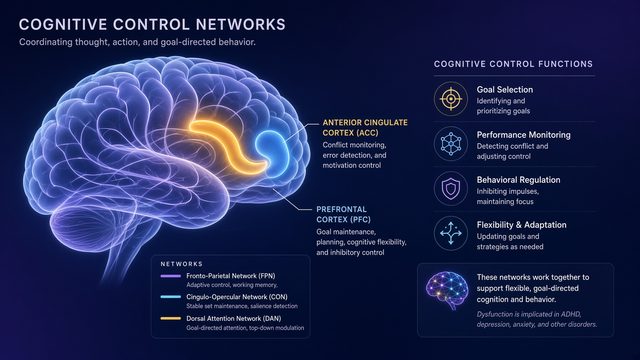
- Prefrontal cortex. It helps with encoding strategies and retrieving and checking memories.
- Posterior cortical regions. They store sensory details such as sights and sounds.
- Amygdala. It adds emotional significance.
When you recall an event, these regions reactivate in a pattern that partially resembles the original experience.

Encoding and consolidation
Encoding is enhanced by attention, meaning, novelty and emotion. Memories are then consolidated, with sleep playing an important role: replay of hippocampal activity during deep sleep appears to strengthen and transfer memory traces. Over years, the hippocampus's involvement for vivid details may continue, while a more general, "gist" version becomes stored in the cortex.
Memory is reconstructive
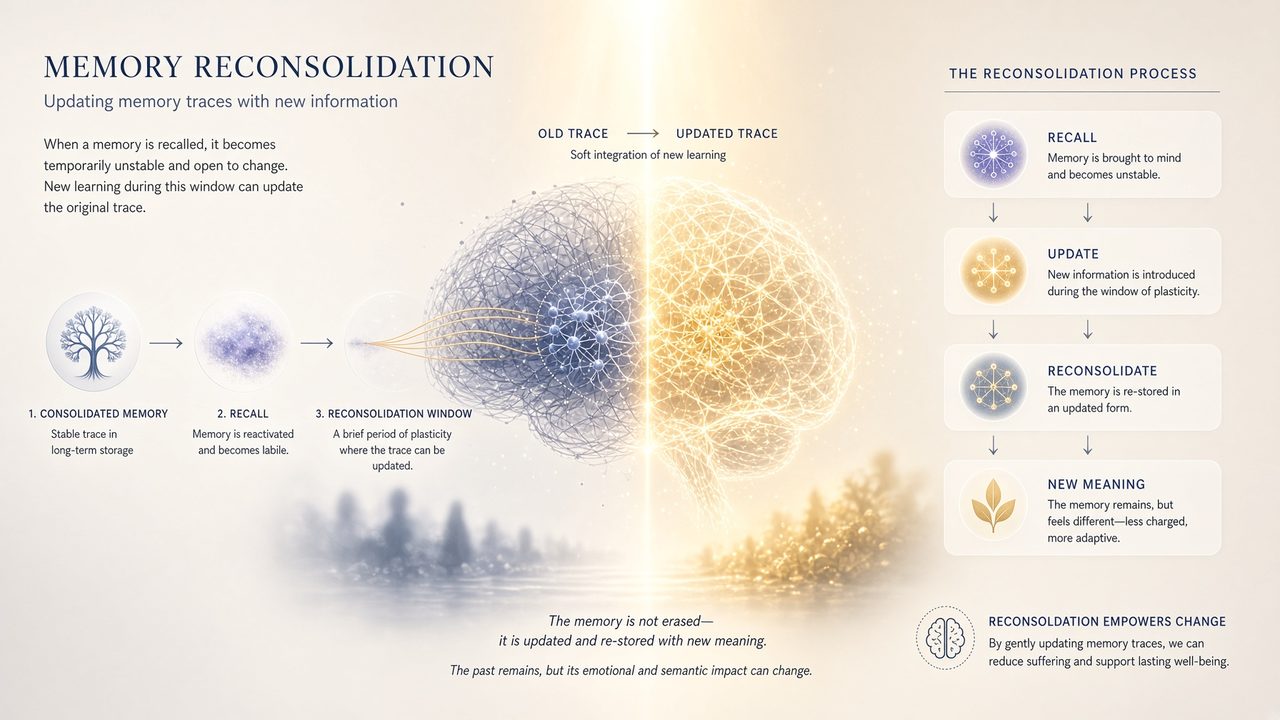
Elizabeth Loftus's research showed that wording in questions can alter people's recollections, such as estimates of car speed. Each retrieval can be influenced by present knowledge and suggestion, and reconsolidation means a recalled memory is briefly labile and can be updated. False memories can feel as real as true ones.
Confidence is not a reliable indicator of accuracy. Flashbulb memories of dramatic events, like where you were during a major news story, are held with great confidence but often change over time.
Development and aging
Episodic memory emerges gradually in childhood, which is why few people remember events before age three or four, a phenomenon called infantile amnesia. In older age, episodic memory is among the first abilities to decline, and people may recall less detail while the gist is preserved. In Alzheimer's disease, impairment of new episodic memory is often the earliest and most prominent symptom, reflecting early hippocampal damage.
Imagining the future
The same network that supports remembering the past also supports imagining the future. Patients with hippocampal damage have difficulty constructing detailed future scenarios, and brain imaging shows overlapping activity. This suggests episodic memory evolved partly to help us plan.
Improving episodic recall
- Pay attention at the time of the event.
- Add distinctive details and emotions.
- Review soon after, and revisit spaced over time.
- Sleep well after learning.
- Retrieve cues by returning to the context in your mind.
- Keep a journal or take photographs to supplement memory.
- Exercise regularly, which is associated with better hippocampal health.
Disorders
Amnesia from hippocampal damage, encephalitis, traumatic brain injury or alcohol-related thiamine deficiency can severely impair episodic memory. Clinical assessment includes tests of recall for stories and word lists.
Further reading from authoritative sources
- National Institute of Neurological Disorders and Stroke (NINDS)
- National Center for Complementary and Integrative Health (NCCIH)
This article is educational and does not replace advice from a licensed clinician. See the medical disclaimer. Looking for specialist care? Browse the neurology clinic directory.