How the Brain Adapts to Chronic Stress
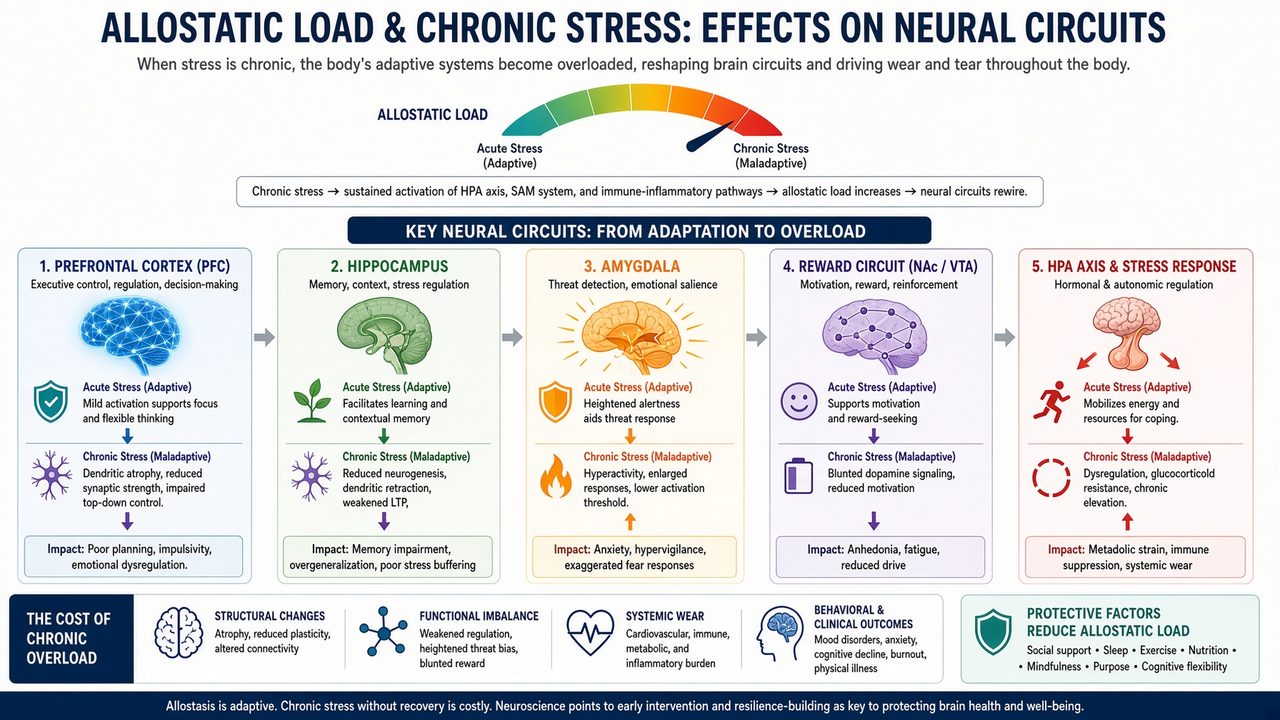
Short bursts of stress are manageable, but stress that lasts for weeks or months leaves marks on the brain and body. Fortunately, research shows that many of these changes can reverse once stress eases and recovery strategies are used.
Allostasis and allostatic load
Bruce McEwen described allostasis as achieving stability through change, such as when stress hormones help the body cope. Allostatic load is the wear and tear that results when the stress response is activated too often, too long or inadequately turned off. It affects the cardiovascular, metabolic, immune and nervous systems.
Brain changes in chronic stress
Research in rodents and humans, including work by McEwen, Robert Sapolsky, Bruce and colleagues, shows:
- Hippocampus: chronic glucocorticoid exposure reduces dendritic branching and neurogenesis in animals, and in humans, chronic stress and depression are associated with smaller hippocampal volume, affecting memory and mood regulation.
- Prefrontal cortex: dendritic shrinkage and reduced connectivity in rodents, with impaired working memory and cognitive flexibility. Human studies find weaker prefrontal control under stress.
- Amygdala: dendritic growth and increased reactivity, favoring fear and anxiety.
- Striatum: a shift from flexible, goal-directed behavior to habitual responding, as research by Lars Schwabe and Emiliano Dias-Ferreira shows, which may explain why stressed people fall back on routines.
- Reward circuits: blunted responsiveness, linked to loss of pleasure.
- Inflammation and neuroimmune activation: microglial activation and elevated inflammatory markers.
- White matter and connectivity changes have also been reported.

Effects on thinking, mood and health
Cognitive effects include difficulties with attention, memory and decision making. Emotional effects include anxiety, irritability and depression risk. Physical effects include sleep disruption, high blood pressure, weakened immunity, digestive trouble and increased risk of heart disease. Chronic stress is a major contributor to burnout.
Reversibility
Studies show recovery is possible. In animals, removing stress allows dendrites in the prefrontal cortex to regrow within weeks. In humans, interventions have shown benefits: a study by Britta Hölzel found that eight weeks of mindfulness-based stress reduction was associated with decreased amygdala gray matter density, and exercise increases hippocampal volume in older adults. Recovery after burnout shows improvement in prefrontal function over time, though recovery may be incomplete for some.
Individual differences
Genetics, early life experience, age, social support and sense of control shape how stress affects people. Controllable stress is less damaging than uncontrollable stress. Adolescence and old age are periods of increased sensitivity.
Ways to reduce and recover
- Reduce stressors: address workload, finances, conflict or caregiving strain where possible, and ask for help.
- Build recovery into your day: breaks, hobbies, time off.
- Sleep: prioritize seven to nine hours.
- Exercise: regular aerobic activity buffers stress effects.
- Mindfulness, relaxation and HRV biofeedback: reduce stress reactivity.
- Social support: talk with friends and family, or join groups.
- Time in nature
- Healthy diet and limited alcohol and caffeine
- Create a sense of control: plan, prioritize and choose responses.
- Therapy: CBT and stress-management training help with coping and perspective.
- Seek medical help if you have persistent anxiety, depression, panic or physical symptoms.
Takeaway
Chronic stress rewires the brain toward vigilance and habit. Removing stressors and building recovery lets the brain adapt back toward flexibility.
Further reading from authoritative sources
- National Institute of Mental Health (NIMH)
- National Center for Complementary and Integrative Health (NCCIH)
This article is educational and does not replace advice from a licensed clinician. See the medical disclaimer. Looking for specialist care? Browse the neurology clinic directory.