How the Brain Filters Distractions
In a busy cafe, you can follow a conversation while ignoring the clatter of dishes, music and chatter. This ability depends on active filtering, a set of mechanisms that enhance relevant signals and suppress irrelevant ones. When these systems falter, distraction takes over.
Early and late selection
Classic debates in psychology asked whether filtering occurs early, before analysis of meaning, or late. Donald Broadbent proposed an early filter, and Anne Treisman suggested that unattended information is attenuated, not blocked entirely, which explains why your own name can break through even in an ignored conversation, the cocktail party effect. Nilli Lavie's load theory reconciles the views: when a task has high perceptual load, irrelevant inputs are filtered out early, while under low load, the extra capacity is spent processing distractors. Under high cognitive load, such as working memory demands, control for suppressing distractors is reduced, so people become more distractible.
Brain mechanisms
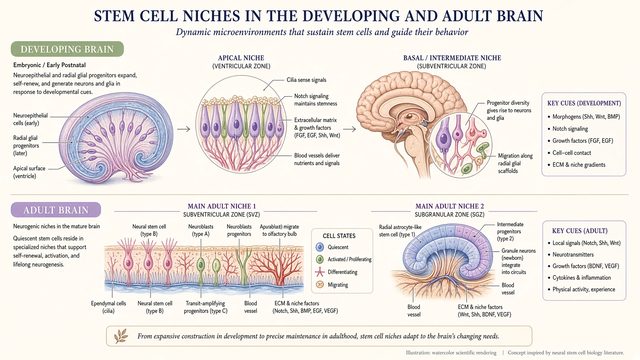
- Prefrontal cortex: sends top-down signals that bias sensory areas toward goal-relevant information and suppresses distractors. Robert Knight's lesion studies showed that damage to the prefrontal cortex increases distractibility.
- Parietal cortex and frontal eye fields: form a dorsal attention network that directs spatial attention.
- Thalamus: the pulvinar and thalamic reticular nucleus regulate flow of information to cortex, acting as a gate.
- Alpha oscillations (8 to 12 Hz): alpha power increases in regions processing irrelevant information, such as the hemisphere ipsilateral to an attended location, and acts as a mechanism for functional inhibition.
- Neural gain: attention increases the firing rate and reduces the noise correlations of neurons representing attended stimuli.
- Inhibitory control circuits: the right inferior frontal gyrus is important for stopping responses.
- Neuromodulators: dopamine, norepinephrine and acetylcholine adjust signal-to-noise ratio.
Sensory gating
The brain also reduces responses to repeated, predictable stimuli. Sensory gating, measured by the P50 response to paired clicks, reflects the ability to filter redundant input. Reduced gating is found in schizophrenia, and is also reported in ADHD, PTSD and autism, which may contribute to overwhelm from sensory input.
Why some people are more distractible
- ADHD: difficulties with inhibitory control and sustained attention
- Autism: some people experience heightened sensory sensitivity and difficulty filtering background noise
- Anxiety: threat monitoring draws attention to potential dangers
- Sleep loss and fatigue
- Age: older adults can have more trouble suppressing distractors, and young children have immature control.
- Working memory capacity: people with higher capacity tend to be better at resisting distraction, as shown by Michael Kane and Randall Engle.
- Stress and pain
- Digital habits, which condition frequent checking.
Practical ways to reduce distraction
- Control the environment: quiet space, noise-cancelling headphones, a tidy desk, and a closed door.
- Turn off notifications and set your phone to do-not-disturb.
- Plan your work with clear priorities so that the brain has a stable goal to resist distractions.
- Increase task engagement, since interesting, appropriately challenging tasks capture attention naturally.
- Use background sound wisely: steady noise or instrumental music can mask unpredictable sounds for some people.
- Schedule distraction time such as social media at defined intervals.
- Capture intrusive thoughts in a notebook.
- Take movement breaks to recover control.
- Practice mindfulness, which trains noticing and returning attention.
- Sleep and exercise support prefrontal control.
- Address sources of anxiety and seek help for ADHD if relevant.
- Create rituals that signal the start of focus time.
Takeaway
Filtering distractions is an active, effortful process. By lightening the load on your brain and shaping your surroundings, you make it easier for your attention systems to do their job.
Further reading from authoritative sources
- National Institute of Neurological Disorders and Stroke (NINDS)
- National Center for Complementary and Integrative Health (NCCIH)
This article is educational and does not replace advice from a licensed clinician. See the medical disclaimer. Looking for specialist care? Browse the neurology clinic directory.