Memory Champions: What Their Brains Reveal
Each year at the World Memory Championships, competitors memorize shuffled decks of cards in under a minute or thousands of digits in an hour. Are they born with exceptional brains? Research suggests that the secret is training in techniques that anyone can learn.
What they do
Top memory athletes use systems that turn abstract information into vivid, sequenced images placed along mental routes. Typical strategies include:
- Memory palaces (method of loci): associating images with locations in a familiar journey
- Person-action-object systems: converting cards or number pairs into characters performing actions with objects, which are then combined into scenes
- Digit-to-image conversion: each two- or three-digit group is mapped to a pre-learned image
- Rapid, repeated practice with timed drills and review
These methods reflect the brain's strengths in visual and spatial memory, and meaningful association.
What the brain scans show
A 2017 study by Martin Dresler and colleagues in the journal Neuron compared 23 of the world's top memory athletes with matched controls. They found:
- No difference in structural brain scans or general cognitive abilities between champions and controls.
- Differences in functional connectivity: the memory athletes had distinct patterns of connectivity across a network of regions, including those involved in visual and spatial memory, with notable involvement of the medial temporal lobe, prefrontal and parietal cortex.
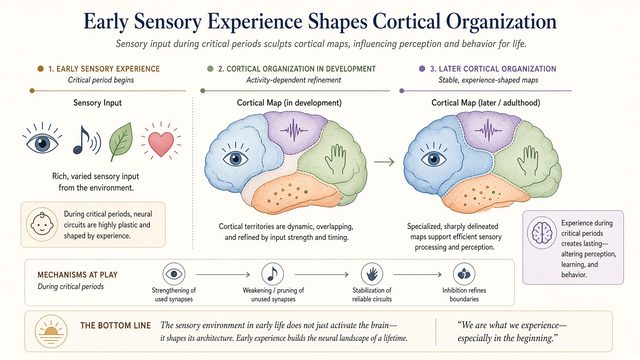
- A training effect: in a follow-up experiment, 51 ordinary participants were randomly assigned to six weeks of daily memory palace training, working memory training, or no training. The memory palace group nearly doubled their recall of words, from about 26 to 62 words, and their brain connectivity patterns shifted toward those of the champions. The improvement persisted for four months.
An earlier study in 2002 by Eleanor Maguire and colleagues found that memory champions, when learning information, activated regions involved in spatial memory, such as the right posterior hippocampus, in comparison with controls, consistent with method of loci use.

The role of practice
Champions often practice for hours per day for years. Joshua Foer's account of his journey from journalist to U.S. Memory Champion in a year illustrates the effect of structured practice. Research on an individual with extraordinary digit span, S.F., showed that his gains came from mnemonic strategies and practice, not from innate ability.
What champions do not have
- They do not necessarily have better memory for everyday events, names or where they left their keys, unless they apply techniques.
- Their skill is domain-specific: memorizing numbers and cards does not imply superior general memory.
- They do not have photographic memory.
Hyperthymesia and savants
People with highly superior autobiographical memory recall extensive details about their personal pasts, with different mechanisms and brain features such as enlarged regions involved in autobiographical recall. Savants with exceptional memory skills in specific areas often have developmental conditions, and their abilities are not typically acquired by strategies. These differ from the trained skills of memory athletes.
Lessons for everyday learning
- Use imagery and association to remember names, lists and facts.
- Build a memory palace for speeches, studying or lists.
- Practice regularly, with spaced repetition.
- Make information meaningful and organize it.
- Be playful, since humor and vivid images stick.
- Combine strategies with understanding, since memory tricks are best used for facts that must be recalled verbatim.
- Take care of your brain: sleep, exercise and a healthy diet support learning.
Takeaway
Memory champions demonstrate the power of strategy and practice. Their achievements show that much of what we call good memory is a learnable skill.
Further reading from authoritative sources
- National Institute of Neurological Disorders and Stroke (NINDS)
- National Center for Complementary and Integrative Health (NCCIH)
This article is educational and does not replace advice from a licensed clinician. See the medical disclaimer. Looking for specialist care? Browse the neurology clinic directory.