Mnemonics and the Brain: Ancient Tricks, Modern Science
Long before printing, orators, poets and scholars relied on mnemonic techniques to memorize speeches, genealogies and epics. Modern cognitive neuroscience helps explain why they work: they transform arbitrary information into forms the brain is good at remembering.
Why they work
The brain does not store information like a file cabinet. It is better at remembering:
- Vivid imagery: Allan Paivio's dual coding theory proposes that information encoded both verbally and visually has two routes for retrieval.
- Spatial layouts: the hippocampus is specialized for place and context.
- Stories and emotion: narrative and emotional content engage multiple regions.
- Meaningful structure: chunks and categories reduce load.
- Distinctive, bizarre or humorous associations, which stand out.
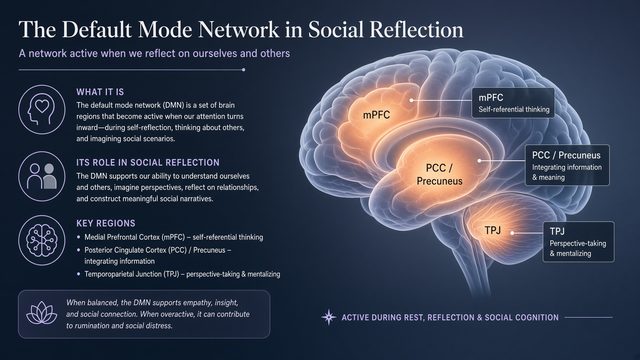
- Self-relevance: the medial prefrontal cortex supports enhanced memory for information related to oneself.
Mnemonics deliberately engage these strengths.
Common techniques
- Acronyms and acrostics: such as ROYGBIV for rainbow colors, or "Every Good Boy Deserves Fudge" for musical lines.
- Rhymes and songs: "Thirty days hath September..." uses rhythm and rhyme, which constrain possible words and aid recall.
- Chunking: grouping digits of a phone number.
- Keyword method: linking foreign words to similar-sounding native words and an image, for example linking the Spanish "pato" (duck) with "pot" and imagining a duck in a pot. Studies show clear benefits for vocabulary learning.
- Peg system: associating items with a memorized list of pegs, such as number-rhyme words.
- Link or story method: chaining items into a vivid narrative.
- Method of loci: placing items in imagined locations along a familiar route (see our article on memory palaces).
- Person-action-object systems, used by memory athletes to memorize digits and cards.
- Name and face techniques: linking a distinctive facial feature to the name through imagery.

What research shows
Meta-analyses indicate that mnemonic instruction produces large gains in memory for lists, vocabulary and facts, especially for students with learning difficulties. In medical education, mnemonics aid retention of anatomical and pharmacological facts. Brain imaging studies of memory athletes, such as those by Martin Dresler and colleagues, found that training in the method of loci altered functional connectivity patterns in ordinary people, making their brain connectivity more like that of memory champions, and improving their recall in a few weeks of training.
Limits
- Mnemonics are best for arbitrary or list-like information, and less helpful for deep conceptual understanding. They should complement, not replace, understanding.
- They take time to create, and poorly designed mnemonics may be hard to decode.
- Without retrieval practice and spaced review, mnemonic gains fade.
- Some people find imagery difficult, though many can improve with practice.
Using mnemonics well
1. Make it personal: use images and references from your own life. 2. Make it vivid: include action, sensory detail, exaggeration and emotion. 3. Make it distinctive so it is not confused with others. 4. Organize into a logical order or story. 5. Practice retrieval at spaced intervals. 6. Create your own whenever possible, as self-generated mnemonics often work better than ready-made ones. 7. Use for the right content: names, vocabulary, lists, sequences, formulas. 8. Pair with understanding, such as explaining why a rule applies.
Takeaway
Mnemonics work by speaking the brain's native language of images, places and stories. Used wisely, they are one of the most powerful memory tools available.
Further reading from authoritative sources
- National Institute of Neurological Disorders and Stroke (NINDS)
- National Center for Complementary and Integrative Health (NCCIH)
This article is educational and does not replace advice from a licensed clinician. See the medical disclaimer. Looking for specialist care? Browse the neurology clinic directory.