Stress and Learning: Finding the Optimal Zone
A little pressure can help you rise to the occasion, but too much can make you freeze. The relationship between stress and learning follows a pattern, and understanding it can help students, teachers and professionals find their optimal zone.
The inverted U
In 1908, Robert Yerkes and John Dodson reported that performance improves with arousal up to a point, and then declines. The pattern, known as the Yerkes-Dodson law, has been refined: the optimal level of arousal is lower for complex or novel tasks and higher for simple or well-practiced ones. It is a useful rule of thumb, though real relationships are more complex.
Brain mechanisms
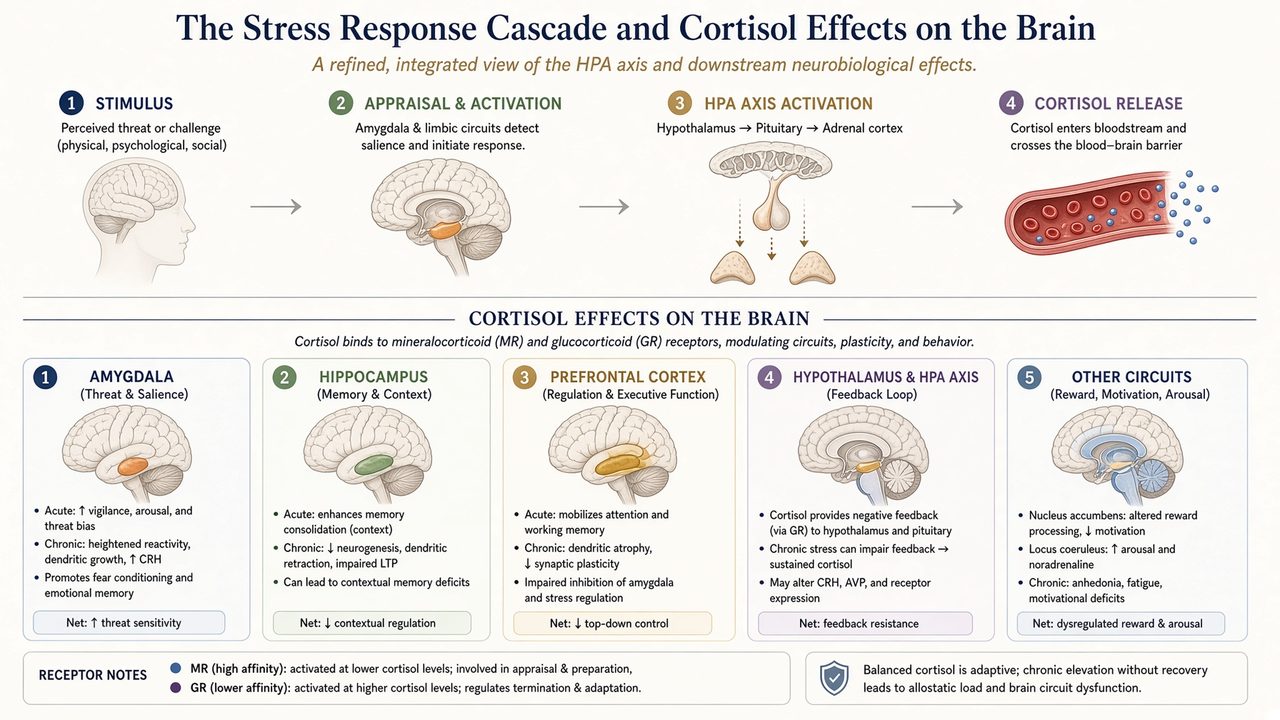
- Catecholamines in the prefrontal cortex: Amy Arnsten showed that moderate levels of noradrenaline and dopamine optimize prefrontal function through certain receptors, while high levels during uncontrollable stress disrupt prefrontal networks, impair working memory and cause a switch to more reflexive, habit-based processing.
- Cortisol and the hippocampus: moderate, short-lived cortisol elevations enhance memory consolidation, while chronic or very high levels impair hippocampal function and retrieval.
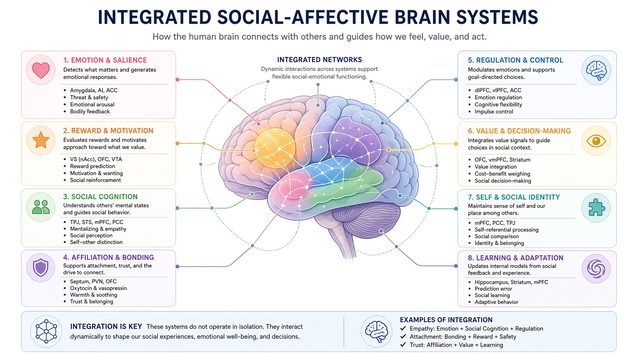
- Amygdala: stress strengthens emotional memory encoding, and may narrow attention.
- Stress and learning style: stress shifts learning from flexible, hippocampus-dependent systems to habit-based striatal learning, as shown by Lars Schwabe and Oliver Wolf.

Good stress and bad stress
- Eustress: challenging, manageable stress that feels motivating, is associated with growth.
- Distress: overwhelming, uncontrollable stress that feels threatening, is associated with impairment.
- Controllability and predictability are key. Stress that feels controllable is less harmful.
- Chronic stress has more damaging effects than short-term stress, as discussed in research on hippocampal and prefrontal changes.
Alia Crum's research suggests that mindset matters: people who viewed stress arousal as helpful performed better and showed healthier physiological responses in some studies than those who viewed it as harmful.
Stress in school and work
Students with high levels of anxiety and stress show poorer academic performance, and chronic adversity affects children's learning and executive function. Educators can foster optimal stress by setting high but attainable expectations, providing support and feedback, and creating a climate in which mistakes are part of learning.
Finding your optimal zone
- Notice your signals: racing heart, tension, scattered thoughts, or on the other side, boredom and drowsiness.
- If under-aroused, raise engagement with movement, a short walk, a change of task, interesting challenges, or a study partner.
- If over-aroused, lower activation with slow breathing, brief relaxation, grounding, movement or breaks.
- Slow breathing: extended exhalations activate the parasympathetic system.
- Break tasks down to reduce overwhelm.
- Prepare thoroughly to build confidence.
- Reappraise: tell yourself, "This is my body preparing me to perform."
- Control what you can, such as preparation and routines.
- Protect sleep, exercise regularly and eat well, since these buffer stress.
- Practice under mild pressure, such as timed practice tests or performing for friends, to build tolerance.
- Ask for help and use social support.
- Use biofeedback such as heart rate variability training to practice regulating arousal.
- Seek professional help when stress or anxiety is persistent, severe or interfering with daily life.
Takeaway
Stress is not simply the enemy of learning. The goal is to find and maintain the zone where arousal energizes you, and to recover when stress becomes too much.
Further reading from authoritative sources
- National Institute of Neurological Disorders and Stroke (NINDS)
- National Center for Complementary and Integrative Health (NCCIH)
This article is educational and does not replace advice from a licensed clinician. See the medical disclaimer. Looking for specialist care? Browse the neurology clinic directory.