The Method of Loci: How Memory Palaces Work
The method of loci, also known as the memory palace, is a technique that dates back to ancient Greece. It involves mentally walking through a familiar place and placing vivid images of items to be remembered at specific locations. It remains one of the most effective memory strategies known.
Origins
According to Roman writers such as Cicero and Quintilian, the poet Simonides of Ceos was attending a banquet when the roof collapsed, crushing the guests beyond recognition. Simonides was able to identify the bodies by recalling where each person had been sitting. From this, he realized that order and place are powerful memory aids. The technique was used by orators to deliver long speeches, and later by medieval scholars and Renaissance thinkers such as Giordano Bruno and Matteo Ricci.
Why it works in the brain
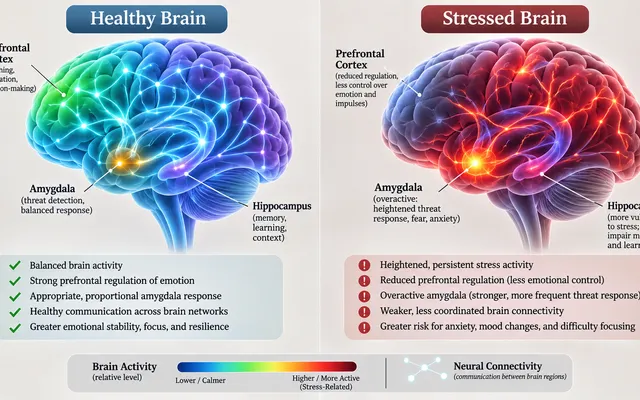
- Spatial memory is robust: the hippocampus and surrounding regions contain place cells, grid cells and other cells specialized for mapping space. The 2014 Nobel Prize recognized John O'Keefe, May-Britt Moser and Edvard Moser for discovering these systems. The method of loci recruits this machinery for non-spatial content.
- Visual imagery: vivid images engage visual cortex and the precuneus.
- Ordered structure: a route provides a built-in sequence and retrieval cues.
- Distinctiveness: each location is unique, preventing interference.
- Dual coding: combining spatial and visual encoding.

Evidence
- Memory champions: a 2017 study by Martin Dresler and colleagues at Radboud University compared top memory athletes with ordinary people. The athletes did not differ in brain structure or general intelligence, but they used the method of loci. Ordinary participants who trained for 30 minutes a day for six weeks nearly doubled the number of words they could recall (from about 26 to 62 words), and their brain connectivity patterns shifted to resemble those of the champions. The improvement lasted months.
- Older adults and clinical groups: studies show that people with mild cognitive impairment, schizophrenia or acquired brain injury can benefit from training, though gains are smaller and require support.
- Students: research in education finds that the method improves recall for lists of facts, such as anatomy terms or historical timelines.
- Journalist Joshua Foer described winning the U.S. Memory Championship after a year of training, using memory palaces extensively.
Building a memory palace
1. Choose a familiar place, such as your home, a route to work or your school. 2. Define a route with a fixed order through distinct locations, such as the front door, hallway, kitchen sink, and sofa. Aim for 10 to 20 stations to start. 3. Convert items into vivid images: make them active, exaggerated, funny, emotional and multisensory. Abstract ideas should be turned into concrete symbols. 4. Place each image at a station, and spend a few seconds visualizing its interaction with the location. 5. Rehearse by walking through the route mentally, retrieving each image. 6. Review at spaced intervals to consolidate. 7. Reuse the palace by mentally "clearing" it with a different set of images, or build several palaces.
Example
To remember a shopping list of milk, bread and eggs, picture a river of milk gushing from your front door, a giant loaf of bread blocking the hallway, and eggs cracking over the kitchen sink.
Advanced uses
- Speeches and presentations
- Languages, vocabulary and grammar
- Anatomy and medical lists
- Poetry or scripture
- Numbers, using systems that convert digits to images
- Historical dates and sequences
Limits
The method works best for ordered, discrete items. It demands effort in creating images, and for deep conceptual understanding, other strategies are needed. Practice improves speed. Some people find forming mental images difficult, and for those who have aphantasia, alternative strategies like physically associating items with real locations may help.
Takeaway
The memory palace turns your brain's remarkable spatial memory into a storage system for any information. With a little practice, it is accessible to anyone.
Further reading from authoritative sources
- National Institute of Neurological Disorders and Stroke (NINDS)
- National Center for Complementary and Integrative Health (NCCIH)
This article is educational and does not replace advice from a licensed clinician. See the medical disclaimer. Looking for specialist care? Browse the neurology clinic directory.