The Neuroscience of Reading Aloud vs. Silently
Do you remember more when you read aloud? Research suggests that it can help, but the story is more nuanced. Reading aloud and reading silently use different brain resources, with consequences for memory, comprehension and speed.
What happens in the brain
Both modes begin with visual word recognition in the occipital and fusiform areas, then phonological and semantic processing in the left temporal and parietal regions. Silent reading in skilled adults often involves subvocalization, an inner voice that activates speech-related motor areas weakly. Reading aloud adds:
- Motor cortex and premotor regions: planning and producing speech
- Cerebellum and basal ganglia: timing and articulation
- Auditory cortex: hearing one's own voice
- Greater activity in Broca's area and the insula
The production effect
Colin MacLeod and colleagues found that words read aloud are remembered better than words read silently, a robust effect called the production effect. It has been replicated across many studies and also applies to mouthing or typing words, though to a lesser degree. The proposed explanation is that production makes the item distinctive, adding motor and auditory components to the memory trace, which provides additional retrieval cues. The effect is strongest in mixed lists, where some items are read aloud and others silently, since the produced items stand out.

Comprehension
For comprehension of text, results vary:
- Children learning to read benefit from reading aloud, which improves word decoding, fluency and awareness of sounds, and helps teachers assess progress. Shared reading with an adult supports vocabulary and language development.
- Struggling readers may comprehend better when reading aloud because it slows pace and forces attention to each word.
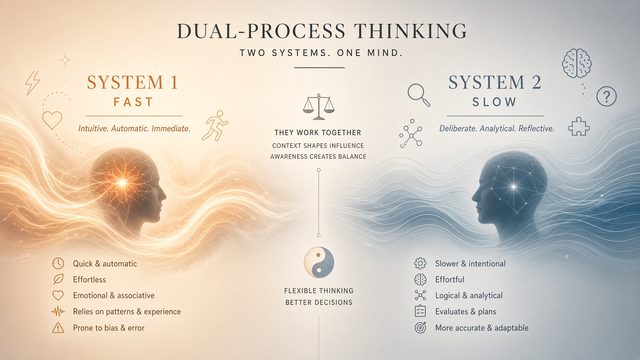
- Skilled adults usually comprehend complex text better when reading silently, since reading aloud can consume cognitive resources for articulation and prosody, and limit speed. Silent reading is typically two to three times faster.
- Difficult material: reading aloud can improve attention to challenging passages, or help catch errors when proofreading.
- Listening to text while reading, as with audiobooks combined with print, can support comprehension for some learners.
Reading aloud as a learning tool
- Memorizing key facts, definitions or foreign words: saying them aloud improves memory.
- Proofreading: reading your own writing aloud helps catch awkward phrasing and mistakes.
- Learning languages: practicing pronunciation and speaking is essential.
- Rehearsing speeches and presentations
- Reading to children, which also builds relationships.
- Reading to older adults or sharing stories aloud supports connection.
- Self-explanation: talking through problem solving can reveal gaps in understanding.
Silent reading advantages
- Speed and efficiency for extended texts
- Deeper focus on complex ideas for experienced readers
- Privacy and convenience
- Better capacity to skim and reread selectively
Special cases
- Dyslexia: reading aloud highlights decoding difficulties, and approaches that combine multisensory training help.
- Aphasia and stroke recovery: reading aloud is used in therapy to practice speech.
- Parkinson's disease: reading aloud and loud speech training, such as LSVT LOUD, helps with voice volume.
Practical tips
- Use aloud reading for items you need to memorize, mixed with silent reading for efficiency.
- Read aloud softly or whisper if needed in shared spaces.
- Alternate: read silently for understanding, then read key passages aloud to remember.
- Summarize aloud after reading to test comprehension.
- For children, read aloud daily, and let them read to you.
Takeaway
Reading aloud and silently serve different purposes. Combining them wisely helps you remember more and understand better.
Further reading from authoritative sources
- National Institute of Neurological Disorders and Stroke (NINDS)
- National Center for Complementary and Integrative Health (NCCIH)
This article is educational and does not replace advice from a licensed clinician. See the medical disclaimer. Looking for specialist care? Browse the neurology clinic directory.