The Science of Relearning After Brain Injury
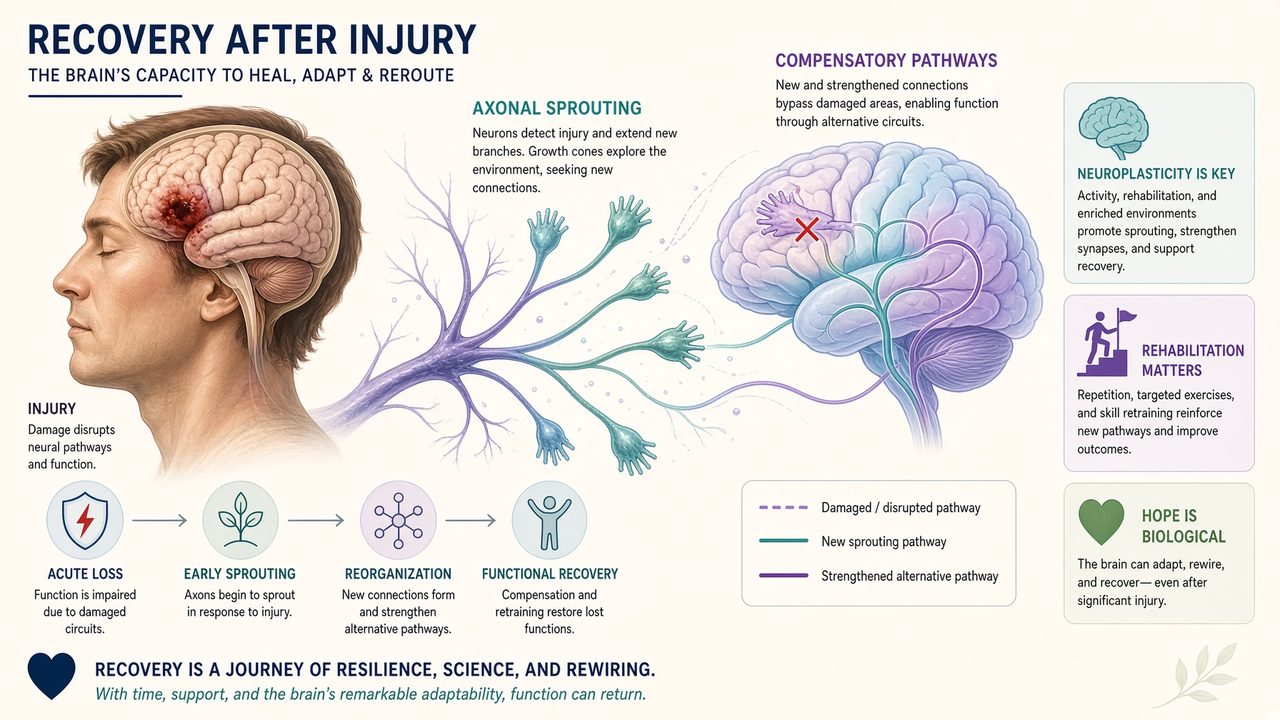
After a stroke or brain injury, everyday skills such as walking, speaking, dressing or remembering can be lost. Remarkably, the brain can relearn many of them. Neurorehabilitation is built on the brain's capacity for plasticity, and research has identified principles that make relearning more effective.
The plastic brain after injury
Following injury, the brain undergoes a cascade of changes. In the first days and weeks, there is a period of heightened plasticity in which the nervous system is primed for reorganization. Growth factors rise, new connections sprout, and surviving circuits remap. Research in animals and humans shows that:
- Perilesional and contralateral regions take on functions.
- Maps shift: for example, after stroke, the hand area of the motor cortex may be reorganized depending on use.
- Use it or lose it: unused functions can deteriorate, and learned non-use can occur when a person stops using a weak limb because it is easier to use the other. Edward Taub's research on this led to constraint-induced movement therapy.
Principles of neuroplasticity-based rehabilitation
Jeffrey Kleim and Theresa Jones outlined principles drawn from research:
- Use it and improve it: training specific functions strengthens them.
- Specificity: the training must resemble the target skill. Practicing walking improves walking more than leg-strengthening alone.
- Repetition matters: many repetitions are needed. Studies suggest that typical therapy sessions deliver far fewer repetitions than animal research indicates are necessary, so increasing dose is a goal.
- Intensity matters: more challenging, higher-intensity practice produces more change.
- Time matters: plasticity is greater early, but recovery can continue for months and years. Starting rehabilitation early is beneficial, though very early, very intensive mobilization in the first 24 hours after stroke was found to be harmful in one trial.
- Salience matters: the training must be meaningful and motivating.
- Age matters: younger brains often show more plasticity.
- Transference: gains in one area may promote improvements in related ones.
- Interference: compensatory habits can sometimes impede recovery of the original function.

Evidence-supported approaches
- Constraint-induced movement therapy: restraining the unaffected arm to force use of the affected one, improves arm function in selected stroke patients (EXCITE trial).
- Task-oriented training and treadmill training with body weight support for walking
- Mirror therapy and motor imagery for weakness and pain
- Robot-assisted therapy and virtual reality can increase repetitions and motivation.
- Aphasia therapy: intensive speech-language therapy improves language, and constraint-induced language therapy is a studied method.
- Cognitive rehabilitation: strategy training for attention, memory and executive function
- Aerobic exercise: supports recovery and reduces risk of recurrence.
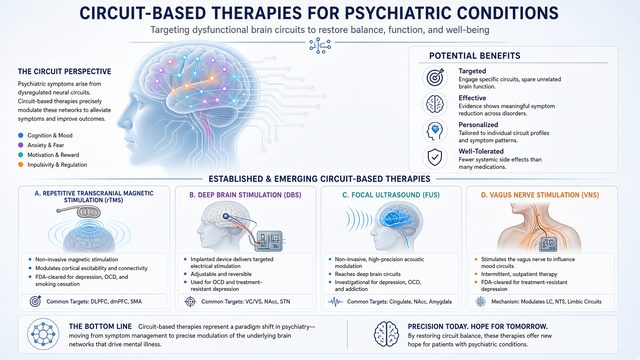
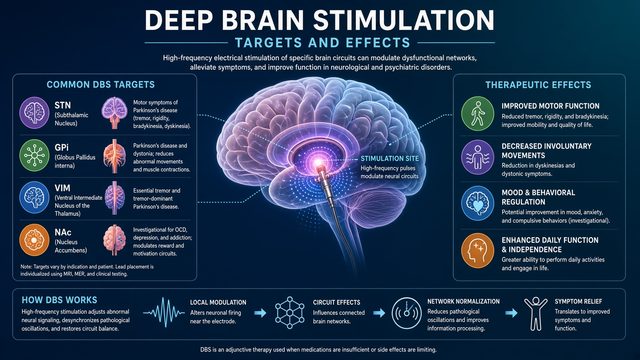
- Neuromodulation: transcranial magnetic stimulation, transcranial direct current stimulation and vagus nerve stimulation paired with rehabilitation are being investigated, with some positive results, and are not yet standard for all patients.
- Pharmacology: drugs like fluoxetine did not show benefits in large trials for motor recovery, and research continues.
- Mental practice and action observation may add benefits.
Practical tips for patients and families
- Practice regularly, including at home, and ask therapists for a structured program.
- Set specific, meaningful goals such as making coffee or walking to the mailbox.
- Use the affected side during daily activities when safe.
- Break skills into parts, and gradually increase difficulty.
- Celebrate small steps and track progress.
- Rest and sleep, since consolidation is vital.
- Manage mood: depression is common after brain injury and impedes recovery, and treatment helps.
- Stay socially engaged and consider peer support.
- Prevent complications and secondary events with medications and healthy habits.
- Be patient: improvement may continue for years, often with plateaus.
Takeaway
Relearning after brain injury is an act of retraining the brain. With specific, repeated and motivating practice, many people regain function that once seemed lost.
Further reading from authoritative sources
- National Institute of Neurological Disorders and Stroke (NINDS)
- National Center for Complementary and Integrative Health (NCCIH)
This article is educational and does not replace advice from a licensed clinician. See the medical disclaimer. Looking for specialist care? Browse the neurology clinic directory.