Mapping Brain Activity: qEEG and Brain Health
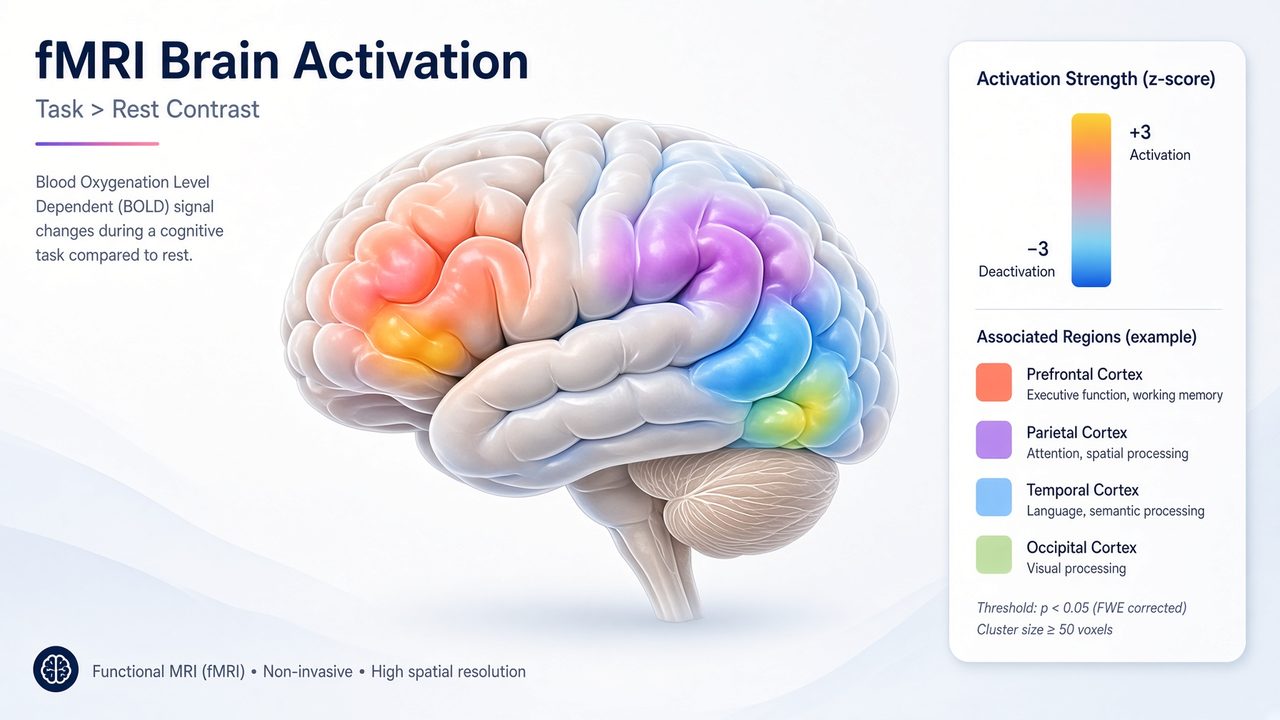
Quantitative EEG (qEEG) takes the raw electrical activity recorded from the scalp and analyzes it mathematically, often producing colorful brain maps. Sometimes called "brain mapping," it is widely used in research and in neurofeedback practice, but is also surrounded by hype. This guide explains what it can and cannot do.
How EEG becomes qEEG
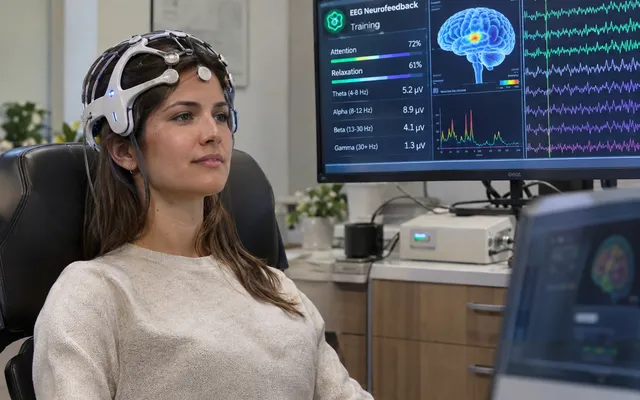
Standard EEG records voltage fluctuations using electrodes placed over the scalp, typically using the international 10-20 system with 19 or more sites. A neurologist reads the tracing visually, looking for seizures, slowing or other abnormalities. In qEEG, the signal is cleaned of artifacts such as eye blinks and muscle activity, then analyzed, usually with the Fast Fourier Transform, which breaks it into frequency bands:
- Delta (0.5 to 4 Hz)
- Theta (4 to 8 Hz)
- Alpha (8 to 12 Hz)
- Beta (13 to 30 Hz)
- Gamma (above 30 Hz)
Measures include absolute power (amount of activity in each band), relative power (proportion of total), coherence and phase (how synchronized two regions are), and asymmetry between hemispheres. Results can be compared with a normative database of healthy people matched for age, producing z-scores that show how far a person's values depart from the average. Some systems estimate sources inside the brain with methods such as LORETA, though spatial precision from scalp EEG is limited.
Established uses
- Epilepsy and sleep: quantitative tools assist seizure detection and sleep staging.
- Anesthesia monitoring: processed EEG indexes guide depth of sedation.
- Intensive care: continuous EEG trends help identify seizures and ischemia.
- Research: qEEG is a standard tool in cognitive neuroscience and clinical studies of dementia, ADHD and other conditions.
- Neurofeedback planning: many practitioners use qEEG to select training targets, although the benefit of this approach compared with simpler protocols is not firmly proven.
Research findings
Groups of people with certain conditions show average differences: more slow-wave activity in some forms of dementia, increased theta-to-beta ratio in some children with ADHD, and altered alpha patterns in depression. These are group trends. Individuals vary a lot, and values overlap heavily with healthy ranges, so the measures do not reliably diagnose individuals. The American Academy of Neurology and other professional bodies have not endorsed qEEG as a standalone diagnostic tool for conditions like ADHD, depression or autism. The FDA has cleared a theta-beta ratio device as an aid to diagnosing ADHD, but only as one piece of a broader assessment.
Limitations
- Artifacts from muscles, eye movement and electrical interference can distort results.
- Database limits: norms depend on the sample, equipment and recording conditions.
- Poor spatial resolution: the skull blurs signals.
- State dependence: results change with sleep, medication, caffeine, mood and eyes open or closed.
- Variable quality among providers, and differing analysis methods.
- Overinterpretation: a map showing "too much" or "too little" activity does not by itself indicate a disorder or explain symptoms.
Choosing a provider wisely
- Ask about the clinician's credentials, such as board certification in neurofeedback through BCIA or relevant medical or psychological licensure.
- Ask what the qEEG will be used for and what other assessments are involved.
- Be cautious about claims that a brain map can diagnose a condition, predict treatment response or reveal personality.
- Be wary of prepaid long packages and guarantees of cure.
- Share results with your physician or psychologist.
Takeaway
qEEG is a valuable measurement tool, best used as one source of information among many. It can reveal useful patterns, but a colorful map is not a diagnosis.
Further reading from authoritative sources
- National Institute of Neurological Disorders and Stroke (NINDS)
- National Center for Complementary and Integrative Health (NCCIH)
This article is educational and does not replace advice from a licensed clinician. See the medical disclaimer. Looking for specialist care? Browse the neurology clinic directory.