Neurofeedback and the Plastic Brain: How Training Changes Circuits
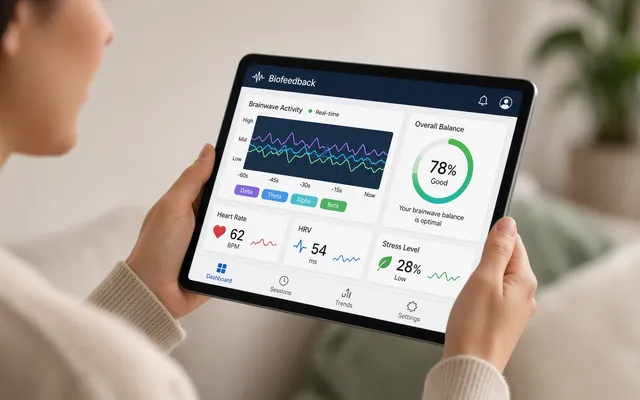
Neurofeedback is a form of biofeedback in which a person sees or hears a real-time display of their own brain activity, usually from EEG, and learns to change it. The idea rests on the brain's plasticity, its ability to modify circuits with experience. The approach has promising elements and real limits.
How a session works
1. Sensors are placed on the scalp, usually with a few electrodes and ear clips. 2. The signal is processed in real time to extract a chosen feature, such as the amount of beta or alpha activity, or the ratio of theta to beta. 3. Feedback is presented as a game, video or tone that responds when the feature moves toward the target. 4. Repetition across many sessions, often twenty to forty, allows learning to consolidate.
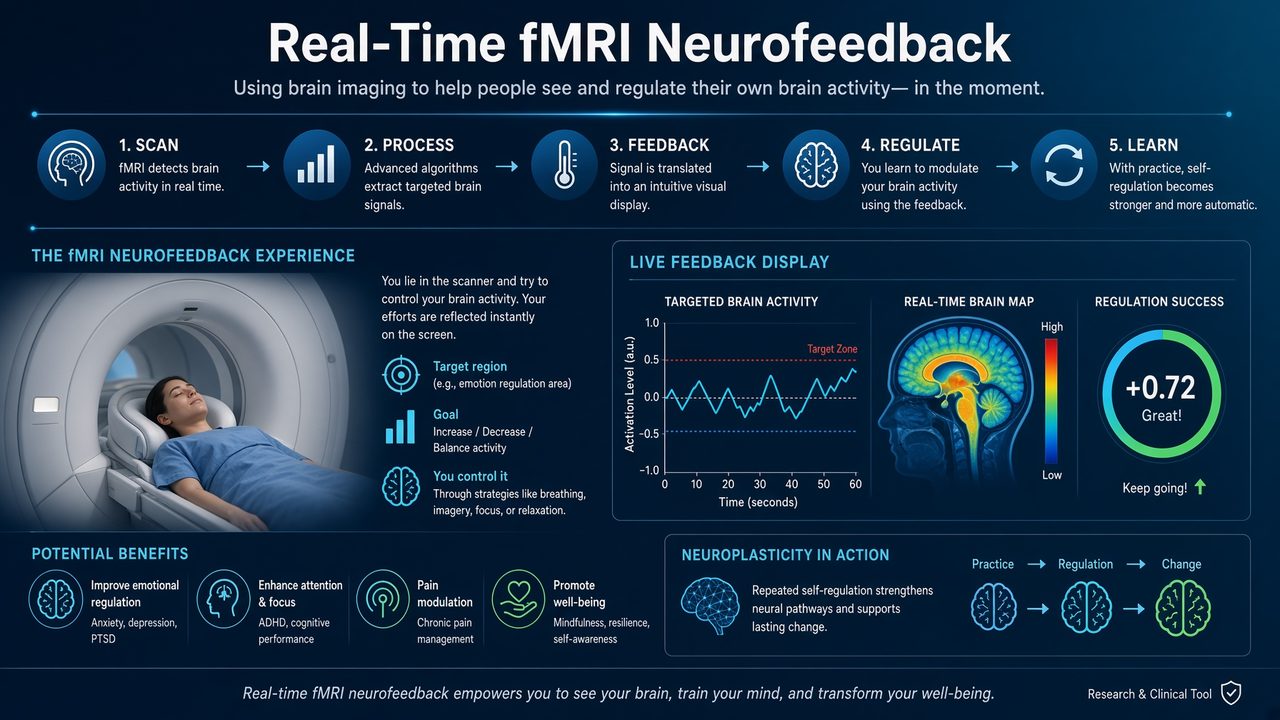
Participants often cannot describe how they succeed. They learn implicitly, similar to learning a motor skill. Some approaches use slow cortical potentials, infraslow protocols, or training of connectivity patterns. Real-time fMRI neurofeedback, available in research settings, targets deep or specific regions.
Why it might change circuits
Plasticity mechanisms include:
- Operant conditioning of neural firing in dopamine-linked reward circuits, strengthening patterns that produce reinforcement
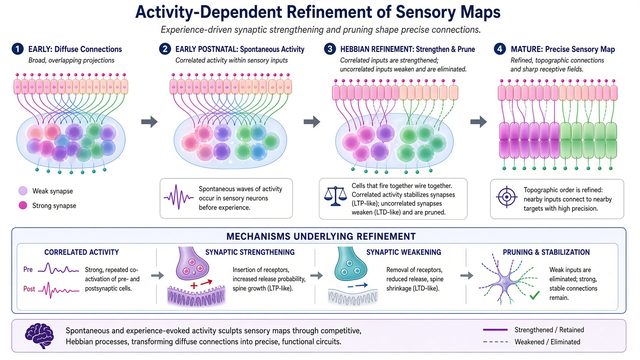
- Hebbian plasticity, where repeated synchronous firing strengthens synapses
- Thalamocortical regulation: training sensorimotor rhythm, around 12 to 15 Hz, is thought to influence thalamic inhibition and improve sleep spindles and attention
- Changes in network connectivity, seen in some imaging studies of people after training
- Self-efficacy and attention training, which are nonspecific but real effects
What the research shows
- ADHD: Several meta-analyses report benefits compared with no treatment or waitlist, particularly for inattention. Studies using blinded, sham-controlled designs, however, show smaller or inconsistent differences, and a large trial reported that effects were not clearly specific to neurofeedback. Guidelines such as those from the American Academy of Pediatrics rate it as a possibly effective option. Stimulant medication and behavioral therapy have stronger evidence.
- Epilepsy: training of sensorimotor rhythm or slow cortical potentials has reduced seizure frequency in some patients, though evidence quality is limited.
- Insomnia: some positive studies.
- Anxiety, depression and PTSD: encouraging but preliminary, with a notable alpha-theta training literature and recent work on amygdala-targeted fMRI neurofeedback.
- Migraine, tinnitus and chronic pain: small studies.
- Autism, traumatic brain injury and cognitive decline: early research.
- Performance training: claims for attention, music and sport performance are mostly based on small studies.
Placebo and specificity
A key question is how much of the benefit comes from the specific brain change, as opposed to expectations, therapist attention, structured practice or relaxation. Sham-controlled trials try to test this, but are difficult to design, since participants may notice noncontingent feedback. The honest conclusion is that neurofeedback appears to help some people, and that the mechanisms and optimal protocols are still being sorted out.
Safety
Neurofeedback is generally well tolerated. Reported side effects include fatigue, headache, anxiety or sleep changes, usually transient. People with epilepsy or on psychiatric medications should work with a qualified clinician and inform their prescriber.
Evaluating a provider
- Look for credentials and experience in the relevant condition.
- Ask what outcomes will be measured and how progress will be judged.
- Expect a clear plan with a defined number of sessions, and regular review.
- Beware of guaranteed cures, claims that it replaces medication and pressure for upfront payment.
- Consider combining it with evidence-based therapies.
Takeaway
Neurofeedback harnesses the brain's capacity to learn, and in some conditions shows real promise. Approach it as a promising but still-developing tool, not a miracle.
Further reading from authoritative sources
- National Institute of Neurological Disorders and Stroke (NINDS)
- National Center for Complementary and Integrative Health (NCCIH)
This article is educational and does not replace advice from a licensed clinician. See the medical disclaimer. Looking for specialist care? Browse the neurology clinic directory.