Neurofeedback Basics: Reading the Brain's Electrical Signals
Neurofeedback is a form of biofeedback that measures brain activity, usually with EEG, and shows it back to you in real time through a game, video or sound. The idea is that by receiving feedback, your brain can learn to shift toward patterns thought to be more helpful.
How a session works
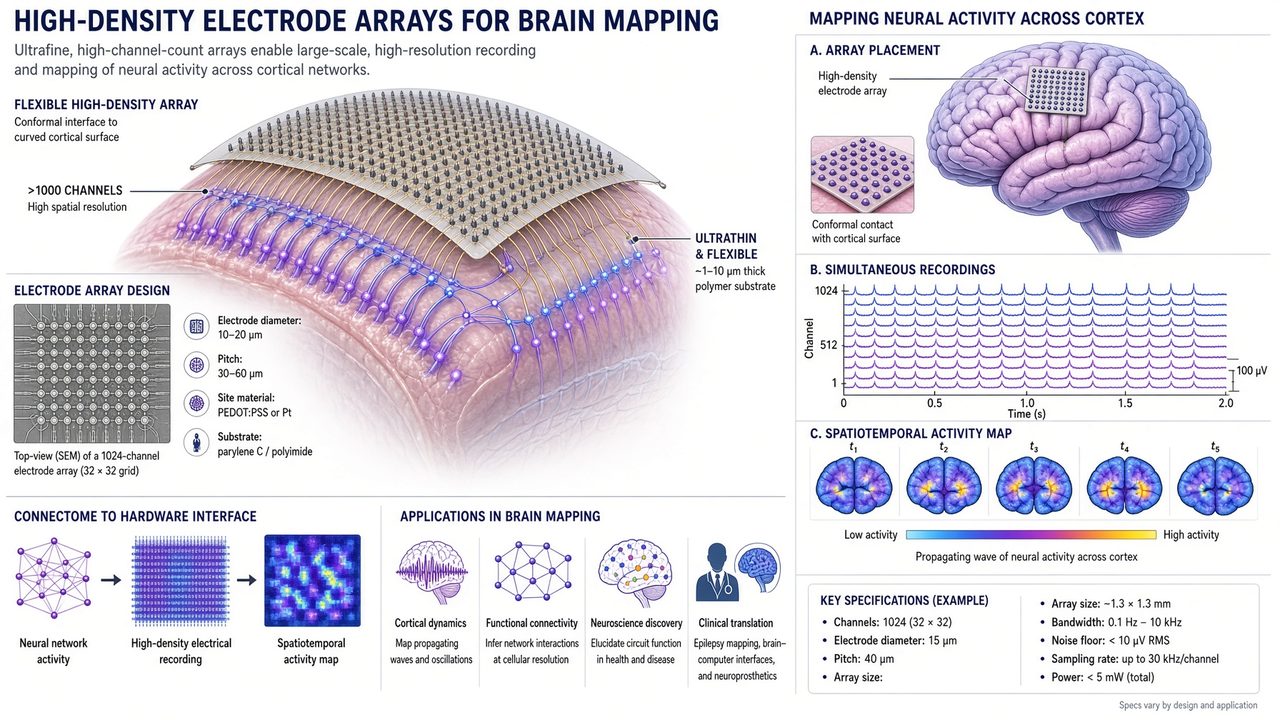
A typical session lasts 30 to 60 minutes. Sensors, usually small electrodes held on the scalp with paste or a cap, pick up the brain's electrical signals. Software analyzes certain frequencies or locations and turns them into feedback. For example, a video might play brightly only when your activity stays within a target range, and dim when it does not.
You are not shocked or stimulated; the system only listens. Most protocols involve a series of sessions, often twenty or more, once or twice a week, though plans vary.
The science behind it
Neurofeedback builds on operant conditioning, the principle that behaviors followed by rewards tend to be repeated. In the 1960s and 1970s researchers showed that animals and people could learn to alter specific EEG rhythms when given feedback. For example, research on a rhythm called the sensorimotor rhythm in cats found links to reduced seizure susceptibility, which inspired early clinical work.
Modern approaches include:
- Frequency-band training, such as encouraging or discouraging theta, alpha or beta activity
- Slow cortical potential training
- Quantitative EEG (qEEG)-guided protocols, which compare your EEG to a database to personalize training
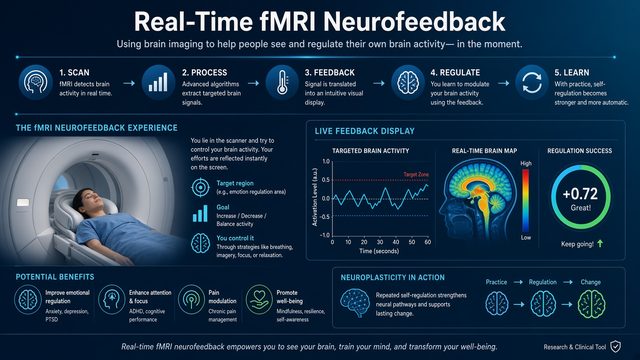
- Real-time fMRI neurofeedback, mostly used in research settings

What the evidence shows
Evidence differs considerably by condition.
- ADHD: This is the most studied use. Some trials and meta-analyses show benefits, particularly on parent-reported symptoms, while studies with better blinding and sham controls show smaller or inconsistent effects. Neurofeedback is generally considered a possible complementary option rather than a replacement for established treatments.
- Epilepsy: Research on certain protocols suggests it may reduce seizure frequency for some people, but it is an adjunct and not a substitute for anti-seizure medication.
- Anxiety, depression, insomnia and PTSD: Studies are promising but mixed, and many are small.
- Peak performance: Some research suggests benefits for musicians and athletes, but results are not conclusive.
Researchers also point out that part of any benefit may come from nonspecific factors, such as expectation, attention from a clinician, and learning to relax.
Safety and side effects
Neurofeedback is generally considered low risk. Some people report temporary fatigue, headaches, irritability or sleep changes after sessions. Because the field is not uniformly regulated, results depend heavily on the practitioner.
Choosing a provider
- Look for credentials, such as certification from the Biofeedback Certification International Alliance, and a license in a health profession.
- Ask what specific outcome is expected, how progress will be measured and how many sessions are planned.
- Be cautious about promises to cure serious conditions, requests for large upfront payments, or advice to stop prescribed medication.
- Tell your physician you are trying neurofeedback.
The bottom line
Neurofeedback is a promising but still evolving approach. It may suit people who want a drug-free, skills-based option and who understand that the evidence is mixed. Used alongside, not instead of, evidence-based care, and delivered by a qualified clinician, it can be a reasonable thing to explore.
Further reading from authoritative sources
- National Institute of Neurological Disorders and Stroke (NINDS)
- National Center for Complementary and Integrative Health (NCCIH)
This article is educational and does not replace advice from a licensed clinician. See the medical disclaimer. Looking for specialist care? Browse the neurology clinic directory.