Biofeedback for Social Anxiety: A Practical Approach
For people with social anxiety disorder, ordinary situations such as speaking up in a meeting, meeting new people or eating in public can trigger intense fear of being judged. The experience is physical as well as mental: a pounding heart, trembling hands, blushing, sweating and a dry mouth. Because the body's alarm is so noticeable, learning to regulate it can be a valuable part of treatment.
The body in social anxiety
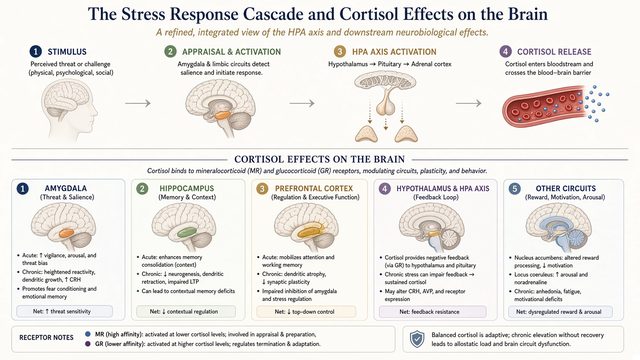
Social anxiety activates the sympathetic nervous system. Heart rate rises, breathing speeds up, muscles tense, and hands may sweat or shake. People become hypervigilant to these sensations and worry others will notice them, which increases anxiety in a self-reinforcing loop. Biofeedback targets this loop by making sensations visible and giving people ways to reduce them.
Types of biofeedback that may be used
- Heart rate variability and paced breathing. Slow breathing helps reduce arousal before and during stressful events.
- Skin conductance (electrodermal) feedback. Because sweaty palms are a frequent concern, seeing skin conductance fall during relaxation can be reassuring.
- Electromyography. Feedback from the jaw, neck and shoulders helps release tension.
- Skin temperature feedback to reinforce relaxation.
- Virtual reality scenes combined with physiological monitoring in research programs, allowing people to practice facing social situations while monitoring their body signals.
How sessions may be structured
1. Education. You learn how anxiety works and what your body signals mean. 2. Baseline. Sensors record your physiology at rest and while you think about or imagine a social situation. 3. Skills practice. You practice breathing and relaxation while seeing the feedback. 4. Stress simulation. You do tasks such as brief speaking exercises or role-play while monitoring your responses and applying skills. 5. Real-world practice. You gradually apply the skills in everyday situations with homework assignments.
What the evidence suggests
Studies of biofeedback for anxiety generally find benefits, but studies focusing specifically on social anxiety are limited. Established first-line treatments include cognitive behavioral therapy, particularly with exposure to feared situations, and medications such as SSRIs. Some research suggests that relaxation alone can sometimes reduce anxiety but may not address avoidance. Biofeedback is therefore best viewed as a supportive technique that can complement therapy.
A caution about "safety behaviors"
If you rely on relaxation or a device to get through social situations and avoid facing fears without it, it can maintain anxiety over the long term. Good clinicians help patients use skills as a way to approach, not avoid, social situations, and gradually reduce dependence on them.
Practical tips
- Practice breathing daily so it becomes automatic.
- Use a brief reset before a meeting or conversation: slow your exhale and relax your shoulders and jaw.
- Expect some arousal. Anxiety is a normal body response, and it can be tolerated.
- Do not wait until you feel calm to join conversations or social events.
- Notice and challenge thoughts, such as "everyone can see I am shaking."
- Celebrate small steps.
Finding support
Look for a licensed therapist with experience in social anxiety, and ask whether they offer biofeedback or can coordinate with a certified biofeedback practitioner. Group programs can be especially helpful, because they provide a built-in opportunity to practice.
When to seek help
If social fear limits school, work, relationships or daily activities, or leads to depression or substance use, professional help is worthwhile. Social anxiety is common and treatable. If you are in crisis, call or text 988 in the United States.
Further reading from authoritative sources
- National Institute of Mental Health (NIMH)
- National Institute of Neurological Disorders and Stroke (NINDS)
- National Center for Complementary and Integrative Health (NCCIH)
This article is educational and does not replace advice from a licensed clinician. See the medical disclaimer. Looking for specialist care? Browse the neurology clinic directory.