The Limbic System: Emotion, Memory, and Survival
The term limbic system refers to a set of interconnected brain structures involved in emotion, motivation, learning and memory. It sits around the brainstem like a ring, which is the origin of the word "limbus," Latin for border or edge. The idea has been influential, but also criticized.
History
Paul Broca described a "limbic lobe" in the 1870s. In 1937, James Papez proposed a circuit of emotion, and in the 1950s, Paul MacLean expanded the idea into the limbic system and popularized the "triune brain" model, which has since been largely rejected as an oversimplified view of evolution.
Core structures
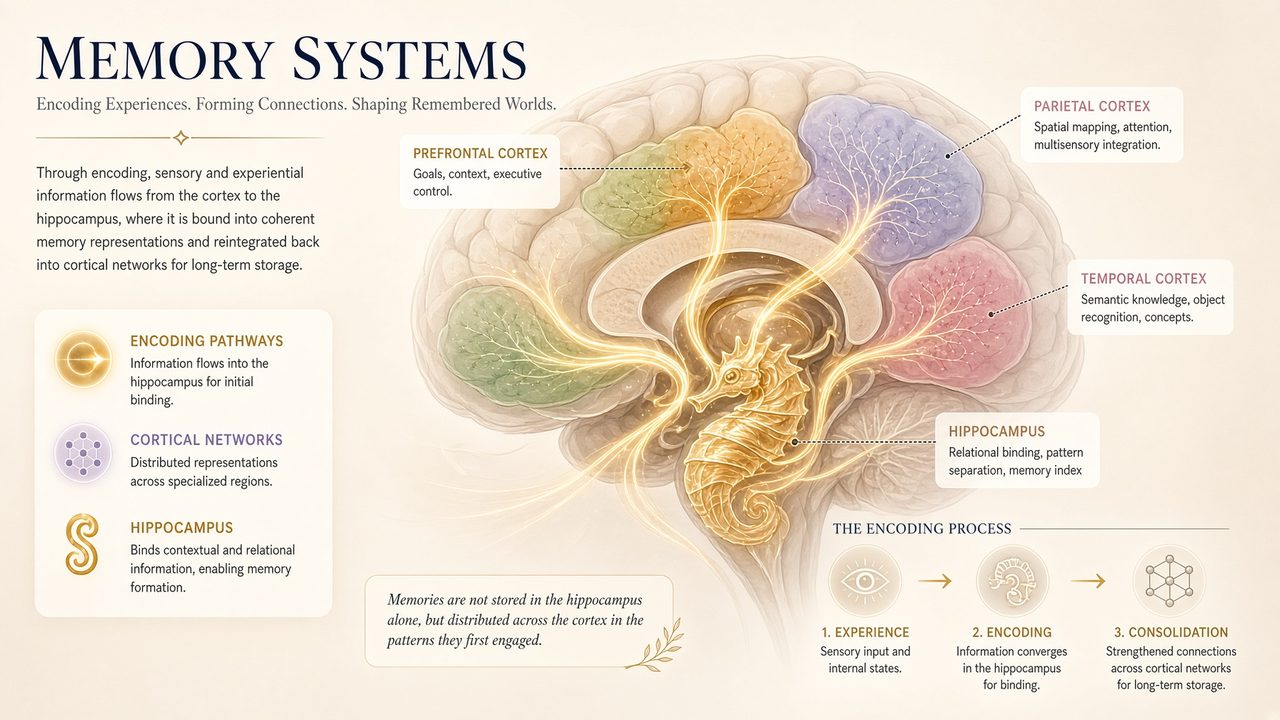
Amygdala
Detects threats, assigns emotional significance and shapes emotional memory and fear learning.
Hippocampus
Forms new explicit memories and supports spatial navigation and context.
Hypothalamus
Controls the body's responses: hormones, temperature, hunger, thirst, sexual behavior and stress responses.
Thalamus (anterior nuclei)
Relays information within memory circuits.
Cingulate gyrus
Links emotion with attention, pain and cognitive control.
Fornix and mammillary bodies
Fiber tracts and nuclei in the memory circuit of Papez.
Others often included
The septal nuclei, nucleus accumbens, orbitofrontal cortex, insula and olfactory structures, reflecting the close ties between smell, emotion and memory. Smell is the only sense that reaches the limbic system without first passing through the thalamus, which helps explain why scents can evoke vivid memories.

Functions
- Emotion: generating and regulating feelings, particularly fear, anger and pleasure
- Memory: linking emotion with experience
- Motivation and reward: drives such as hunger and seeking pleasure
- Survival behaviors: fight, flight and bonding
- Autonomic and hormonal responses through the hypothalamus
Criticisms and updates
Joseph LeDoux and others argue that the concept is vague. There is no agreed definition of which structures belong, and many "limbic" regions have non-emotional functions, such as the hippocampus's role in memory. Emotions engage many regions beyond the limbic system, including the prefrontal cortex and brainstem. Modern research favors network models of emotion. Nonetheless, "limbic" remains useful shorthand in clinical and teaching contexts.
Limbic system and the cortex
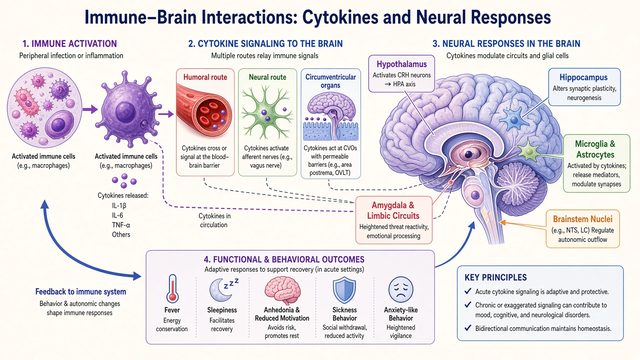
The prefrontal cortex regulates limbic activity, and the balance between them influences emotional control. Chronic stress strengthens amygdala reactivity while weakening hippocampal and prefrontal function.
Disorders
- Anxiety disorders and PTSD: hyperreactive amygdala, impaired prefrontal regulation
- Depression: altered activity and structure in the hippocampus, amygdala and cingulate
- Alzheimer's disease: early damage to the hippocampus and entorhinal cortex
- Temporal lobe epilepsy: seizures often originate in the hippocampus and amygdala
- Addiction: involves the nucleus accumbens and reward circuitry
- Kluver-Bucy syndrome: after bilateral temporal lobe damage, with docility, hyperorality and loss of fear
Keeping the system healthy
Exercise, sleep, stress management, social support and avoiding substance misuse promote healthy limbic function. Therapies such as CBT, mindfulness and exposure treatments change patterns of limbic and prefrontal activity.
Takeaway
The limbic system concept captures how emotion, memory and survival are intertwined. While its boundaries are debated, it remains a valuable starting point for understanding how feelings shape our lives.
Further reading from authoritative sources
This article is educational and does not replace advice from a licensed clinician. See the medical disclaimer. Looking for specialist care? Browse the neurology clinic directory.