The Technology Behind Home Biofeedback
Biofeedback has moved from clinic to living room. Wearables, apps and handheld devices now offer real-time information about heart rhythm, breathing, skin conductance and even brain waves. Understanding the technology helps you separate useful tools from gimmicks.
Common sensors
Photoplethysmography (PPG)
A light shines on the skin, and a sensor detects changes in reflected light as blood volume pulses with each heartbeat. PPG is used in finger clips, earlobe sensors, smartwatches and rings to estimate heart rate and heart rate variability. It works well at rest but is sensitive to motion, skin tone, temperature and fit.
Electrocardiography (ECG)
Electrodes detect the heart's electrical signal. Chest straps provide accurate beat-to-beat intervals and are considered the best consumer option for HRV. Some watches offer single-lead ECG.
Respiration sensors
Stretchable chest or abdominal belts measure breathing movement. Some devices infer breathing from PPG or motion. They help train slow, diaphragmatic breathing.
Electrodermal activity (EDA)
Two small electrodes on the fingers or palm measure tiny changes in skin conductance that reflect sweat gland activity and arousal. Rapid changes show stress responses.
Skin temperature
Thermistors on a finger measure temperature, which falls with sympathetic arousal and rises with relaxation, used in training for migraine and Raynaud's.
Electromyography (EMG)
Sensors detect muscle electrical activity, used to train relaxation of tense muscles. Home EMG devices are less common.
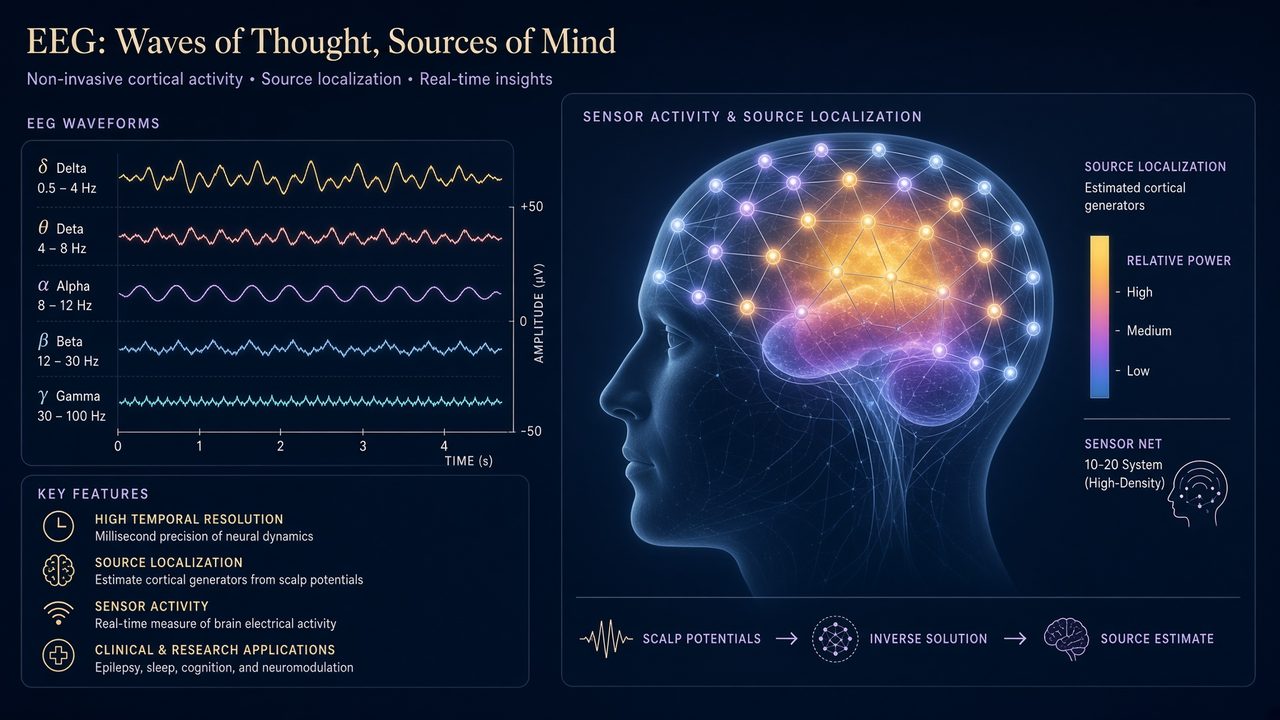
EEG headbands
Consumer EEG headsets use a few dry electrodes on the forehead and behind the ears. They can detect broad changes such as relaxation but have limited accuracy compared with clinical systems, and they are susceptible to movement and muscle artifact.
Apps and feedback
Software translates signals into visuals, sounds or haptic cues, such as a calming animation that grows as heart rhythm becomes smoother. Many pace breathing to guide you to resonance frequency.
Accuracy and validation
- Look for devices validated in independent studies for the metric you want.
- Chest-strap ECG is generally more accurate for HRV than wrist PPG.
- Scores like "stress," "readiness" or "focus" are proprietary algorithms, not direct measurements, and may not be validated.
- Skin tone, tattoos, motion and poor fit can degrade readings.
How to choose
1. Define your goal, such as breathing practice, sleep tracking or tension awareness. 2. Pick the matching sensor. 3. Check evidence and reviews, and the company's data policy. 4. Consider usability. Choose something you will use consistently. 5. Check costs, including subscriptions.
Using devices well
- Practice in a quiet setting first, then in daily life.
- Focus on how you feel, not just numbers.
- Use devices as training wheels and aim to learn to regulate without them.
- Avoid obsessive checking, which may increase anxiety.
- Share data with your clinician if you are working with one.
Privacy
Physiological data are sensitive. Consumer apps may share data with third parties. Read privacy policies, limit permissions and know how to delete data.
Safety and medical cautions
Home devices are not medical devices unless cleared as such. They cannot diagnose conditions such as atrial fibrillation reliably, though some watches have regulatory clearance for irregular rhythm notifications. If you experience chest pain, fainting or persistent symptoms, see a doctor, not an app.
Bottom line
Home biofeedback technology can be an engaging way to practice relaxation and self-awareness. Choose validated tools, keep expectations realistic and seek professional help for medical or mental health conditions.
Further reading from authoritative sources
- National Institute of Neurological Disorders and Stroke (NINDS)
- National Center for Complementary and Integrative Health (NCCIH)
This article is educational and does not replace advice from a licensed clinician. See the medical disclaimer. Looking for specialist care? Browse the neurology clinic directory.