Chemogenetics: The Next Generation of Brain Control

Optogenetics controls neurons with light. Chemogenetics does it with drugs. By engineering receptors that respond only to a designer molecule, scientists can turn selected cells up or down in living animals without implanted fibers.
How DREADDs work
DREADD stands for Designer Receptors Exclusively Activated by Designer Drugs. Bryan Roth and colleagues at the University of North Carolina developed them from human muscarinic receptors, modifying the receptor so that it no longer responds to the natural neurotransmitter acetylcholine but responds to an otherwise inert drug, originally clozapine-N-oxide, or CNO. Versions based on G protein pathways can excite neurons (Gq), inhibit them (Gi) or influence other signaling (Gs). A virus delivers the receptor gene to chosen cells, and then the animal receives the activating drug.
Other chemogenetic systems
- PSAM/PSEM systems: engineered ion channels activated by synthetic ligands.
- Pharmacologically selective actuators and newer designer systems with improved selectivity.
- Chemogenetic systems for controlling cell signaling and gene expression.

Chemogenetics versus optogenetics
- Speed: optogenetics acts within milliseconds. Chemogenetics acts over minutes to hours, which is useful for studying prolonged states such as mood or appetite.
- Invasiveness: chemogenetics requires no implanted light source, and the drug can reach many regions.
- Control: light can be switched on and off precisely, while drug effects fade with metabolism.
- Combination: many labs use both.
What it has revealed
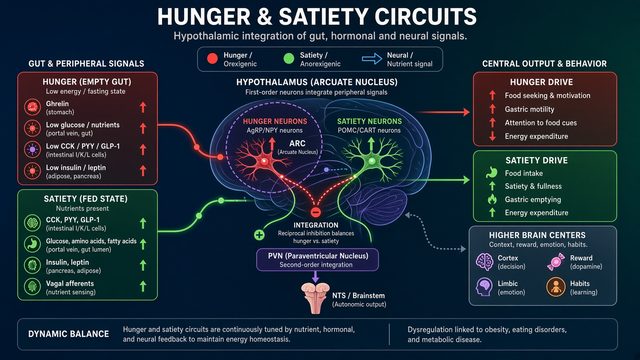
Chemogenetics has helped identify circuits for feeding, sleep, fear, memory, social behavior, pain and addiction. For example, activating or silencing specific neurons in the hypothalamus influences appetite, and inhibiting overactive circuits can reduce seizures in animal models. In primate studies, chemogenetics has altered decision-making and attention without causing cell damage.
Toward therapy
Because it avoids implants, chemogenetics is attractive for treating disorders involving overactive neurons, such as epilepsy, chronic pain and Parkinson's disease. Preclinical studies show seizure reduction after chemogenetic silencing of epileptic circuits. A positron emission tomography study of chemogenetic receptors in monkeys, and development of clinically suitable drugs such as deschloroclozapine and compound 21, are steps toward human use. A major issue is that CNO can convert to clozapine in the body, which has its own effects, so researchers use better ligands and proper controls.
Challenges
- Gene delivery in humans and safety of viral vectors
- Immune reactions to engineered proteins
- Control of dose and timing
- Regulatory pathway and long-term effects
- Ethics of altering brain circuits
Why scientists use both tools
Many questions need both speed and duration. A researcher might use light to test how a circuit triggers an immediate action, and a designer drug to test whether sustained activity changes mood or eating over hours. Together, the tools show how brain circuits operate on different time scales.
Limits to remember
Most evidence comes from rodents and a few primates, and human brain circuits are more complex, so findings need careful translation.
Takeaway
Chemogenetics adds a flexible, minimally invasive way to control brain circuits, with potential as a therapy that could one day be switched on by a pill.
Further reading from authoritative sources
- National Institute of Neurological Disorders and Stroke (NINDS)
- National Center for Complementary and Integrative Health (NCCIH)
This article is educational and does not replace advice from a licensed clinician. See the medical disclaimer. Looking for specialist care? Browse the neurology clinic directory.