The Circadian Rhythm: Your Body's Internal Clock
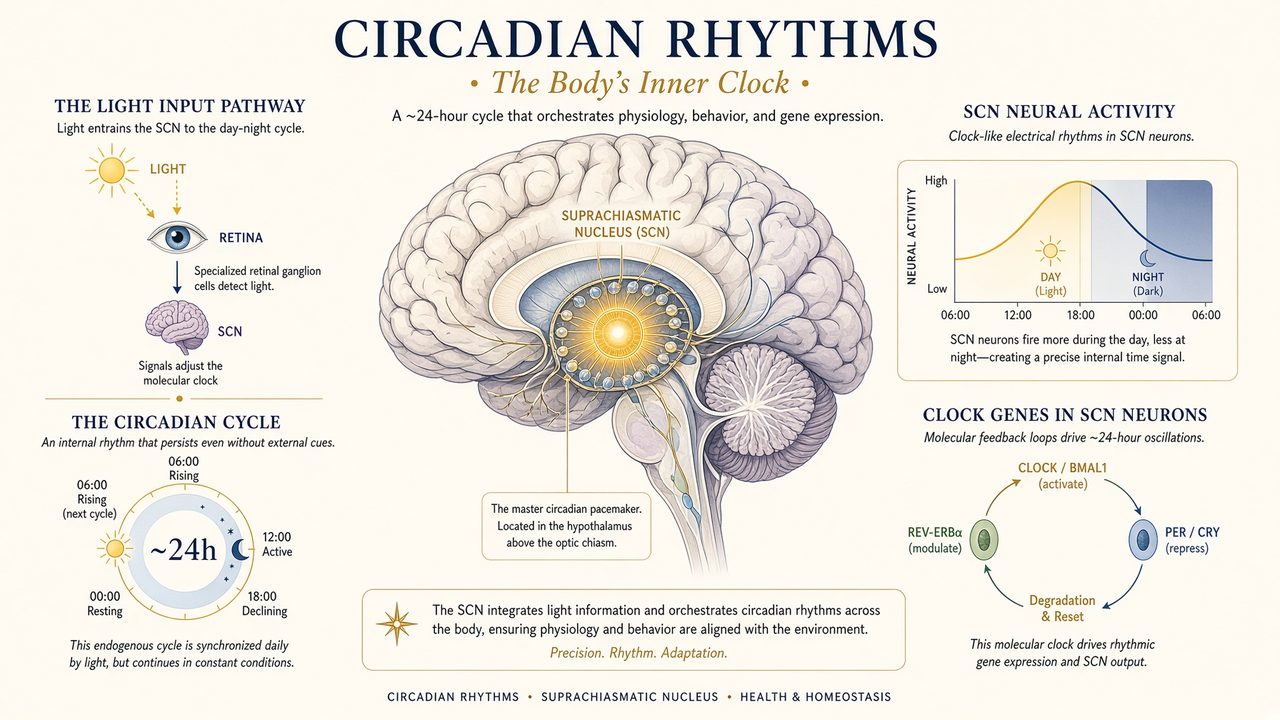
Nearly every living thing has an internal clock that tracks the day. In humans, this circadian rhythm regulates when we feel sleepy or alert, when hormones are released, and even when body temperature and digestion peak. The word comes from the Latin for "about a day."
The master clock
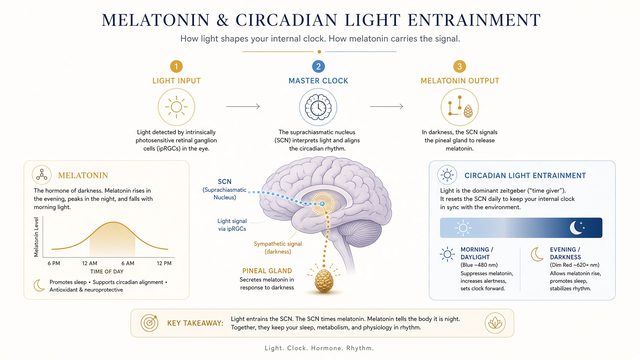
The main circadian pacemaker is a tiny cluster of about twenty thousand neurons in the hypothalamus called the suprachiasmatic nucleus. It sits just above the point where the optic nerves cross, so it receives information about light directly from the eyes. Specialized light-sensing cells in the retina, which contain the pigment melanopsin, are especially sensitive to blue-ish daylight and signal the clock regardless of what you consciously see.
Almost every cell in the body also has its own clock, driven by feedback loops among genes with names such as Period and Cryptochrome. The master clock coordinates these peripheral clocks. The discovery of the molecular machinery behind circadian rhythms earned the 2017 Nobel Prize in Physiology or Medicine.
How long is a day for the brain?
In carefully controlled studies where volunteers lived without clocks or daylight, the average human circadian period was found to be slightly longer than 24 hours, around 24.2 hours. Daily light exposure, particularly in the morning, nudges the clock earlier and keeps it aligned.
What the clock controls
- Sleep-wake timing, through the hormone melatonin, which rises in the evening in dim light
- Body temperature, which falls at night and rises during the day
- Cortisol, which peaks shortly after waking
- Alertness and performance, with a natural dip in mid-afternoon
- Metabolism and digestion
- Blood pressure and heart rate
Chronotypes
People differ in their preferred timing. "Larks" feel best early in the day, while "owls" are most alert later. Chronotype is partly genetic and shifts with age: teenagers tend toward later timing, and older adults toward earlier. When social obligations such as early school or work hours conflict with your biological timing, you may build up "social jet lag."
What throws the clock off
- Evening light, especially bright light, delays the clock and suppresses melatonin
- Irregular sleep schedules, including large weekend shifts
- Shift work and rotating schedules
- Travel across time zones
- Late meals, which may shift peripheral clocks
- Lack of daytime light, which weakens the clock signal
Chronic circadian misalignment has been linked in epidemiologic studies to higher risks of metabolic disease, cardiovascular disease, mood disorders and some cancers, though cause and effect are still being worked out.
Keeping your clock in sync
1. Get bright light in the morning, ideally outdoors within an hour of waking. 2. Keep consistent sleep and wake times, including on weekends, within about an hour. 3. Dim lights in the evening and reduce screen brightness as bedtime approaches. 4. Time meals regularly, avoiding large late-night meals. 5. Exercise earlier in the day if evening workouts disturb your sleep. 6. Use caffeine sensibly, avoiding it in the afternoon and evening.
Circadian rhythm sleep-wake disorders
Some people have clocks that are out of line with their desired schedule. Delayed sleep-wake phase disorder, common in adolescents and young adults, involves sleeping and waking very late. Advanced phase disorder is the opposite. Non-24-hour disorder occurs in some blind people whose clocks cannot be reset by light. These are diagnosed by sleep specialists and treated with timed light exposure, melatonin used at the right time, and behavioral strategies.
The bottom line
Your internal clock influences much more than when you feel tired. Protecting its rhythm through regular timing, daylight and dark evenings is one of the simplest ways to support sleep and overall health.
Further reading from authoritative sources
- National Institute of Neurological Disorders and Stroke (NINDS)
- National Center for Complementary and Integrative Health (NCCIH)
This article is educational and does not replace advice from a licensed clinician. See the medical disclaimer. Looking for specialist care? Browse the neurology clinic directory.