The Glymphatic System: How Sleep Cleans the Brain
Every organ produces metabolic waste, but the brain lacks the ordinary lymphatic vessels that most tissues use to clear it. In 2012 researchers led by Maiken Nedergaard described a pathway in mice that appears to serve this function, which they named the glymphatic system because it depends on glial cells and works in a lymph-like way.
How it is thought to work
Cerebrospinal fluid, the clear fluid that surrounds the brain and spinal cord, flows into the brain along spaces that surround arteries. It mixes with interstitial fluid between brain cells, picks up waste products, and exits along spaces around veins toward the lymphatic vessels in the neck. Water channels called aquaporin-4, concentrated on the end-feet of astrocytes, are thought to help fluid move through the tissue.
Sleep and the glymphatic system
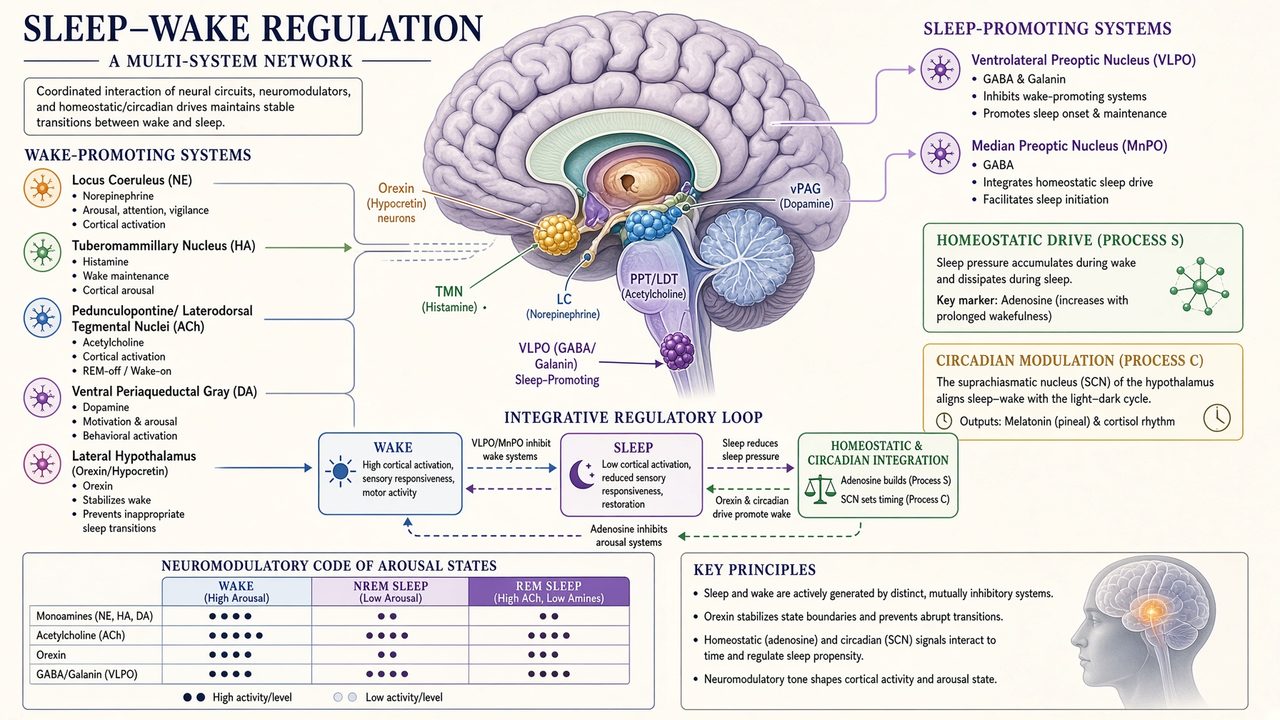
In experiments in mice, glymphatic flow was much greater during sleep and anesthesia than during wakefulness. The space between brain cells appeared to expand during sleep, which may allow fluid to flow more freely. Slow waves and the surges of norepinephrine-regulated activity during non-REM sleep seem to be involved in driving fluid through the brain.
Waste cleared in this way includes proteins such as beta-amyloid and tau, which accumulate in Alzheimer's disease. Studies in animals and in people show that a single night of sleep deprivation increases amyloid levels in the brain and spinal fluid. These observations led to interest in sleep as a factor in dementia risk.

What is still uncertain
The glymphatic concept is influential but not without debate:
- Much of the evidence comes from rodents, and results in humans rely on indirect imaging and fluid measurements.
- Researchers disagree on the exact mechanisms, such as how important aquaporin-4 is and what drives the flow.
- Some studies have questioned whether flow is higher during sleep in all conditions or how anesthesia affects it.
- It is not yet known how much changes in glymphatic function contribute to Alzheimer's disease or other disorders in people.
For these reasons, claims that a particular sleeping posture or product will "clean your brain" go beyond what the data support. Some animal studies suggest side-sleeping may favor clearance, but human evidence is limited.
Why it matters for health
Research linking chronic short or fragmented sleep with a higher risk of cognitive decline and dementia, along with the glymphatic findings, provides one plausible biological explanation. Other explanations also exist, including inflammation, vascular health and disruption of memory consolidation.
Conditions that may affect clearance include:
- Sleep apnea and other sleep disorders
- Aging, which is associated with reduced glymphatic flow in animal studies
- Traumatic brain injury
- Vascular disease and high blood pressure
What you can do
You cannot directly control glymphatic flow, but supporting good sleep is a sound strategy regardless:
- Aim for seven to nine hours for most adults
- Keep a regular schedule
- Treat sleep apnea and insomnia
- Limit alcohol, which affects sleep quality
- Stay physically active and manage blood pressure
The future
Researchers are developing imaging methods to measure fluid movement in people, which may allow better tests of the glymphatic theory and perhaps treatments that target it. For now, the main message is straightforward: sleep is an active period of brain maintenance, and protecting it is good for the brain.
Further reading from authoritative sources
- National Institute of Neurological Disorders and Stroke (NINDS)
- National Center for Complementary and Integrative Health (NCCIH)
This article is educational and does not replace advice from a licensed clinician. See the medical disclaimer. Looking for specialist care? Browse the neurology clinic directory.