Biofeedback in the Workplace: Managing Stress and Culture
Workplace stress costs organizations and employees dearly. Some employers now offer biofeedback and wearable-based programs to help staff manage stress. These can help, if used carefully.
What programs look like
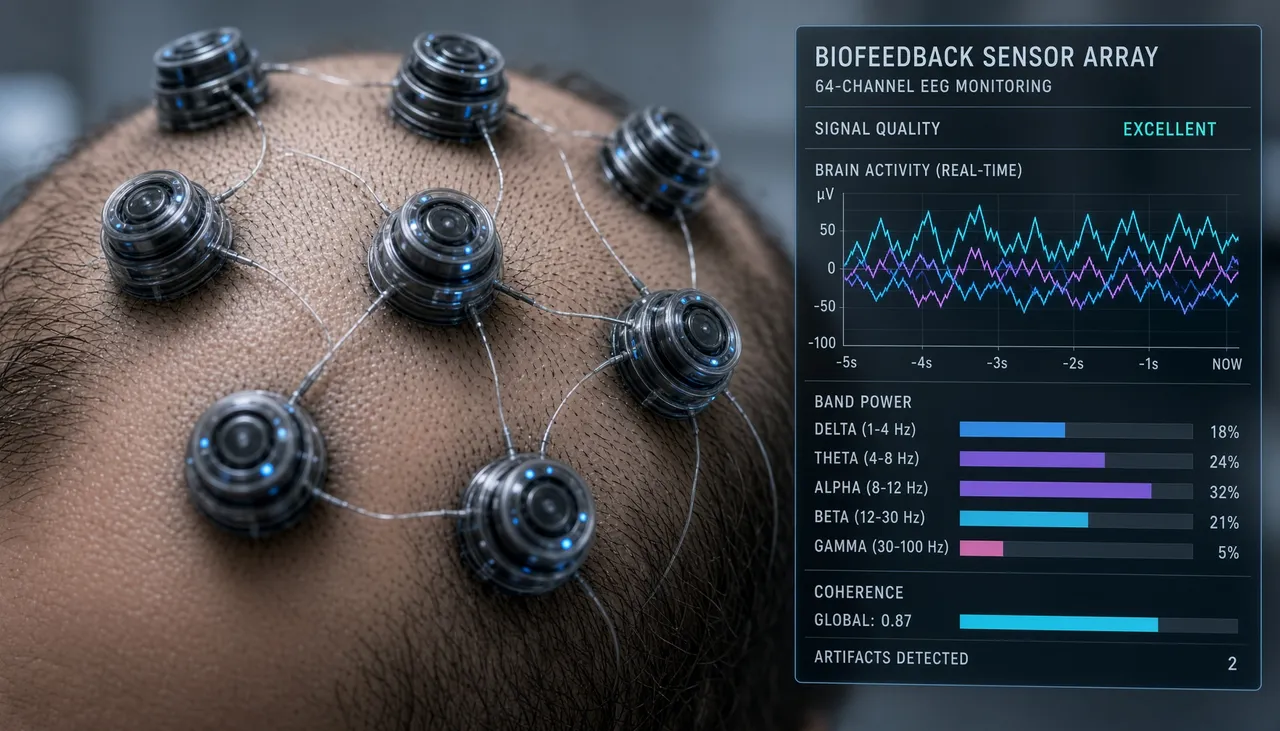
- Training sessions in heart rate variability breathing with sensors, led by trained facilitators
- Wellness rooms with biofeedback equipment
- App-based programs and wearables that track heart rate, sleep and stress
- Coaching and group workshops
- Programs for high-stress roles, such as healthcare, law enforcement and emergency services
What research shows
Studies of workplace resilience programs, including HeartMath interventions, have found improvements in stress, mood, sleep and blood pressure in employees, as in a study by Rollin McCraty and colleagues of corporate employees. A meta-analysis of heart rate variability biofeedback found moderate reductions in stress and anxiety. Evidence for wearables is mixed, and benefits usually come from the training and behavior change, not just the measurement. Studies often have small samples and lack long-term follow-up. Individual-focused programs tend to produce smaller effects than organizational changes to workload and job control, as reviews of stress management interventions suggest.
Benefits
- Self-awareness: employees see how stress affects their body
- Practical skills: quick breathing and relaxation for use at work
- Recovery: better sleep and energy
- Engagement: employees may value the investment
- Support for demanding roles: short resets between tasks
Risks and ethics
- Privacy: physiological data are sensitive. Employers should not have access to individual data, and programs should use confidential, aggregated reporting.
- Voluntary participation: no pressure, rewards or penalties tied to stress readings
- Surveillance: monitoring employees' bodies can erode trust, and some data could be used for discrimination.
- Blaming individuals: teaching breathing does not fix excessive workloads or toxic management.
- Accuracy: consumer wearables are imperfect, and stress scores should not be used to evaluate workers.
- Equity: programs should be accessible to everyone.
Building a healthy program
- Address root causes by managing workloads, staffing, scheduling and culture
- Involve employees in design
- Choose evidence-based tools and trained providers
- Protect data with clear policies and independent third parties
- Offer a menu of options, including counseling, exercise and mindfulness
- Measure outcomes with anonymous surveys and absence data
- Support leaders in modeling healthy behavior
For employees
Try slow breathing for a few minutes between meetings, take real breaks, and check privacy terms before using workplace wellness apps.
Special occupations
First responders, nurses, teachers and military personnel face repeated high-stress events. Brief resilience training with biofeedback has been tested in these groups, with small gains in stress management. Peer support, rest and access to mental health care remain essential.
Remote and hybrid work
Apps can offer guided breathing for people working at home, and virtual group sessions provide shared practice. As with in-person programs, privacy and voluntary participation come first.
Measuring success
Useful measures include employee-reported stress, sleep, sick days and satisfaction, collected anonymously and analyzed in aggregate.
Takeaway
Biofeedback can be a useful workplace tool, if it is voluntary, private and paired with real efforts to reduce stress at its source.
Further reading from authoritative sources
- National Institute of Mental Health (NIMH)
- National Institute of Neurological Disorders and Stroke (NINDS)
- National Center for Complementary and Integrative Health (NCCIH)
This article is educational and does not replace advice from a licensed clinician. See the medical disclaimer. Looking for specialist care? Browse the neurology clinic directory.