How Urban Living Affects the Brain
More than half of the world's population lives in cities, and the proportion is rising. Urban life offers opportunities, culture and services, and it also brings challenges for mental health.
Mental health findings
Epidemiological studies show higher rates of schizophrenia, anxiety and mood disorders among urban residents compared with rural. A 2010 meta-analysis by Jenny Peen and colleagues found higher prevalence of anxiety and mood disorders in urban areas. Studies of schizophrenia show that people raised in cities have around twice the risk of those raised in the countryside, with risk related to the amount of time spent in an urban environment during childhood. Causes are not fully understood. Contributors may include social stress, social isolation, pollution, noise, migration, crime and inequality.
Brain imaging evidence
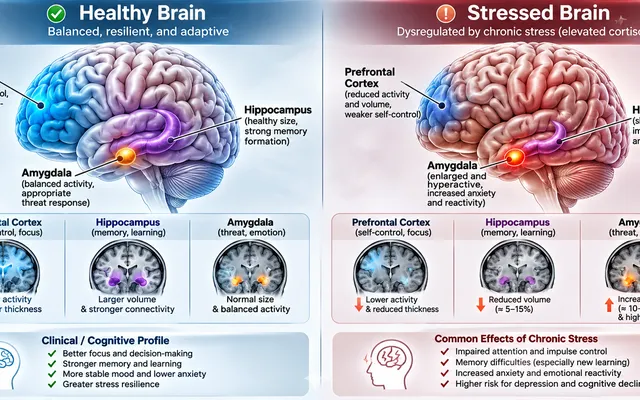
Andreas Meyer-Lindenberg and colleagues scanned participants performing a stress task, and found that city living was associated with increased amygdala activation, while upbringing in a city was associated with differences in the perigenual anterior cingulate cortex, a region involved in regulating stress. These findings suggest that urban social stress may affect threat processing. The study had limitations, and the findings do not mean that city living damages the brain.

Benefits of cities
Cities concentrate healthcare, education, jobs, culture and social opportunities, which can support wellbeing and cognitive stimulation. Social networks may be easier to build, and many people thrive in urban settings. Walkable cities encourage physical activity, which supports the brain.
Stressors
- Crowding and noise
- Air pollution
- Housing costs and instability
- Fewer green spaces, especially in lower-income neighborhoods
- Social isolation and anonymity
- Heat island effects that amplify heat waves
- Violence and discrimination
- Light at night
Designing for brain health
- Parks and urban trees, shown in studies by Mathew White and others to be linked to better mental health
- Quiet and low-traffic zones
- Safe sidewalks and bike lanes
- Affordable, stable housing
- Social spaces: libraries, community gardens, plazas
- Natural light and quality indoor environments
- Accessible mental health services
- Inclusive planning that involves residents
Personal strategies
- Seek out green space regularly, even small parks
- Walk or cycle where possible
- Build local community ties, such as neighbors and groups
- Protect sleep with blackout curtains and earplugs
- Take breaks from stimulation and digital overload
- Escape to nature periodically
Urban upbringing and later life
Because early life seems especially sensitive, programs for children in cities, such as safe play spaces, quality childcare and green schoolyards, may have long-lasting benefits.
Not all cities are alike
Research from different countries shows that the link between urban living and mental illness depends on inequality, social cohesion and policy. Cities that invest in public space, transport and community services tend to have healthier residents.
Moving to or from a city
A change of setting can be stressful, but building routines, joining local groups and exploring nearby parks help the brain adjust to a new place.
Takeaway
Cities can be good or bad for the brain depending on how they are built and who has access to their benefits. Design and community can tip the balance.
Further reading from authoritative sources
- National Institute of Mental Health (NIMH)
- National Institute of Neurological Disorders and Stroke (NINDS)
This article is educational and does not replace advice from a licensed clinician. See the medical disclaimer. Looking for specialist care? Browse the neurology clinic directory.