ALS and the Nervous System
Amyotrophic lateral sclerosis, often called ALS or Lou Gehrig's disease, is a progressive condition that destroys the nerve cells controlling voluntary muscles. It affects movement, speech, swallowing and breathing, while many people retain their senses and, often, their thinking.
How the nervous system is affected
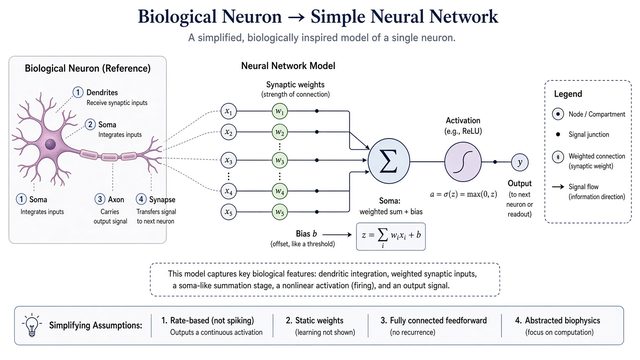
Voluntary movement depends on upper motor neurons in the motor cortex that send signals down the spinal cord, and on lower motor neurons that connect to muscles. In ALS, both types degenerate. Muscles weaken, twitch (fasciculations), stiffen and waste away because they no longer receive signals. Glial cells such as astrocytes and microglia, together with protein misfolding, mitochondrial problems and excitotoxicity from excess glutamate, contribute. The protein TDP-43 forms abnormal clumps in about 97 percent of cases.
Symptoms
- Muscle weakness in a hand, foot or the limbs, often starting on one side
- Cramps, twitching and stiffness
- Slurred speech and difficulty swallowing (bulbar onset)
- Fatigue and weight loss
- Later, breathing difficulty from weak respiratory muscles
About 15 percent of people develop frontotemporal dementia, and up to half have milder changes in behavior or thinking. Bladder and eye movement functions are usually spared until late.

Causes and risk
Most cases are sporadic, with no family history. About 10 percent are familial, and genes such as C9orf72, SOD1, TARDBP and FUS have been identified. C9orf72 expansions also cause frontotemporal dementia. Age, sex, military service and some environmental exposures are studied as risk factors, and evidence for causes such as sports concussion and pesticides is limited and debated. Most people are diagnosed between ages 55 and 75.
Diagnosis
There is no single test. A neurologist combines examination, electromyography and nerve conduction studies, MRI to rule out other causes, and blood tests. Diagnosis often takes months. Because early evaluation matters, getting referred to a specialist ALS clinic is valuable.
Treatments
- Riluzole: modestly extends survival by a few months.
- Edaravone (Radicava): may slow functional decline in selected patients.
- Sodium phenylbutyrate and taurursodiol (Relyvrio): approved in 2022, but withdrawn in 2024 after a confirmatory trial failed to show benefit.
- Tofersen (Qalsody): an antisense therapy for people with SOD1 mutations, approved in 2023.
- Supportive care: noninvasive ventilation, feeding tube support, physical and speech therapy, communication devices, medications for cramps, drooling and mood, and palliative care. Multidisciplinary clinics are associated with better outcomes.
Research
Scientists are investigating genetic therapies, stem cells, neuroinflammation and biomarkers such as neurofilament light. Large platform trials such as HEALEY ALS enroll many patients to test several drugs at once. Brain-computer interfaces now allow some people with ALS to communicate by thought.
Support
The ALS Association and the Muscular Dystrophy Association provide resources, equipment loans and support groups.
Living with ALS
Planning ahead helps: discuss goals of care, breathing support and feeding options early, while the person can fully participate. Voice banking, in which a person records speech before it declines, preserves a personal synthetic voice, and eye-gaze devices allow communication later. Caregivers need respite and training in safe lifting and swallowing precautions.
Takeaway
ALS is serious, but treatments and care are improving. Early specialty care, planning and support for families make a major difference.
Further reading from authoritative sources
This article is educational and does not replace advice from a licensed clinician. See the medical disclaimer. Looking for specialist care? Browse the neurology clinic directory.