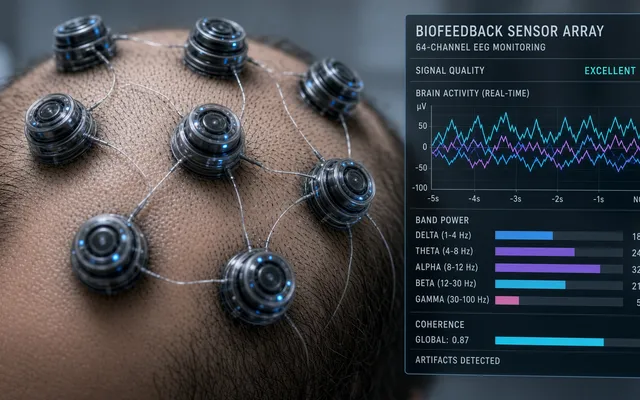
Neurofeedback in Dementia Care: Current Research
When someone is diagnosed with dementia, families look for any approach that might help, and neurofeedback is sometimes offered. The research is early, and it is important to understand both its potential and its limits.
What the research has examined
- Mild cognitive impairment and early Alzheimer's: small studies have used EEG training aimed at reducing slow-wave activity or increasing faster rhythms, in line with EEG patterns seen in Alzheimer's, which show slowing and reduced synchrony. Some report improvements in memory, attention or EEG measures after sessions, while others find no significant difference from sham feedback.
- Systematic reviews: reviews of neurofeedback in older adults with cognitive impairment conclude that the number of studies is small, designs vary and risk of bias is high. They call for larger, well-controlled trials with long follow-up.
- Related approaches: transcranial magnetic stimulation, transcranial direct current stimulation, light and sound stimulation, and cognitive training are being studied for cognitive symptoms in dementia, with mixed or preliminary results.
- Practical issues: neurofeedback requires attention, understanding instructions and many sessions. People with moderate to severe dementia may have difficulty participating, and caregivers may need to assist.
Safety
Neurofeedback is noninvasive and generally well tolerated. Reported effects include fatigue, headache and anxiety. The bigger risk is opportunity cost: spending money and energy on unproven treatment instead of established care, or being misled by claims that it can reverse dementia.

How to evaluate claims
- Ask for peer-reviewed evidence in people like the patient.
- Be cautious about testimonials and marketing that promise cures.
- Seek proper diagnosis and standard care first, including medication review, treatment of depression, sleep, hearing and vascular risks.
- Prefer clinical trials: participation in a registered trial provides oversight and contributes to knowledge. Search clinicaltrials.gov.
- Check credentials: providers should be licensed, with biofeedback certification, and should work in coordination with the care team.
- Set realistic goals, such as improved attention or relaxation, and track results.
- Consider cost and burden to the person and caregiver.
What helps now
Established nondrug approaches with better evidence include exercise, music and reminiscence therapy, structured routines, caregiver training, treatment of sensory loss, social engagement and good sleep, alongside appropriate medication. Relaxation and breathing practices, sometimes guided by simple biofeedback, may reduce stress for some people.
Supporting the caregiver
Caregivers often feel pressure to try everything. It is reasonable to explore options, and it is also acceptable to focus energy on proven supports, such as routines, meaningful activity, respite and treating the caregiver's own stress. Discuss any new therapy with the person's clinician, and keep a log of effects, so decisions are based on observation.
Research priorities
Well-designed trials need sham controls, objective cognitive and functional outcomes, longer follow-up and measures of caregiver burden. Until then, neurofeedback remains a research tool for dementia.
Takeaway
Neurofeedback is an interesting research area, but it is not a proven dementia treatment. Pursue it, if at all, as an adjunct, with realistic expectations and a trusted clinician.
Further reading from authoritative sources
- National Institute on Aging (NIA)
- National Institute of Neurological Disorders and Stroke (NINDS)
- National Center for Complementary and Integrative Health (NCCIH)
This article is educational and does not replace advice from a licensed clinician. See the medical disclaimer. Looking for specialist care? Browse the neurology clinic directory.