Can Alzheimer's Be Prevented? What the Evidence Says
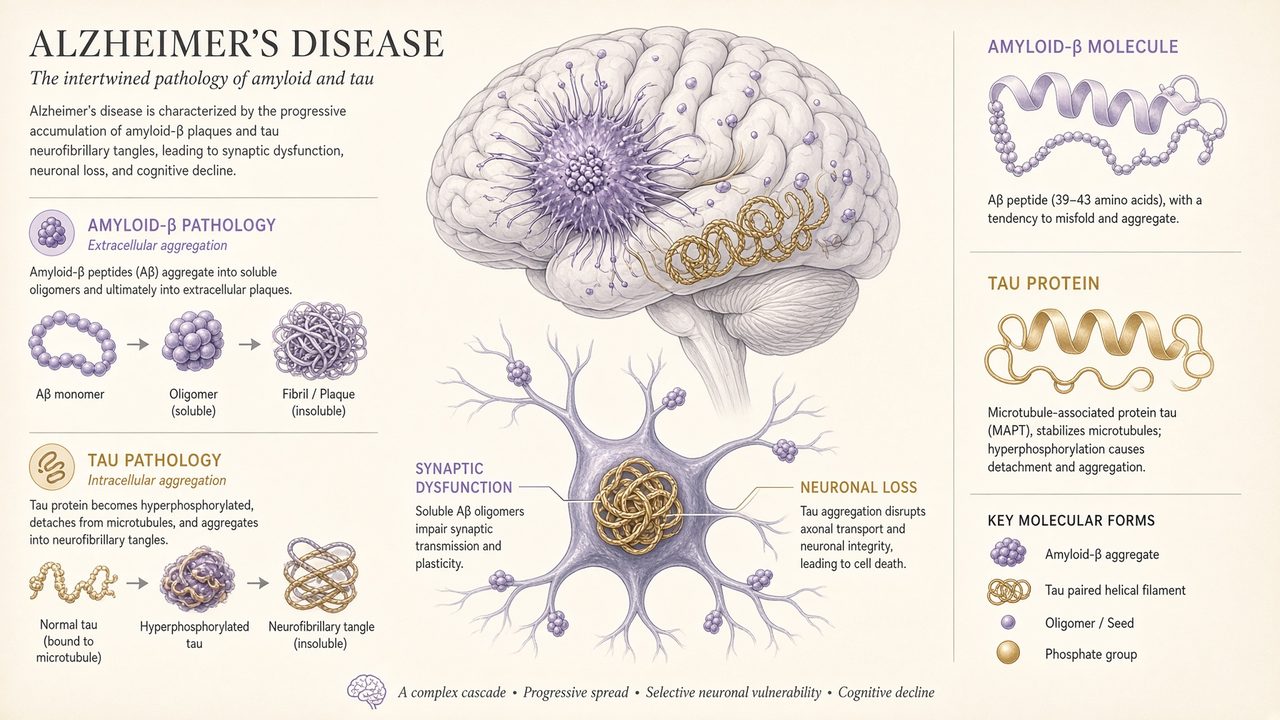
Alzheimer's disease cannot yet be prevented with certainty, and anyone who promises otherwise is overselling. But research suggests that a large share of dementia risk is influenced by factors we can change, and that acting on them may delay or reduce the chance of developing symptoms.
Genes and chance matter
Age is the strongest risk factor. Genetics also matters: the APOE e4 variant raises risk, and rare mutations in APP, PSEN1 and PSEN2 cause early-onset familial forms. Many people with risk genes never develop dementia, and many without them do. Prevention therefore means shifting odds, not eliminating risk.
What the Lancet Commission found
The 2024 Lancet Commission on dementia prevention, intervention and care identified 14 modifiable risk factors. They include less education early in life, hearing loss, high LDL cholesterol, depression, traumatic brain injury, physical inactivity, diabetes, smoking, hypertension, obesity, excessive alcohol use, social isolation, air pollution and vision loss. The commission estimated that addressing them could theoretically prevent or delay roughly 45 percent of cases worldwide. The figure is a modeling estimate, not a promise for any individual.

Evidence from trials
- FINGER trial: in Finland, more than 1,200 at-risk older adults were randomized to a multidomain program of diet, exercise, cognitive training and vascular monitoring, or general advice. After two years, the intervention group performed better on a composite cognitive score, particularly on executive function and processing speed. Follow-up and larger replication trials, including the U.S. POINTER study, are building on this.
- Blood pressure control: the SPRINT MIND trial found that intensive blood pressure lowering reduced the risk of mild cognitive impairment compared with standard targets.
- Hearing aids: the ACHIEVE trial suggested that hearing intervention slowed cognitive decline in older adults at higher risk, though not in the whole group.
- Exercise, diet and cognitive training: results from single-domain trials are mixed and often modest.
- Supplements: large trials of vitamin E, omega-3 fats, ginkgo and others have not shown clear prevention in general populations.
Practical steps
- Control blood pressure, cholesterol and blood sugar, with your doctor.
- Treat hearing and vision loss.
- Stay physically active, with aerobic activity and strength work.
- Eat a Mediterranean-style diet.
- Sleep well, and get sleep apnea treated.
- Do not smoke, and limit alcohol.
- Protect your head from injury.
- Stay socially and mentally engaged.
- Treat depression.
- Reduce exposure to air pollution where possible.
What not to rely on
Brain-training apps, unproven supplements and expensive "brain scans" marketed directly to consumers are not proven prevention. New antiamyloid drugs treat early disease in selected patients and are not prevention for healthy people.
Talking with your doctor
Ask about your personal risk factors, including family history, blood pressure, cholesterol, glucose, hearing, mood and sleep. Many of these can be measured and treated. If you have memory concerns, an early evaluation is worthwhile, because some causes of memory trouble are reversible and because early diagnosis opens options for treatment and planning.
Takeaway
Prevention is about stacking many small advantages over decades. You cannot control everything, but the habits that protect the heart and body also help protect the brain.
Further reading from authoritative sources
This article is educational and does not replace advice from a licensed clinician. See the medical disclaimer. Looking for specialist care? Browse the neurology clinic directory.