Lewy Body Dementia: An Overview
Lewy body dementia (LBD) is the second most common type of degenerative dementia after Alzheimer's disease. It is caused by abnormal deposits of the protein alpha-synuclein, called Lewy bodies, in brain cells. LBD includes two related diagnoses: dementia with Lewy bodies and Parkinson's disease dementia.
What causes it
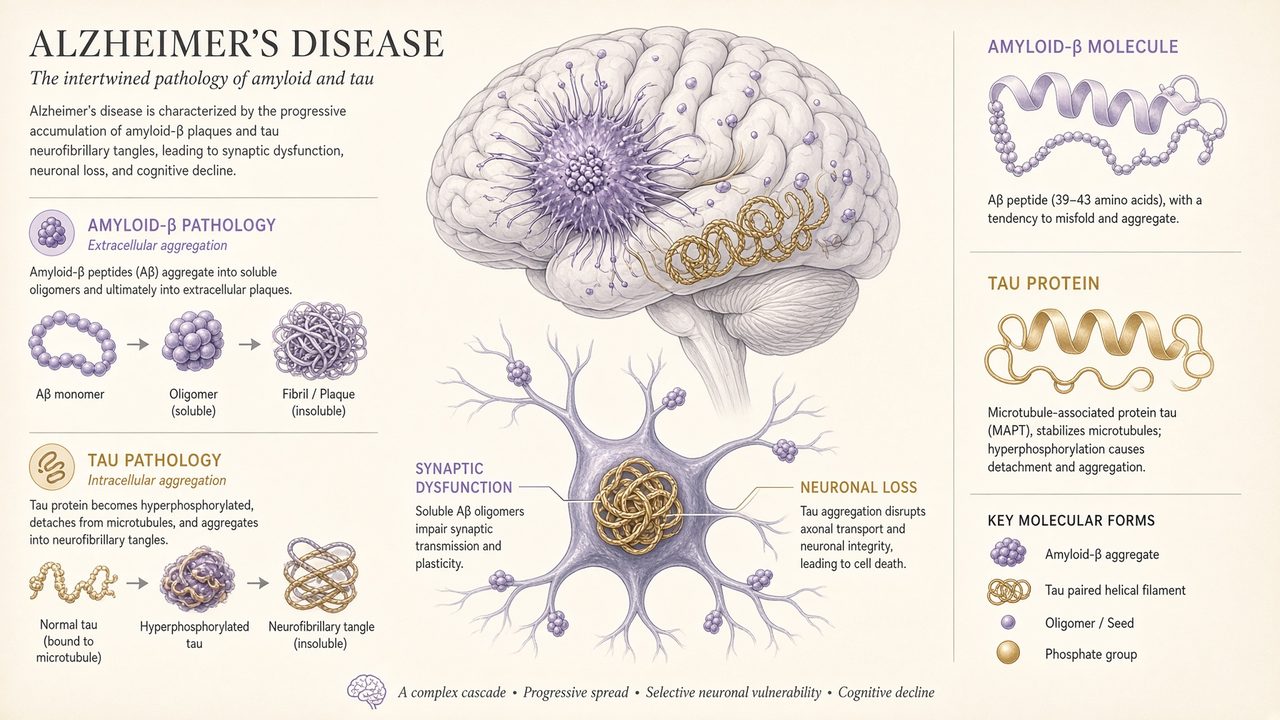
Alpha-synuclein clumps accumulate in neurons in the cortex and brainstem, disrupting function and eventually causing cell death. Why this happens is not fully understood. Age is the main risk factor, and most cases are not inherited, though rare genetic factors exist. Many people with LBD also have Alzheimer's-type changes.
Core symptoms
According to the diagnostic consensus criteria, the core features are:
- Fluctuating cognition. Attention and alertness vary markedly from hour to hour or day to day, with periods of confusion or staring.
- Recurrent visual hallucinations. People often see well-formed people or animals, frequently with details, and may be unbothered or frightened.
- REM sleep behavior disorder. People act out dreams, with shouting or movement, and this can appear years before other symptoms.
- Parkinsonism. Slowness, stiffness, tremor, shuffling steps and balance problems.

Other features
- Severe sensitivity to antipsychotic medications
- Autonomic problems, such as blood pressure drops on standing, constipation, urinary issues and fainting
- Loss of smell
- Depression, anxiety, apathy and delusions
- Daytime sleepiness
Compared with Alzheimer's, early LBD often affects attention, executive function and visuospatial skills more than memory.
Dementia with Lewy bodies versus Parkinson's dementia
The distinction depends on timing. If dementia develops before or within about a year of movement symptoms, it is called dementia with Lewy bodies. If dementia develops after at least a year of established Parkinson's disease, it is Parkinson's disease dementia. The two share brain pathology and similar management.
Diagnosis
There is no single test. Doctors rely on history, neurological and cognitive examination, and exclude other causes. Supportive tests include sleep studies confirming REM sleep behavior disorder, DaTscan imaging of dopamine transporters, and MRI or PET scans. Newer tests detecting abnormal alpha-synuclein in spinal fluid or skin are emerging. An accurate diagnosis matters because treatment and risks differ from Alzheimer's.
Treatment
There is no cure, but symptoms can be managed.
- Cholinesterase inhibitors, such as rivastigmine and donepezil, can help cognition, hallucinations and daily function, often more effectively than in Alzheimer's.
- Carbidopa-levodopa can help movement symptoms, but may worsen hallucinations or confusion, so it is used carefully.
- Antipsychotics should generally be avoided. Many typical and some atypical antipsychotics can cause severe reactions in people with LBD, including worsening of parkinsonism, sedation and, rarely, life-threatening problems. When medication is essential, specialists may use agents such as quetiapine or pimavanserin at low doses with close monitoring.
- Sleep problems. Melatonin can help REM sleep behavior disorder, and safety measures protect against injury.
- Blood pressure and bowel symptoms are managed with fluids, compression stockings, diet and medication adjustments.
- Non-drug approaches. Exercise, physical therapy, speech therapy, occupational therapy and structured routines help.
Hospital and surgery precautions
People with LBD are vulnerable to delirium and to medication reactions. Families should alert emergency and hospital staff about the diagnosis and the sensitivity to antipsychotics and certain anesthetic or sedative drugs.
Caregiving tips
- Respond calmly to hallucinations. If not distressing, they may not need treatment. Reassure and adjust lighting to reduce shadows.
- Plan around good times, when alertness is best.
- Prevent falls by removing hazards.
- Keep consistent routines.
- Join support groups. The Lewy Body Dementia Association offers resources.
- Plan ahead for legal and financial matters.
Outlook
LBD progresses over years, and survival varies, averaging several years after diagnosis. Early recognition, medication safety and strong support improve quality of life. Our directory lists academic neurology centers that offer specialty dementia clinics.
Further reading from authoritative sources
This article is educational and does not replace advice from a licensed clinician. See the medical disclaimer. Looking for specialist care? Browse the neurology clinic directory.