Stroke Recovery and Neuroplasticity
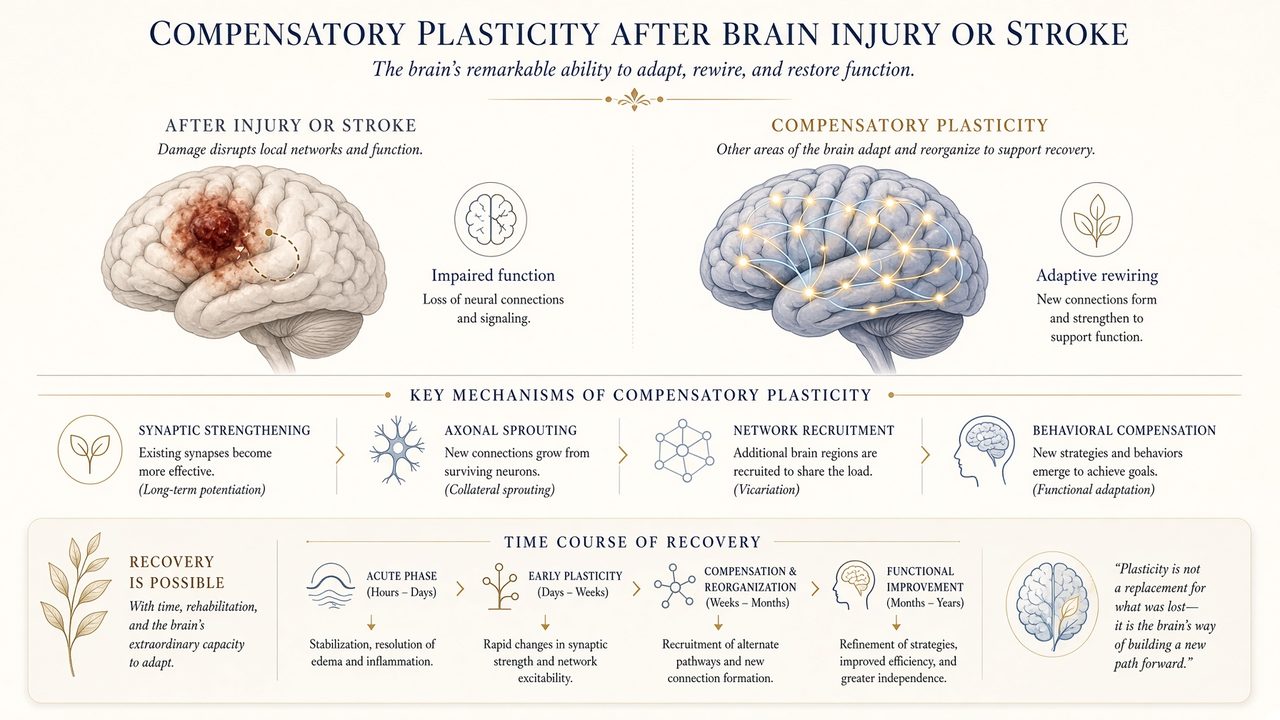
A stroke can take away movement, speech or vision in moments, yet many people regain function in the weeks, months and years that follow. This recovery relies largely on neuroplasticity, the brain's ability to reorganize.
What happens during a stroke
A stroke occurs when blood flow to part of the brain is blocked (ischemic, about 87 percent of strokes) or when a vessel ruptures (hemorrhagic). Neurons in the core of the affected area die quickly, while the surrounding region, called the penumbra, is threatened but may survive if flow is restored. Time is critical: clot-dissolving drugs and mechanical thrombectomy can reopen vessels and limit damage when given promptly. The FAST warning signs are face drooping, arm weakness, speech difficulty and time to call emergency services.
How the brain recovers
- Spontaneous recovery: swelling subsides, inflammation settles and surviving neurons resume work, which explains rapid gains in the first days to weeks.
- Plasticity: intact networks take over lost functions. Nearby cortex may map new territory, and the opposite hemisphere may contribute. Synapses strengthen, dendrites sprout and new connections form, driven by activity.
- Critical window: animal studies show a period of heightened plasticity, with molecular changes such as increased growth factors and reduced inhibition, beginning shortly after stroke and lasting weeks to months. Most recovery occurs in the first three to six months, though gains can continue for years.
- Learned non-use: if a person stops using a weakened limb, the brain may reinforce disuse, so practice matters.
What helps recovery
- Early, intensive rehabilitation: physical, occupational and speech therapy beginning as soon as the person is medically stable. The AVERT trial found that very early, high-dose mobilization within 24 hours was not better than usual care, so intensity must be balanced with safety.
- Task-specific practice: repeated, meaningful movements, such as reaching, grasping and walking.
- Constraint-induced movement therapy: restricting the stronger arm to force use of the weaker one, supported by the EXCITE trial.
- Treadmill and aerobic training: improves walking and fitness.
- Mirror therapy, motor imagery and virtual reality: provide additional practice.
- Speech therapy: for aphasia, including intensive therapy.
- Brain stimulation: transcranial magnetic stimulation and direct current stimulation are being studied, and vagus nerve stimulation paired with rehabilitation received FDA approval for arm function in 2021.
- Robotics and brain-computer interfaces: assist movement and motivate practice.
- Prevention of another stroke: controlling blood pressure, using prescribed antiplatelets or anticoagulants, treating atrial fibrillation, stopping smoking and eating well.
- Mood and sleep: depression is common and treatable.
- Support: family involvement, community programs and peer groups.
Practical tips
- Keep a regular practice schedule at home.
- Set specific, measurable goals.
- Be patient, because gains can be gradual.
- Protect against falls.
- Ask about outpatient and community rehabilitation after inpatient care ends.
Mental and emotional recovery
Depression, anxiety and fatigue are common after stroke and can slow rehabilitation, so ask about screening and treatment. Counseling, medications and peer support groups help. Caregivers also need support, and families should celebrate small gains, which keep motivation high through a long recovery.
Takeaway
Plasticity makes recovery possible, and practice is its fuel. Starting rehabilitation early and persisting gives the brain the best chance to rebuild.
Further reading from authoritative sources
This article is educational and does not replace advice from a licensed clinician. See the medical disclaimer. Looking for specialist care? Browse the neurology clinic directory.