Tau Tangles and Alzheimer's Disease
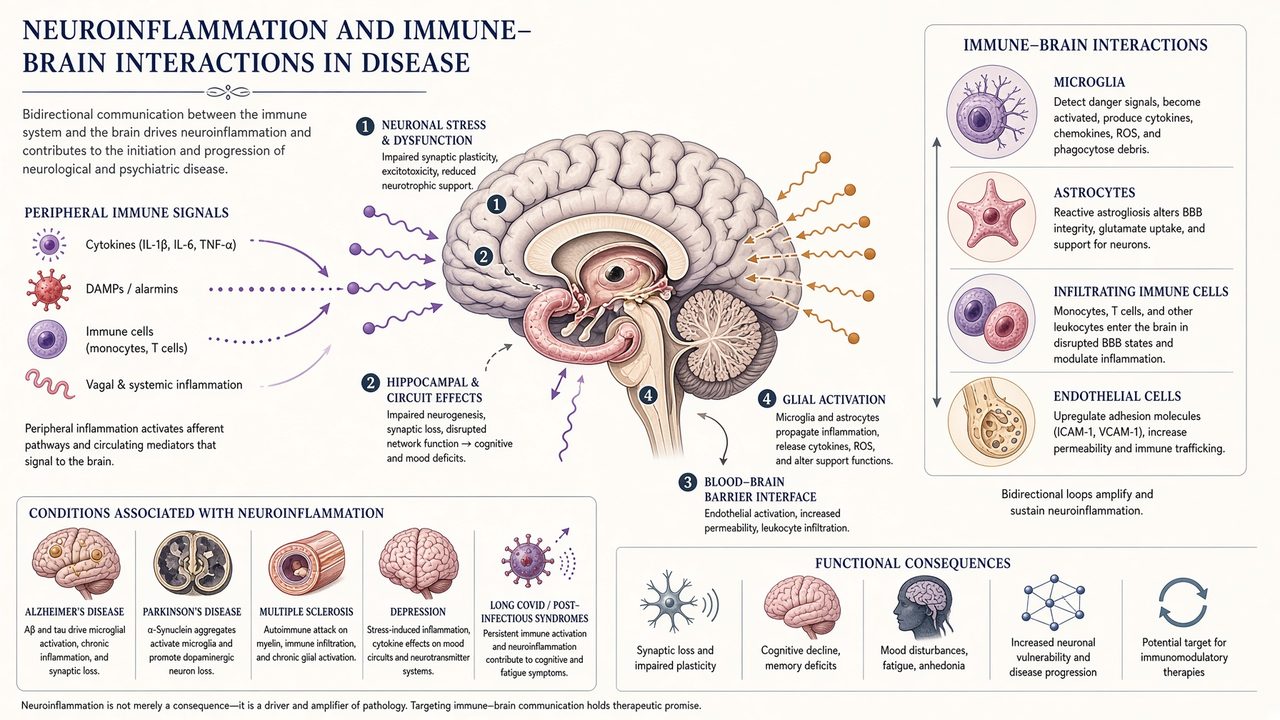
Alongside amyloid plaques, neurofibrillary tangles made of tau protein are a defining feature of Alzheimer's disease. Unlike plaques, tangles correlate closely with memory loss and brain shrinkage, which makes tau an increasingly important target.
What tau does
Tau is a microtubule-associated protein found mainly in neuronal axons. It stabilizes microtubules, the tracks that transport nutrients, organelles and signaling molecules along the neuron. Tau function is regulated by phosphorylation, the addition of phosphate groups.
How tau goes wrong
In disease, tau becomes hyperphosphorylated, detaches from microtubules and clumps into paired helical filaments and tangles inside neurons. Loss of tau function destabilizes transport, and toxic tau species disrupt synapses and mitochondria. Evidence suggests that small, soluble tau aggregates, not only mature tangles, are toxic.

Spreading through the brain
Heiko Braak and colleagues described a stereotyped staging pattern: tangles first appear in the entorhinal cortex and hippocampus, then spread to the temporal and association cortices, and finally to the primary sensory areas. Experiments in mice and cell models show that pathological tau can travel between connected neurons and seed misfolding in recipient cells, in a prion-like manner. This helps explain why symptoms progress as pathology spreads.
Tau and amyloid
Evidence supports a model in which amyloid accumulation occurs early, perhaps over a decade or two, and promotes the spread of tau, with tau pathology more directly causing neuron loss and cognitive decline. Tau pathology also appears in other conditions, called tauopathies, such as frontotemporal dementia, progressive supranuclear palsy, corticobasal degeneration and chronic traumatic encephalopathy.
Detecting tau
- Tau PET scans: tracers such as flortaucipir allow imaging of tangles in living people, and the FDA approved flortaucipir in 2020.
- Cerebrospinal fluid: phosphorylated tau and total tau levels are measured via lumbar puncture.
- Blood tests: plasma phosphorylated tau, particularly p-tau217, is emerging as a promising and less invasive marker for Alzheimer's pathology.
Treatment efforts
Therapies under study include antibodies against tau, antisense oligonucleotides that reduce tau production, drugs that prevent aggregation, and approaches to boost clearance. Some early trials have failed, but others are in progress. Because tau correlates with symptoms, researchers hope that tau-targeted treatment may help in later stages or combined with antiamyloid therapy.
Practical notes
There is no way to see your own tau without clinical testing, and tests are not recommended for people without symptoms outside research. If you or a relative has memory concerns, an evaluation by a neurologist or memory specialist can determine causes. Healthy lifestyle factors that support vascular and brain health remain worthwhile.
Why tau matters for the future
Because tau tracks with symptoms, measuring it may help predict who will decline and monitor response to treatment. If blood tests become widely available, they could make diagnosis faster and less costly. This progress also raises ethical questions about testing people without symptoms, which scientists and clinicians are actively discussing.
Takeaway
Tau tangles are a major driver of Alzheimer's symptoms. Advances in imaging, blood tests and new drug trials are making tau a central focus of research.
Further reading from authoritative sources
This article is educational and does not replace advice from a licensed clinician. See the medical disclaimer. Looking for specialist care? Browse the neurology clinic directory.