Biofeedback in Stroke Recovery: Training the Brain and Body
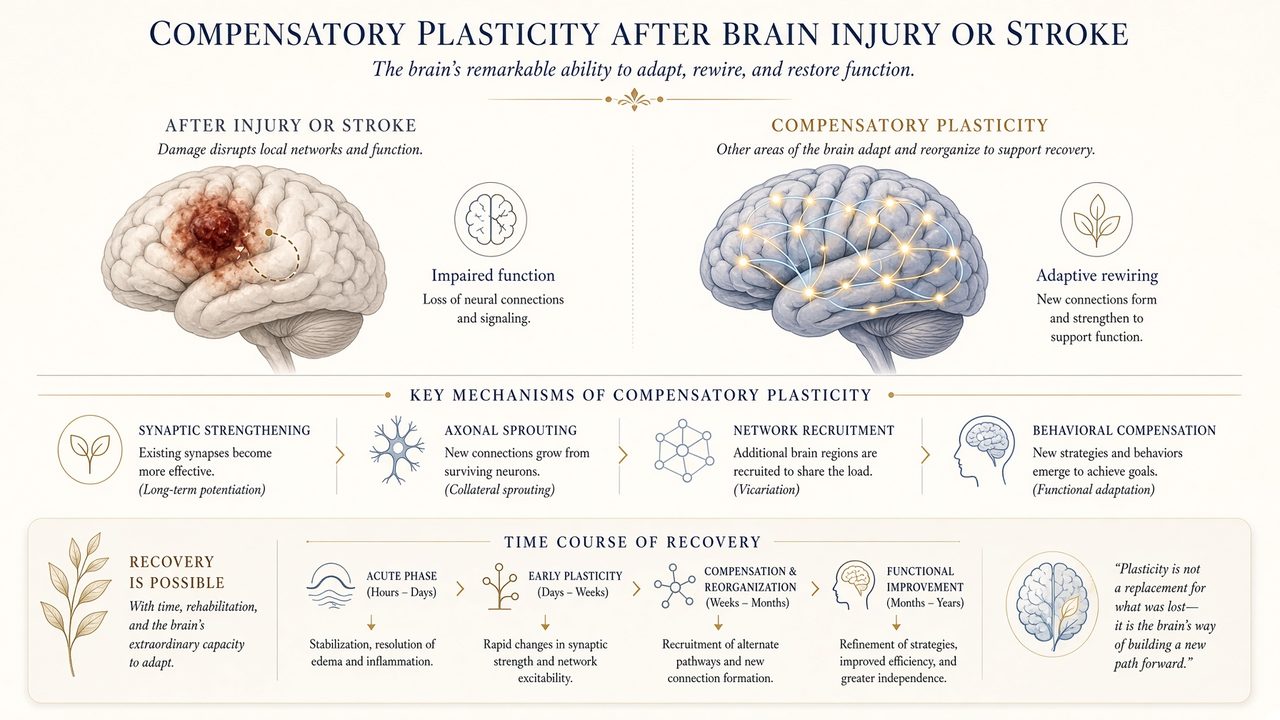
After a stroke, the brain and body must relearn how to work together. Biofeedback gives real-time information about muscle activity, movement or brain signals that the person cannot easily sense, and helps them to guide recovery.
Types of biofeedback in stroke rehabilitation
- Electromyographic biofeedback: sensors on the skin show muscle activity as sounds, lights or graphs, helping people to activate weak muscles, relax overactive ones, or retrain coordinated movement. It has been used for the arm, hand and ankle.
- Force and balance biofeedback: force plates or pressure sensors show weight distribution, helping to improve standing symmetry and balance. Visual feedback on the weight shift has improved balance in some trials.
- Gait feedback: devices providing sound or vibration cues about step length, timing or foot placement
- Positional and angle feedback: sensors that signal joint angles or posture
- Neurofeedback and brain-computer interfaces: electroencephalography-based systems that detect motor intention or imagined movement, and then provide visual feedback or trigger a robotic orthosis or electrical stimulation. Trials suggest improvement in arm function for some patients, with a review by Ang and colleagues and the work of Ander Ramos-Murguialday and colleagues on closed-loop brain-machine interface training showing gains in motor function in chronic stroke.
- Swallowing biofeedback: surface electromyography feedback during swallowing exercises, which helps to retrain swallowing in dysphagia
- Virtual reality and game-based feedback
Evidence
Cochrane reviews of electromyographic biofeedback for stroke found some evidence of improved ankle movement and gait training, and of improved upper limb function, but included studies were small, with low to moderate quality of evidence. Reviews suggest feedback of body weight distribution can improve balance during training, with uncertain benefits for walking. Brain-computer interface based therapy has shown moderate effects on arm function in meta-analyses, with larger trials in progress. Biofeedback is generally considered an adjunct to conventional therapy and not a replacement.
How it helps
Stroke can disrupt sensation, and people may be unaware of how they are moving. Biofeedback makes the invisible visible, motivates repetition, and enables objective tracking. It supports principles of neuroplasticity, such as repetition, feedback and engagement.
Practical considerations
- Work with a trained therapist: physical or occupational therapists, or speech-language pathologists
- Set clear goals, such as lifting the wrist or shifting weight onto the weak leg
- Practice regularly, including at home when portable devices are appropriate
- Combine with task practice, because feedback should transfer to real activities
- Monitor fatigue and skin health under electrodes
- Adapt for cognitive or visual problems, which can affect use of displays
- Insurance coverage varies
Starting early and staying consistent
Biofeedback is most helpful when integrated into a daily rehabilitation schedule, and short, frequent sessions are often better than occasional long ones. Progress may seem slow, so track measures such as grip strength, steps taken or time standing evenly to see changes.
Family involvement
Family members can learn to cue practice at home, praise effort and help with setup of simple devices. A therapist can show which exercises are safe to do between visits.
Looking ahead
Wearable sensors, home-based brain-computer interfaces and virtual reality tools are making feedback more accessible, and larger trials will show how best to combine them with standard therapy.
Takeaway
Biofeedback helps stroke survivors see and hear their progress. As part of a full rehabilitation plan, it can support relearning.
Further reading from authoritative sources
- National Institute of Neurological Disorders and Stroke (NINDS)
- National Institute on Aging (NIA)
- National Center for Complementary and Integrative Health (NCCIH)
This article is educational and does not replace advice from a licensed clinician. See the medical disclaimer. Looking for specialist care? Browse the neurology clinic directory.