How the Brain Generates Ideas
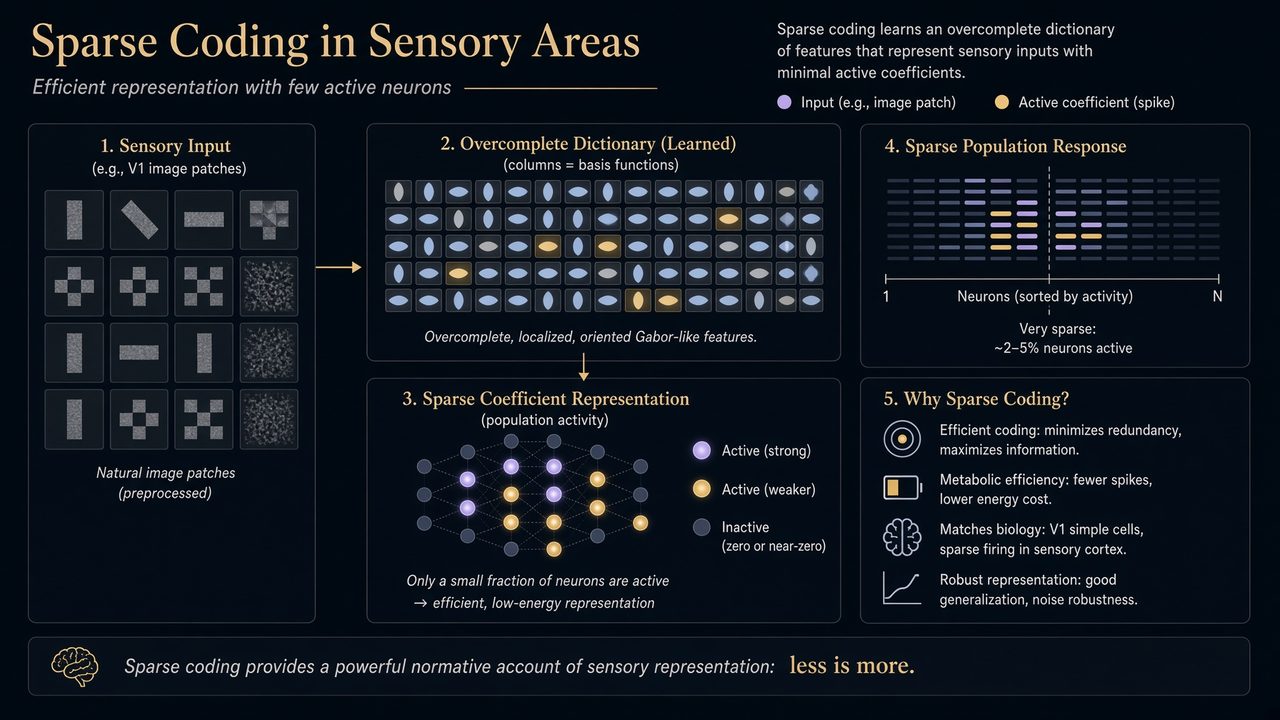
Ideas often seem to appear from nowhere, in the shower or on a walk. Neuroscience is mapping how the brain combines memories, imagination and evaluation to generate original thoughts.
Brain networks for ideas
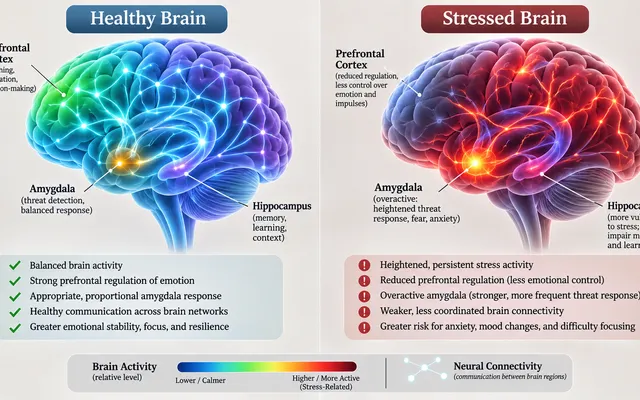
Roger Beaty and colleagues used brain imaging during idea generation tasks and found cooperation among the default mode network, which supports spontaneous thought, memory and imagination, the executive control network, which supports focus, evaluation and goal-directed thinking, and the salience network, which switches between them. Highly creative people show stronger connectivity among these networks. Generating ideas draws on the hippocampus for combining memories and the prefrontal cortex for selecting and refining. Mind wandering, which engages the default mode network, can facilitate incubation, as shown in a study by Benjamin Baird and colleagues in which participants who did an undemanding task during a break showed greater improvement on a creative problem than those who rested or did a demanding task.
Divergent and convergent thinking
Divergent thinking produces many possible ideas, often measured with tasks like thinking of unusual uses for a brick. Convergent thinking narrows down to the best answer. Both are valuable, and creative work moves back and forth. Associative thinking, where ideas are linked by distant connections, is a hallmark of creative people, and semantic networks may be more flexible in higher creative achievers, as in work by Yoed Kenett.

Neurochemistry and states
Dopamine is linked to exploration and flexible thinking, and moderate levels are thought to be best. Mood matters: positive moods broaden thinking, and mild anxiety can narrow it. Alpha waves over the right posterior regions occur before insight solutions, as shown by Mark Beeman and John Kounios. Sleep supports creativity, with rapid eye movement sleep promoting remote associations, as shown by Sara Mednick and Matthew Walker.
Environment and habits
- Walking: a Stanford study by Marily Oppezzo and Daniel Schwartz found that walking increased creative idea generation by about 60 percent compared with sitting.
- Nature and novel settings
- Diverse input: reading widely, traveling, meeting people from different fields
- Constraints: limits can focus thinking
- Sleep, breaks and boredom
- Collaboration and feedback, with psychological safety
- Moderate noise: ambient noise of about 70 decibels enhanced creative cognition in one study by Ravi Mehta and colleagues.
Practical methods
- Capture ideas: keep a notebook or voice notes
- Set quantity goals: more ideas lead to better ones
- Defer judgment while brainstorming, then evaluate
- Combine and remix existing ideas
- Ask what if and why not questions
- Take incubation breaks: step away from problems
- Change perspective: imagine how others would solve it
- Use analogies
- Write or sketch to externalize
- Protect time for unstructured thinking
Ideas across ages
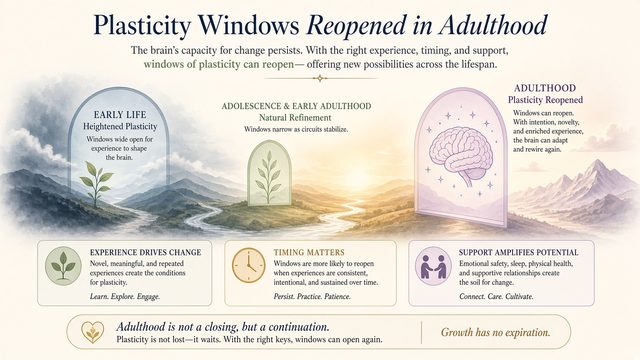
Children are often more flexible idea generators because they have fewer assumptions, while adults bring expertise that gives ideas depth. Older adults who stay curious continue to generate original ideas, and creative activities in later life are associated with better wellbeing.
Takeaway
Ideas come from networks that connect and judge memories. Give your brain material, rest and freedom, and then shape what appears.
Further reading from authoritative sources
- National Institute of Neurological Disorders and Stroke (NINDS)
- National Institute of Mental Health (NIMH)
This article is educational and does not replace advice from a licensed clinician. See the medical disclaimer. Looking for specialist care? Browse the neurology clinic directory.