The Neuroscience of Humor
Humor is universal across cultures, and laughter appears in infancy and even in other primates. Neuroscience is beginning to reveal how the brain understands and enjoys jokes.
What makes something funny
Many theories exist. Incongruity theory suggests that humor arises when expectations are violated and then resolved in a surprising but sensible way. Relief theory sees laughter as release of tension, and superiority theory suggests laughing at others' mishaps. Benign violation theory, proposed by Peter McGraw and Caleb Warren, holds that humor arises when something seems wrong or threatening yet also safe or okay.
Brain circuits
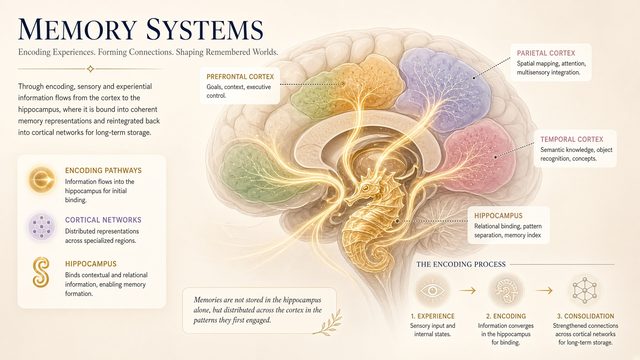
Imaging studies, including work by Dean Mobbs, Allan Reiss and colleagues, show that funny cartoons and jokes engage:
- Temporal-parietal junction and inferior frontal regions, involved in detecting and resolving incongruity and in language and meaning
- Medial prefrontal cortex, involved in understanding other minds
- Nucleus accumbens, ventral tegmental area and amygdala, areas of the reward network, which explain the pleasure of humor, with greater activation for funnier items
- Insula and anterior cingulate cortex, related to emotion and expression
The right frontal lobe has been linked to appreciating humor, as shown in studies of patients with right hemisphere or frontal damage, who can have trouble understanding jokes and tend to choose absurd punchlines. Laughter itself involves brainstem circuits, motor regions and emotional networks, and uncontrollable laughter can occur with certain neurological conditions such as pseudobulbar affect.

Laughter and social bonds
Robert Provine found that most laughter occurs not after jokes but in ordinary conversation, signaling friendliness and belonging. Robin Dunbar and colleagues showed that laughing together releases endorphins, as measured by increased pain thresholds, and builds bonds. Genuine and polite laughter differ in brain responses, as shown by Sophie Scott. Rats laugh in ultrasonic chirps when tickled, as discovered by Jaak Panksepp, which suggests deep evolutionary roots. Laughter is contagious.
Health and coping
Humor can reduce stress and anxiety temporarily, ease pain tolerance, strengthen relationships and promote resilience. Studies show that people with a good sense of humor tend to cope better with stress, although evidence for long-term health benefits, such as longevity, is mixed, and some positive effects may reflect optimism and social connection. Therapeutic uses include humor in healthcare settings, laughter yoga and clown programs for children in hospitals. Humor can be harmful when it is hostile, demeaning or used to avoid emotions.
Humor across life and conditions
Children begin to laugh at around three to four months. Sense of humor develops with cognitive skills. Older adults may prefer different styles. Depression and some conditions can reduce enjoyment of humor, while frontal lobe disease may change humor preferences, and some people with frontotemporal dementia develop new or inappropriate humor.
Bringing more humor into life
- Share funny stories and media with others
- Notice absurdities, and take yourself lightly
- Play, improvise and take part in comedy or laughter groups
- Use humor to cope, while respecting feelings
- Be mindful of context and avoid humor that hurts
Takeaway
Humor is a cognitive and social skill that rewards the brain. A good laugh shared with others is good for all of us.
Further reading from authoritative sources
- National Institute of Neurological Disorders and Stroke (NINDS)
- National Institute of Mental Health (NIMH)
This article is educational and does not replace advice from a licensed clinician. See the medical disclaimer. Looking for specialist care? Browse the neurology clinic directory.