How Stress Reshapes the Brain
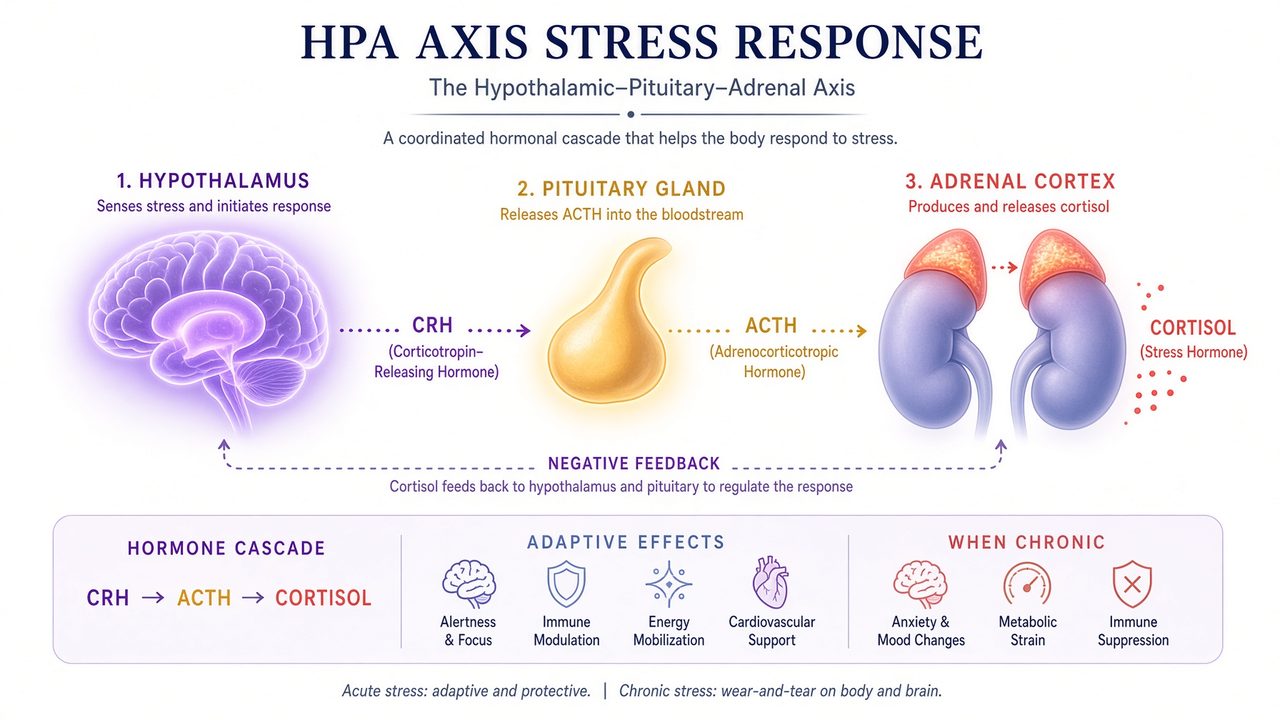
Stress is the body's response to demands. In short bursts, it sharpens attention and mobilizes energy. When stress becomes chronic, it can change how the brain is wired and how it functions. The encouraging news is that many of these changes are reversible.
The stress response
When the brain perceives a threat, two systems activate. The sympathetic nervous system releases adrenaline within seconds, raising heart rate and alertness. Slightly more slowly, the hypothalamic-pituitary-adrenal (HPA) axis triggers release of cortisol from the adrenal glands. Cortisol mobilizes energy and modulates immune function, and a feedback loop normally shuts it off once the threat is over.
Three regions especially affected
The amygdala
Studies in animals show that chronic stress causes neurons in the amygdala to grow more branches, which is associated with heightened fear and anxiety. In people, imaging studies find greater amygdala reactivity in those experiencing prolonged stress.
The prefrontal cortex
Chronic stress tends to cause neurons in the prefrontal cortex to lose branches and connections. This can weaken attention, working memory, decision-making and the ability to inhibit impulses and regulate emotions. Under acute stress, control shifts away from prefrontal "thinking" circuits toward faster, habit-based and emotional systems.
The hippocampus
The hippocampus has many receptors for stress hormones. Persistent elevated cortisol impairs learning and memory and is associated with reduced hippocampal volume in some studies of people with long-term stress, depression or post-traumatic stress disorder. It can also weaken the hippocampus's ability to turn off the stress response, creating a vicious circle.

Early-life stress
Adverse childhood experiences, such as abuse, neglect or chronic instability, can affect the developing stress system. Research links early adversity to differences in stress reactivity, emotion regulation and risk for mental and physical illness later in life. Supportive relationships and early intervention can buffer these effects.
Allostatic load
Scientists use the term allostatic load for the wear and tear that accumulates from repeated activation of stress systems. High allostatic load is linked to higher risks of high blood pressure, heart disease, diabetes, depression, anxiety and cognitive decline.
Signs that stress is taking a toll
- Trouble concentrating or remembering
- Irritability and mood swings
- Sleep problems
- Frequent headaches or muscle tension
- Changes in appetite
- Withdrawing from friends and activities
How the brain recovers
Studies suggest that after stress is reduced, structural changes in animals often reverse over weeks, and some human studies suggest improvements in brain function and mood after stress-reduction interventions. Recovery is helped by:
- Exercise, which is associated with improved mood and memory
- Sleep, which allows the brain to reset
- Social support, which buffers stress responses
- Mindfulness and relaxation training
- Therapy, including cognitive behavioral approaches
- Time in nature
- Setting boundaries and reducing avoidable stressors
When to seek help
Stress that is persistent, overwhelming, or accompanied by depression, anxiety, panic or substance use deserves professional attention. Primary care clinicians, counselors and psychologists can help you build a plan.
Further reading from authoritative sources
- National Institute of Mental Health (NIMH)
- National Center for Complementary and Integrative Health (NCCIH)
This article is educational and does not replace advice from a licensed clinician. See the medical disclaimer. Looking for specialist care? Browse the neurology clinic directory.