Working Memory Training: Evidence and Limits
Working memory, the ability to hold and manipulate information over seconds, underlies reasoning, reading and learning. Because it is limited, and linked to academic and life outcomes, researchers and companies have explored whether it can be expanded by training. The results are sobering but nuanced.
What working memory is
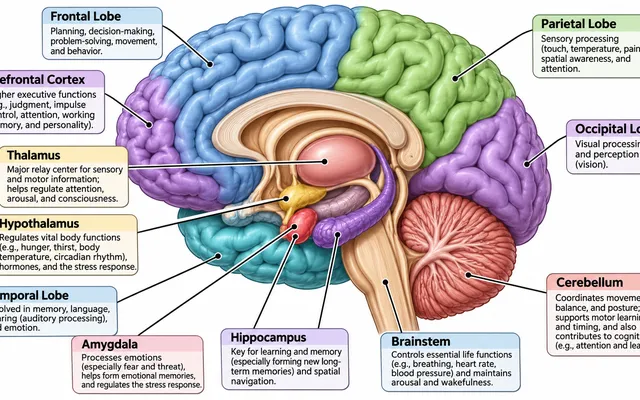
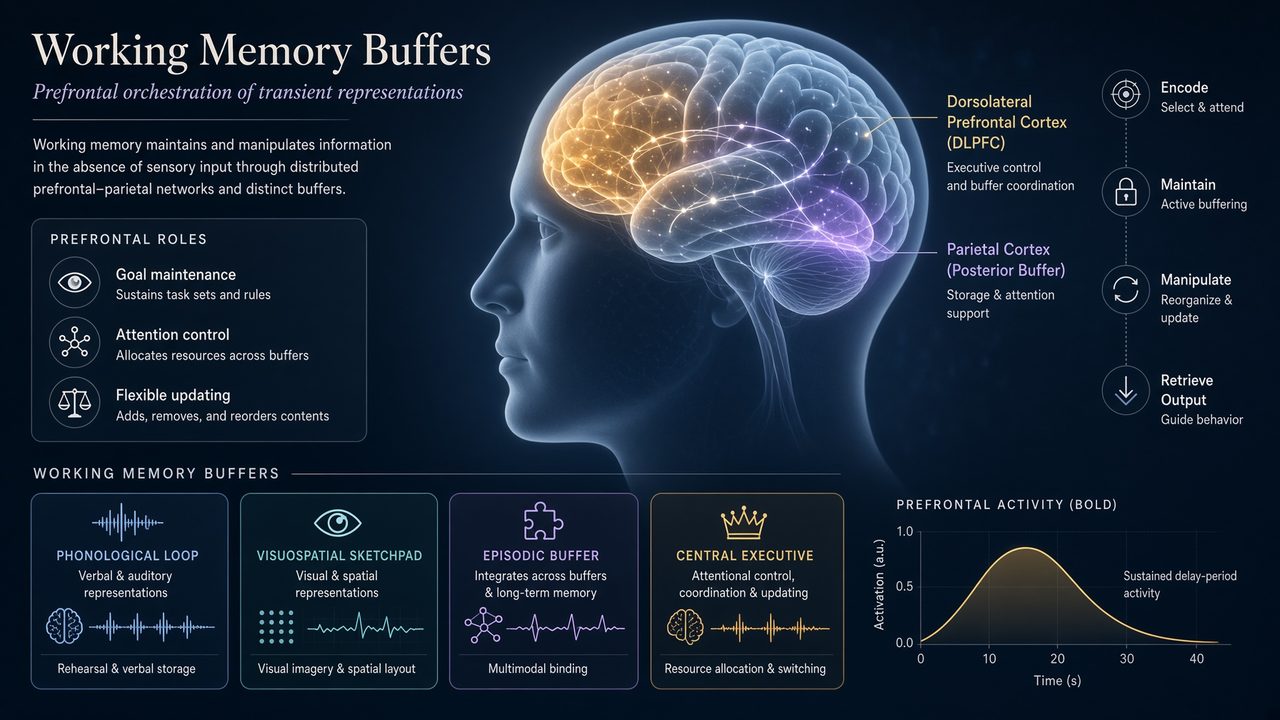
Alan Baddeley and Graham Hitch's model describes a central executive that coordinates attention, plus storage systems for verbal information (the phonological loop) and visual-spatial information (the visuospatial sketchpad), as well as an episodic buffer. Capacity limits are about four chunks. The dorsolateral prefrontal cortex, parietal cortex and basal ganglia are key regions, and dopamine in prefrontal circuits plays an important role.
Why training seemed promising
- Working memory capacity correlates with fluid intelligence, reading comprehension and attention.
- Studies by Torkel Klingberg suggested that training children with ADHD led to improvements, with changes in prefrontal and parietal activation and dopamine receptor density.
- A 2008 study by Susanne Jaeggi and colleagues reported that training on a dual n-back task improved fluid intelligence, which sparked great interest.

What later research found
- Replication problems: many follow-up studies failed to replicate improvements in fluid intelligence.
- Meta-analyses: Melby-Lervåg and Hulme (2013) concluded that training produced short-term gains in verbal and visuospatial working memory tasks, but no consistent transfer to verbal ability, reading, arithmetic or attention, and the gains faded over time. Subsequent reviews found similar results, and some found small, short-lived transfer to near tasks. Questions about control groups and expectancy effects persisted, since participants who know they are in the training group may try harder on later tests.
- Children with ADHD: meta-analyses show small improvements in working memory tasks, but no clear improvement in attention symptoms or academic performance.
- Older adults and clinical groups: training in healthy aging yields improvements in trained tasks, with limited transfer. In conditions such as schizophrenia and acquired brain injury, programs combining working memory practice with strategy training may offer functional benefits.
- Neural changes: imaging studies show altered activity and connectivity after training, though what these changes mean for function is unclear.
Why transfer is hard
Skills learned during training may be task-specific strategies rather than increased general capacity. Improvement on n-back tasks may reflect learning of the specific demands, such as chunking or familiarity, instead of a general increase in working memory.
What does help working memory in daily life
- Strategy use: chunking, rehearsal, visualization and organizing information
- External aids: notes, lists, diagrams, calendars and reminders reduce the load on working memory.
- Reduce demands: break tasks into steps, present information one piece at a time, and avoid multitasking.
- Optimize the state of the brain: sleep, exercise, stress management, treatment of anxiety and depression, and sensible caffeine use.
- Mindfulness practice has shown benefits for working memory under stress in some studies.
- Aerobic exercise is associated with improved executive function.
- Instruction aligned with working memory limits, as in cognitive load theory, with clear structure and worked examples.
- Teachers and parents can support children with working memory difficulties through simplified instructions, visual supports and repeating key information.
- Medication for ADHD can improve working memory performance in some individuals.
Should you try training programs?
If you enjoy it and are aware of the limits, it will not harm you, but do not expect big transfer to real life. Compare cost and time against other options, and look for programs with independent evidence.
Takeaway
Working memory is important, but not easily expanded by drills. Using strategies and supports, and keeping your brain healthy, offers more dependable benefits.
Further reading from authoritative sources
- National Institute of Neurological Disorders and Stroke (NINDS)
- National Center for Complementary and Integrative Health (NCCIH)
This article is educational and does not replace advice from a licensed clinician. See the medical disclaimer. Looking for specialist care? Browse the neurology clinic directory.