Sleep Apnea and Brain Health: The Hidden Risks
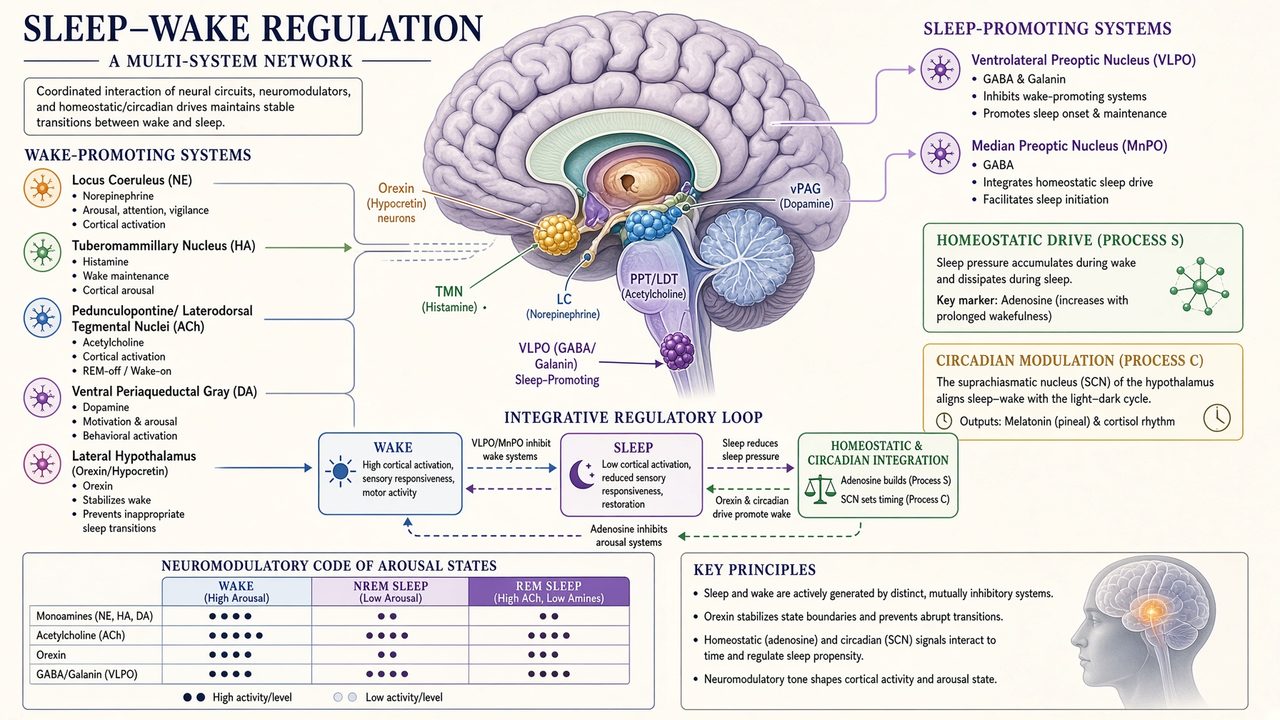
Sleep apnea is common and often undiagnosed. Repeated pauses in breathing during sleep fragment rest and drop blood oxygen, and the brain bears many of the consequences.
What sleep apnea is
In obstructive sleep apnea (OSA), the muscles of the throat relax and the airway narrows or collapses during sleep, causing breathing to stop or become shallow for ten seconds or longer, often dozens of times per hour. Each event causes oxygen drops, surges in stress hormones and brief arousals. Roughly 20 to 30 percent of men and 10 to 15 percent of women have OSA, and many do not know. Central sleep apnea, in which the brain fails to signal breathing, is less common.
Symptoms and risk factors
- Loud snoring, witnessed pauses, gasping or choking at night
- Unrefreshing sleep, morning headaches, dry mouth
- Daytime sleepiness, difficulty concentrating, irritability or depression
- Frequent nighttime urination
- Risks include obesity, a large neck circumference, older age, male sex, menopause, nasal obstruction, alcohol, sedatives, smoking, family history and certain craniofacial features. Women and people of normal weight may present with fatigue, insomnia or depression, not classic snoring.

Effects on the brain
- Cognition: attention, executive function, working memory and processing speed are affected. Studies by Ronald Harper and colleagues, and others, show gray matter changes in memory, mood and autonomic regions in people with OSA.
- Memory consolidation: fragmented slow wave sleep and REM disrupt memory formation.
- Mood: OSA is associated with higher rates of depression and anxiety.
- Vascular effects: intermittent hypoxia and blood pressure surges damage blood vessels and increase the risk of hypertension, atrial fibrillation, heart disease and stroke.
- White matter and small vessel disease are more common with OSA.
- Dementia risk: studies link OSA with increased risk of cognitive impairment and Alzheimer's disease, possibly through amyloid and tau accumulation and vascular injury. Studies suggest that people with OSA develop mild cognitive impairment years earlier on average, and that CPAP use is associated with delayed onset, though causality is not fully proven.
- Accident risk: drowsy driving.
- Children: untreated OSA can cause hyperactivity, inattention and learning problems.
Diagnosis
A doctor may use questionnaires such as STOP-Bang, then recommend a sleep study, either in a lab (polysomnography) or at home. The apnea-hypopnea index (AHI) measures events per hour, with five to fifteen as mild, fifteen to thirty as moderate and above thirty as severe.
Treatment
- CPAP (continuous positive airway pressure): the standard treatment, which splints the airway with air pressure. Consistent use improves sleepiness, mood, blood pressure and cognition, and may reduce cardiovascular risk. Comfort adjustments, mask fitting and humidifiers improve adherence.
- Oral appliances: mandibular advancement devices for mild to moderate OSA.
- Weight loss: can substantially reduce severity. Medications such as tirzepatide have been approved for OSA in adults with obesity.
- Positional therapy, avoiding sleeping on the back.
- Hypoglossal nerve stimulation: an implanted device for selected patients who cannot tolerate CPAP.
- Surgery: for specific anatomical problems, including tonsillectomy in children.
- Avoid alcohol and sedatives near bedtime.
- Treat nasal congestion.
When to seek help
Talk with a doctor if you snore loudly, stop breathing at night, feel unrefreshed or sleepy by day, or have high blood pressure or difficulty concentrating. Untreated OSA is a major and modifiable risk factor for brain health.
Takeaway
Sleep apnea silently strains the brain. Diagnosis and treatment can restore sleep, sharpen thinking and protect long-term brain health.
Further reading from authoritative sources
- National Institute of Neurological Disorders and Stroke (NINDS)
- National Center for Complementary and Integrative Health (NCCIH)
This article is educational and does not replace advice from a licensed clinician. See the medical disclaimer. Looking for specialist care? Browse the neurology clinic directory.