Parkinson's Disease and the Brain
Parkinson's disease is a progressive neurological condition that affects movement. It is the second most common neurodegenerative disease after Alzheimer's, and nearly a million people in the United States are estimated to live with it. Although it is best known for tremor, it also affects sleep, mood, digestion and thinking.
What happens in the brain
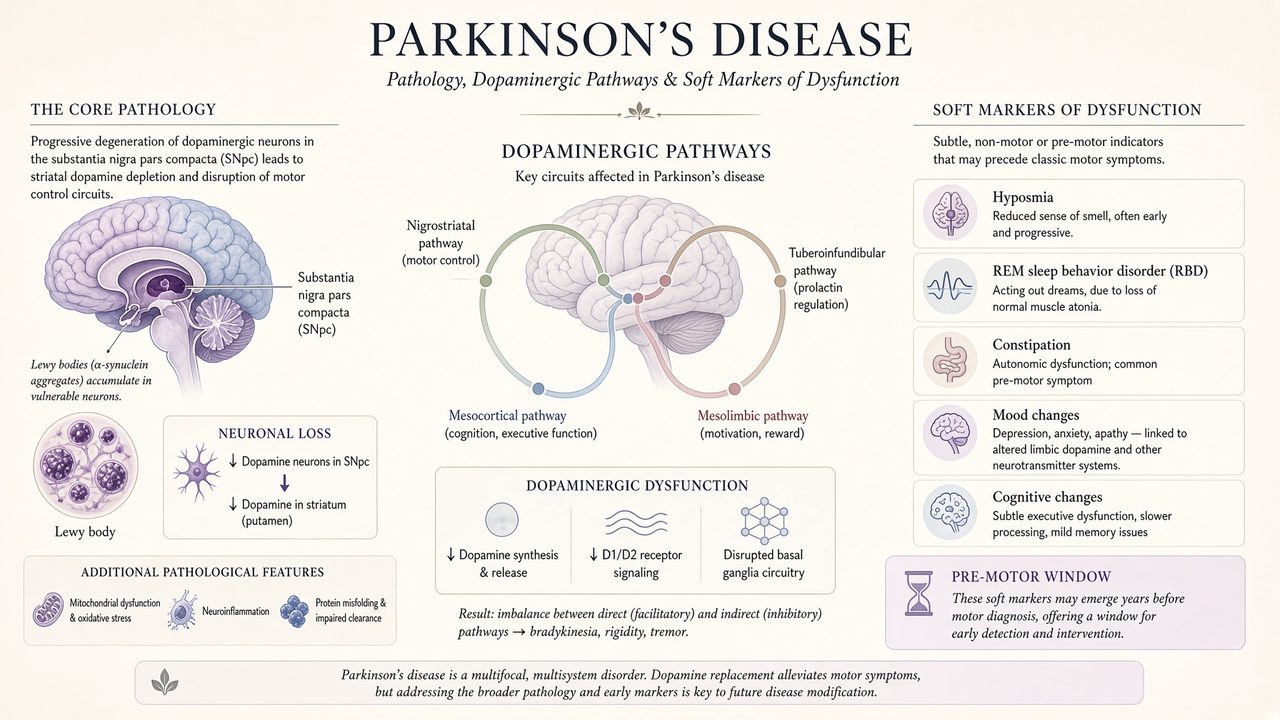
The substantia nigra supplies dopamine to the basal ganglia, a group of structures that help initiate and smooth voluntary movement. When these dopamine-producing cells die, movement circuits become disrupted. By the time motor symptoms appear, a substantial proportion of these neurons have been lost.
A hallmark finding in Parkinson's is the presence of Lewy bodies, clumps of misfolded alpha-synuclein protein within neurons. Researchers think abnormal alpha-synuclein may spread through the nervous system, and some evidence suggests that changes may begin outside the brain, for example in the gut or sense of smell pathways, years before movement symptoms.
Main motor symptoms
- Tremor at rest, often beginning in one hand
- Bradykinesia, meaning slowness of movement, with smaller handwriting and reduced facial expression
- Rigidity, or stiffness in muscles
- Postural instability, with balance problems that tend to appear later
Symptoms usually begin on one side of the body.

Non-motor symptoms
These can be as troublesome as the motor ones and sometimes appear first:
- Loss of sense of smell
- Constipation
- Acting out dreams during sleep (REM sleep behavior disorder)
- Depression and anxiety
- Fatigue
- Low blood pressure on standing
- Cognitive changes, which may progress to dementia in some people
Causes and risk factors
In most cases the cause is unknown and thought to involve a combination of aging, genes and environment. A minority of cases are linked to specific gene mutations. Some studies associate exposure to certain pesticides and head injury with increased risk, while regular exercise, and in some studies caffeine intake, are associated with lower risk. Association does not prove cause.
Diagnosis
Diagnosis is mainly clinical, based on symptoms and a neurological examination by a physician, often a movement disorder specialist. Imaging such as a dopamine transporter scan may be used in uncertain cases, and MRI can rule out other conditions. There is not yet a single routine blood test.
Treatment
Medications
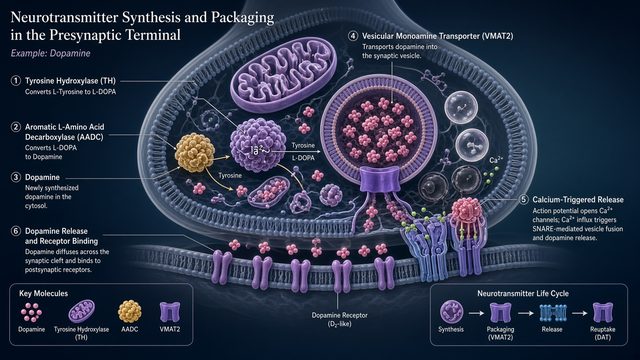
Levodopa, usually combined with carbidopa, remains the most effective medication for motor symptoms, converting to dopamine in the brain. Other options include dopamine agonists, MAO-B inhibitors and COMT inhibitors. Timing and dose adjustments become important over the years as response fluctuates.
Deep brain stimulation
For selected people with motor fluctuations or tremor that are not well controlled by medication, surgically implanted electrodes can deliver electrical pulses to specific brain targets. It can substantially reduce symptoms but does not stop the disease.
Exercise and therapy
Evidence strongly supports regular exercise, including aerobic activity, resistance training, balance work, tai chi, dance and boxing-style programs. Physical therapy, occupational therapy and speech therapy, such as programs focused on voice volume, help maintain function and safety.
Managing non-motor symptoms
Constipation, sleep problems, mood and blood pressure changes can be treated and deserve attention.
Living with Parkinson's
Care teams that include neurologists, therapists, nurses and social workers can improve quality of life. Support groups connect patients and caregivers. Clinical trials are testing therapies aimed at slowing progression, and participation may be an option.
When to see a doctor
Consult a clinician if you notice tremor, new slowness, stiffness, or other changes in movement, particularly if they are progressive. Early evaluation can ensure accurate diagnosis and timely treatment.
Further reading from authoritative sources
This article is educational and does not replace advice from a licensed clinician. See the medical disclaimer. Looking for specialist care? Browse the neurology clinic directory.