Reminiscence Therapy and the Brain
Remembering the past is not only nostalgia. For people with memory loss, structured reminiscence can reconnect them with identity, relationships and emotion. Reminiscence therapy is a widely used, low-risk approach in dementia care.
How it works
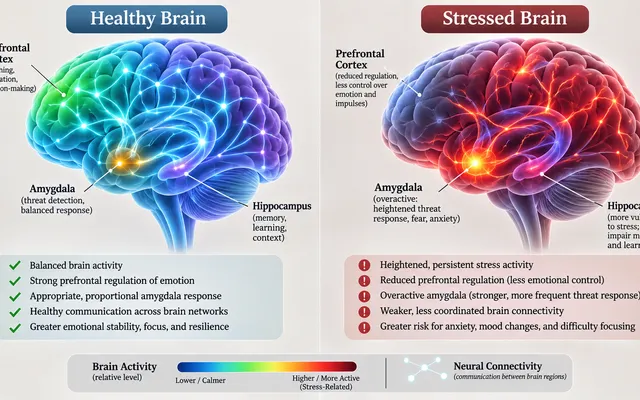
Long-term autobiographical memories, especially from youth and early adulthood, are often better preserved than recent memories in early to moderate dementia, a pattern sometimes described as Ribot's gradient. Cues such as familiar songs, smells, photographs and objects can trigger emotional and sensory memories through networks involving the hippocampus, medial prefrontal cortex, amygdala and sensory cortices. Recalling positive life experiences can boost mood, sense of identity and social connection.
Types of reminiscence work
- Simple reminiscence: informal conversation about the past.
- Life review therapy: a structured process, often one-on-one, in which the person reviews their life chronologically, including difficult periods, to find meaning and integrate experiences. Developed from Robert Butler's work.
- Life story work: compiling a life story book or memory box to share with caregivers.
- Group reminiscence: sessions in care homes or day centers, with themes such as school days, work, holidays or food.

What the evidence shows
A Cochrane review of reminiscence therapy for dementia found small improvements in quality of life, communication and mood, and possibly in cognition, as well as some reduction in caregiver strain, though the evidence quality was low to moderate. Studies in older adults without dementia show reductions in depressive symptoms from life review and reminiscence. Results vary, and some people may become sad, so sessions need sensitivity.
How to try it
- Gather prompts: old photos, souvenirs, postcards, music, magazines, tools, recipes, clothing and familiar scents.
- Choose a calm time and quiet space.
- Use open questions such as "What was your first job like?" but do not quiz, because testing memory can cause stress.
- Follow the person's lead, accept their version of events and avoid correcting.
- Create a memory book or box with names and captions, which helps staff and visitors start conversations.
- Use themes: weddings, school, travel, music or seasonal events.
- Involve family and children, since intergenerational sessions can be meaningful.
- Stay alert to distress: if a memory brings grief, offer comfort and shift topics.
- Record stories: audio or video preserve voices and tales.
Beyond dementia
Reminiscence also supports older adults living alone, those in transitions such as moving into care, and people facing loss. Digital tools like tablets and video calls can provide access to photos and music.
Choosing and adapting sessions
Keep sessions short, around 20 to 45 minutes, and adjust to attention span. People with hearing or vision loss may need larger photos or amplified sound. For those with advanced dementia, sensory prompts such as touch, scent and music may work better than words. Trained staff, occupational therapists and volunteers can support programs, and many libraries and memory cafes offer reminiscence activities.
Takeaway
Reminiscence therapy honors a person's life story. It will not reverse memory loss, but it can bring comfort, connection and dignity.
Further reading from authoritative sources
This article is educational and does not replace advice from a licensed clinician. See the medical disclaimer. Looking for specialist care? Browse the neurology clinic directory.