The Neuroscience of Concussion Recovery
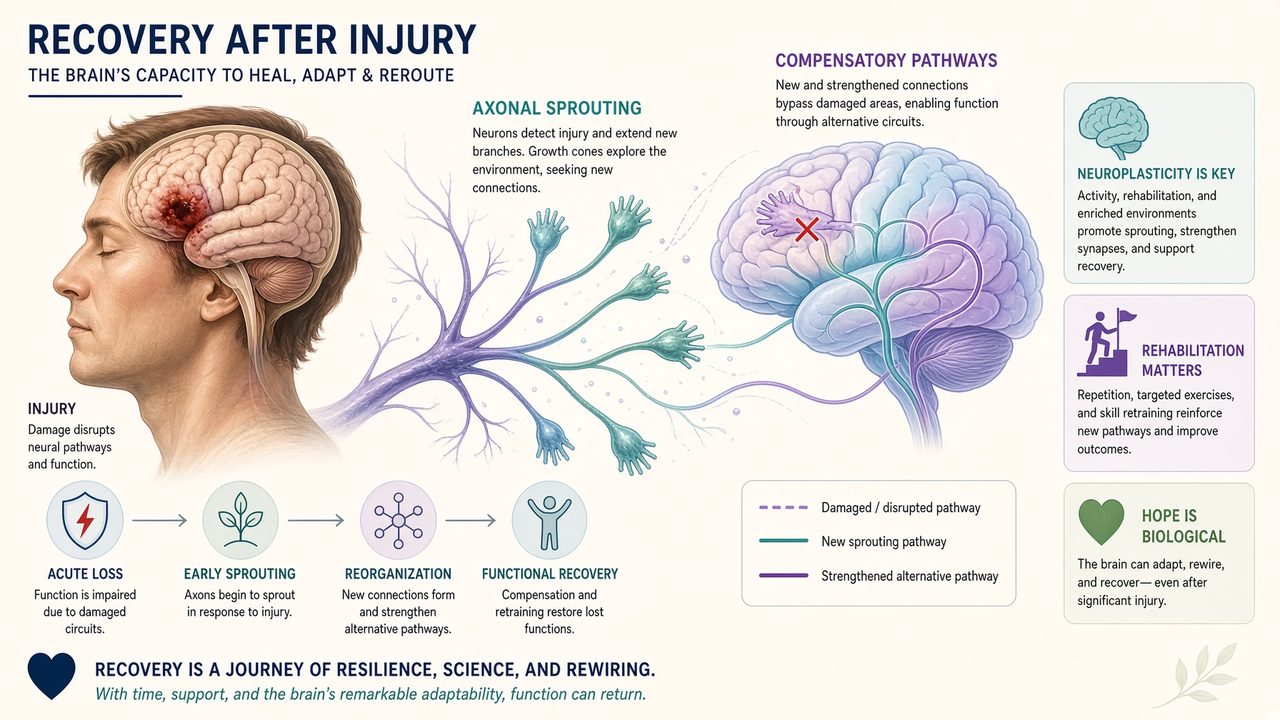
A concussion is a mild traumatic brain injury that disrupts brain function without usually showing up on standard scans. Understanding what happens inside the brain explains why rest, gradual return and patience are central to recovery.
What happens in the brain
A blow or rapid head movement stretches and shears neurons and axons, triggering a cascade described by Christopher Giza and David Hovda. Neurons release potassium and glutamate, ion pumps work overtime to restore balance, demanding more glucose just when blood flow is reduced. This creates a mismatch between energy supply and demand, called a metabolic crisis. Axon injury, inflammation and changes in brain networks and the autonomic nervous system also occur. Standard CT and MRI are usually normal, though advanced imaging in research shows subtle changes.
Symptoms
- Headache, dizziness, nausea
- Confusion, memory gaps, slowed thinking
- Sensitivity to light and noise
- Balance problems and blurred vision
- Sleep changes, fatigue
- Irritability, anxiety, sadness
Loss of consciousness occurs in fewer than 10 percent of concussions.
Typical recovery
Most adults improve within two to four weeks, and many within days. Children and teens often take longer, about four weeks. A minority have symptoms lasting months, sometimes called persistent post-concussion symptoms. Risk factors include a prior history of concussion, migraine, anxiety or depression, and severe initial symptoms.
What helps
- Short rest, then activity: guidelines from the 2022 Amsterdam consensus recommend initial relative rest for 24 to 48 hours, followed by gradual return to light activity. Trials, including work by John Leddy in Buffalo, show that sub-symptom threshold aerobic exercise speeds recovery compared with strict rest.
- Sleep and hydration, and regular meals.
- Gradual return to school or work, with accommodations such as breaks and reduced screen time.
- Avoid alcohol and drugs that mask symptoms.
- Treat specific problems: vestibular therapy for dizziness, vision therapy, headache management and psychological care.
- Do not return to sports or high-risk activity until symptoms are gone and you have progressed through a stepwise return-to-sport protocol under professional guidance.
When to seek emergency care
Go to emergency services for worsening headache, repeated vomiting, drowsiness, seizure, weakness, slurred speech, unequal pupils or confusion. Anyone taking blood thinners or older adults after a head injury should be evaluated promptly.
Preventing second injuries
A second blow before the brain has healed can worsen symptoms and prolong recovery. Rarely, in young athletes, second impact syndrome may occur. This is why return-to-play rules matter.
Support
Schools, employers and coaches should know the signs. The CDC offers HEADS UP resources for families, schools and sports.
Children and teens
Young brains are still developing, so concussions in children deserve careful management. Schools should provide gradual return-to-learn plans that reduce homework and screen demands at first and allow breaks. Return to sport comes only after the child is symptom-free at school and has completed each step of a graded exercise program with a clinician's approval.
Takeaway
Most concussions heal with time and gradual activity. Take them seriously, follow a stepwise plan and get help if symptoms linger.
Further reading from authoritative sources
This article is educational and does not replace advice from a licensed clinician. See the medical disclaimer. Looking for specialist care? Browse the neurology clinic directory.