Neurofeedback for Depression: Current Evidence
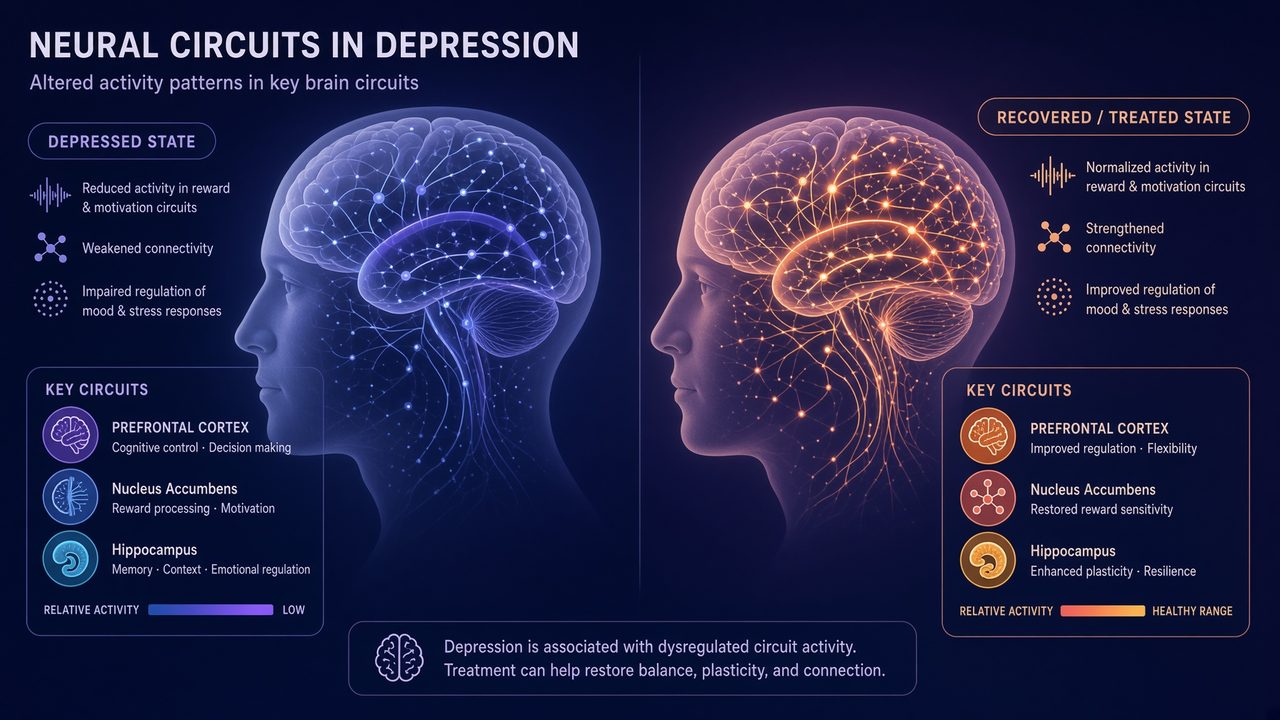
Depression is common, and many people do not fully respond to medication or psychotherapy. Neurofeedback, which trains people to modify their own brain activity, has been proposed as an additional option. The research is promising but still developing.
Approaches
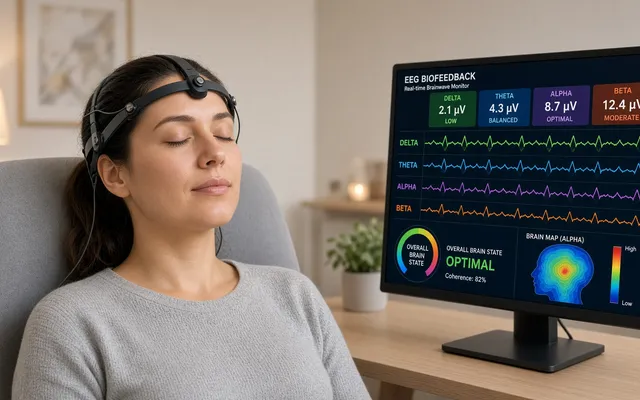
- EEG alpha asymmetry training: based on observations that depressed people may show greater relative alpha power, indicating less activity, over the left frontal cortex compared with the right, a pattern described by Richard Davidson and others. Training aims to increase relative left frontal activity.
- Beta and theta/alpha protocols: also studied.
- High-beta training for rumination: researchers have trained down high-beta activity associated with rumination.
- fMRI neurofeedback: participants learn to up-regulate activity in regions such as the amygdala or prefrontal cortex while recalling positive memories. A study by Kymberly Young and colleagues found that training depressed patients to increase amygdala response during positive autobiographical memory recall reduced depression scores more than a control task. A trial by the same group found that effects were present at follow-up.
- EEG fingerprint of amygdala activity (Amygdala EEG Fingerprint): a method that uses EEG to approximate amygdala activity, and is under development for portable use.
- Infraslow and connectivity training: in early research.
What trials show
- Meta-analyses: reviews, such as those by Martijn Arns and colleagues, and others, find moderate reductions in depression scores in some studies, with high heterogeneity and risk of bias. Some meta-analyses report that effects were not significant when compared with sham feedback.
- Sham-controlled trials: a few randomized trials with sham feedback show mixed results, with improvements in both groups pointing to placebo and nonspecific effects, such as attention, expectation and structured routine.
- Real-time fMRI: promising but resource intensive, and trials are small.
- Comparisons with standard treatments: neurofeedback has not been shown to be superior to or replace psychotherapy or medication. Large head-to-head trials are lacking.
- Safety: neurofeedback generally has few side effects, such as fatigue, headaches or temporary anxiety, though cost and time commitment are significant.
Considering neurofeedback
- Start with an evaluation: depression has many causes and should be assessed by a clinician. Medical conditions, such as thyroid disease or sleep apnea, should be excluded.
- Use evidence-based treatments first, such as psychotherapy, medication and lifestyle changes.
- If you try neurofeedback as an add-on, ask about the provider's training and credentials, such as BCIA certification, the specific protocol and evidence, cost, number of sessions, and how progress will be measured.
- Be wary of claims of cures or guarantees, or of stopping medication without medical supervision.
- Monitor your symptoms with standardized scales, and set a time to reassess.
- Seek urgent help if you have thoughts of suicide. In the United States, call or text 988.
Related brain-based treatments
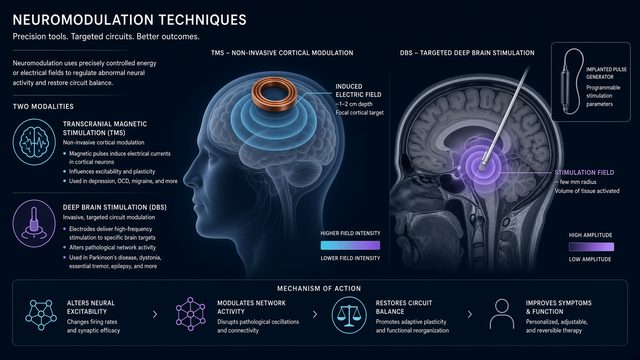
Other neuromodulation approaches have stronger evidence for treatment-resistant depression, including transcranial magnetic stimulation (TMS), electroconvulsive therapy (ECT), and ketamine or esketamine, each administered under medical supervision.
Takeaway
Neurofeedback for depression is an intriguing research area, not yet a proven standalone therapy. A cautious, informed approach combined with established care is the sensible path.
Further reading from authoritative sources
- National Institute of Mental Health (NIMH)
- National Center for Complementary and Integrative Health (NCCIH)
This article is educational and does not replace advice from a licensed clinician. See the medical disclaimer. Looking for specialist care? Browse the neurology clinic directory.