Emotion Regulation: What the Prefrontal Cortex Does
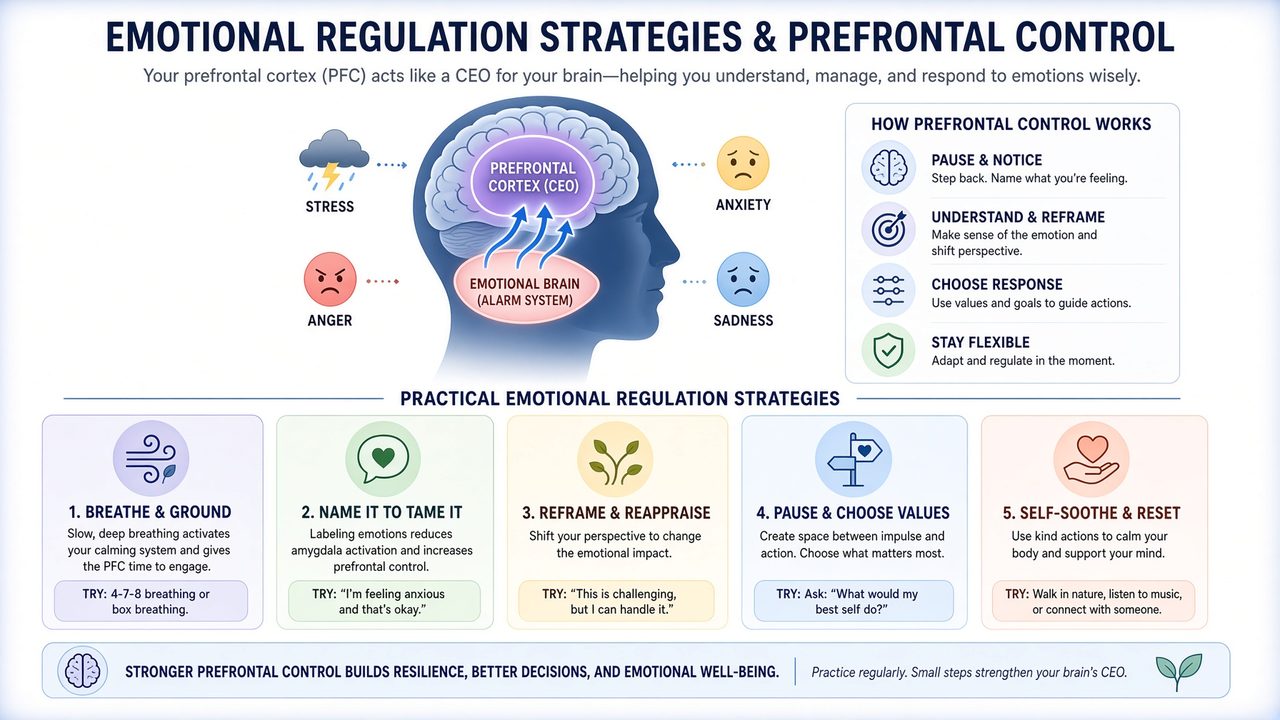
Everyone feels anger, fear, sadness and excitement. What differs is how people manage those feelings. Emotion regulation refers to the processes by which we influence which emotions we have, when we have them and how we experience and express them. The prefrontal cortex plays a central role.
The brain circuitry
Ventromedial prefrontal cortex
It interacts with the amygdala to dampen fear responses and to update the emotional meaning of a situation, such as in fear extinction.
Dorsolateral prefrontal cortex
It supports working memory and cognitive control, helping you hold a reappraisal in mind.
Ventrolateral prefrontal cortex
It is involved in selecting responses and inhibiting reactions.
Anterior cingulate cortex
It detects conflict between an emotional impulse and a goal, signaling the need for control.
Imaging studies, notably by James Gross, Kevin Ochsner and colleagues, show that when people deliberately reinterpret a distressing image, prefrontal activity rises and amygdala activity falls.
Common strategies
Cognitive reappraisal
Changing how you think about a situation to alter its emotional impact. For example, viewing a job rejection as a chance to find a better fit. Reappraisal is generally associated with better well-being and lower physiological stress.
Expressive suppression
Hiding outward signs of emotion. It can reduce expression but often does not reduce the inner feeling, and it may increase physiological arousal and impair memory and social closeness when used habitually.
Distraction
Shifting attention away from a distressing stimulus. It works well in the short term for intense emotion but does not resolve underlying problems.
Acceptance and mindfulness
Noticing feelings without judgment. Mindfulness practice is linked with changes in prefrontal and amygdala activity.
Situation selection and modification
Avoiding or altering circumstances that provoke strong emotion, such as setting boundaries.

Development
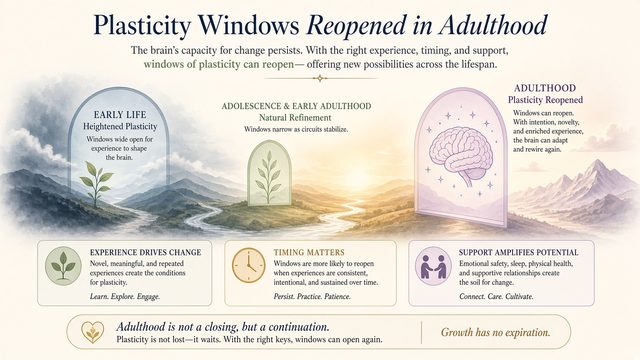
Prefrontal circuits mature slowly, into the mid-twenties. Young children rely on caregivers for co-regulation, and adolescents show stronger emotional reactivity relative to control, helping explain mood volatility. Secure relationships and practice help build regulation skills.
When regulation is difficult
Difficulties are associated with anxiety, depression, borderline personality disorder, ADHD, PTSD and substance use. Stress, sleep loss and alcohol temporarily reduce prefrontal control, making outbursts or rumination more likely. Brain injury to the frontal lobes can cause marked emotional dysregulation.
Strengthening regulation
- Label emotions. Naming a feeling, called affect labeling, is associated with reduced amygdala activity.
- Practice reappraisal by asking what else could explain a situation.
- Slow your breathing, which lowers physiological arousal.
- Sleep and exercise, which support prefrontal function.
- Practice mindfulness regularly.
- Seek therapy, such as cognitive behavioral therapy or dialectical behavior therapy, which teach skills systematically.
- Build supportive relationships.
Flexibility matters
No strategy is best in every context. Healthy regulation involves choosing flexibly. Reappraisal may be unhelpful when a problem needs action, and suppressing in a professional setting can be appropriate. Regulation does not mean eliminating negative emotions, which carry useful information.
When to get help
If emotions feel overwhelming, lead to self-harm, harm to others or interfere with daily life, talk to a mental health professional. In the United States, the 988 Suicide and Crisis Lifeline offers support by call or text.
Further reading from authoritative sources
- National Institute of Mental Health (NIMH)
- National Center for Complementary and Integrative Health (NCCIH)
This article is educational and does not replace advice from a licensed clinician. See the medical disclaimer. Looking for specialist care? Browse the neurology clinic directory.