Oxytocin: The Neuroscience of Trust and Bonding
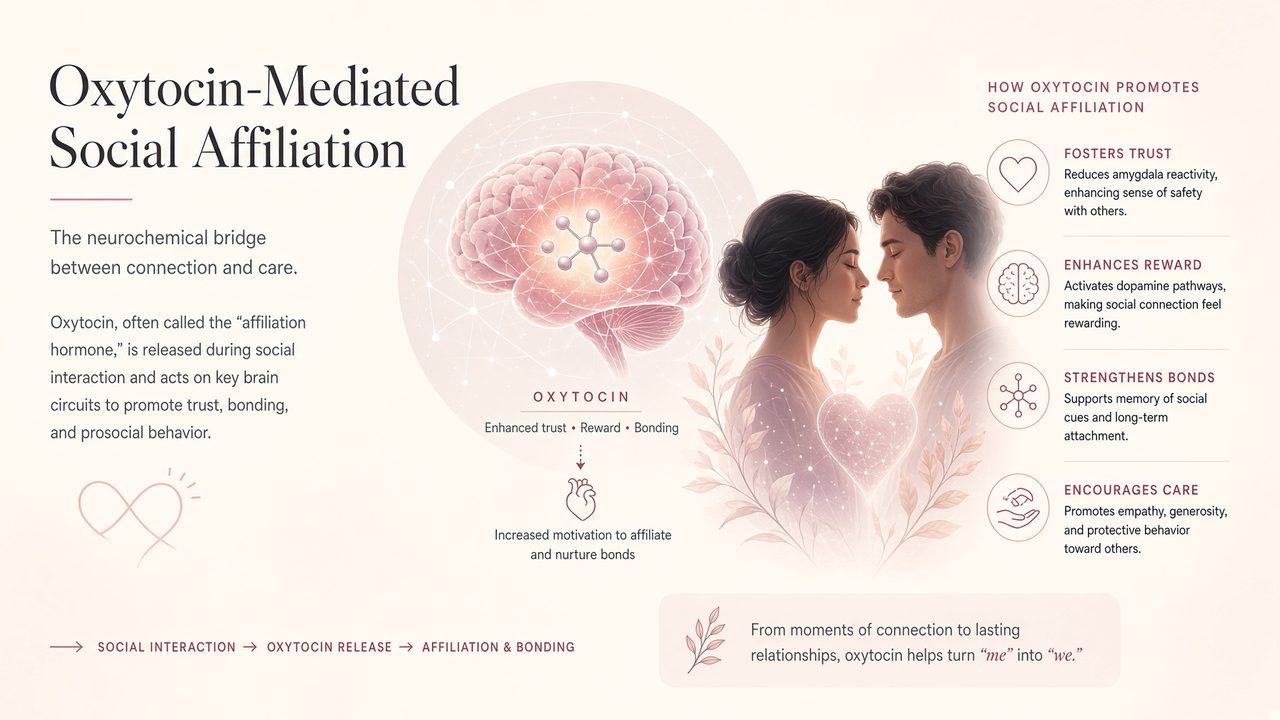
Oxytocin has been called the "love hormone" and the "cuddle chemical." Its role in bonding is real, but the popular story is oversimplified. Research shows that oxytocin shapes social behavior in context-dependent and sometimes surprising ways.
What oxytocin is
Oxytocin is a peptide made in the hypothalamus. It is released into the bloodstream by the pituitary gland, where it triggers uterine contractions in labor and milk letdown in breastfeeding, and it is also released within the brain, acting on regions including the amygdala, nucleus accumbens and hippocampus.
Bonding in animals
Studies in prairie voles by Sue Carter and Thomas Insel showed that oxytocin and vasopressin receptor distribution in reward areas underlies lifelong pair bonds, and blocking them prevented bonding. In sheep, oxytocin helps mothers bond to lambs, and in rodents, it promotes maternal behavior.

Oxytocin in humans
- Parent-infant bonding: oxytocin levels rise with parent-infant touch and interaction, and are associated with synchrony, as research by Ruth Feldman shows. Fathers' oxytocin also rises with caregiving.
- Trust: a well-known 2005 study by Michael Kosfeld and colleagues reported that intranasal oxytocin increased trust in an investment game. Later studies found inconsistent or smaller effects, and reviews highlight concerns about replicability.
- Social perception: oxytocin may increase attention to eyes and improve emotion recognition in some contexts.
- Stress buffering: social support and oxytocin together reduce cortisol responses in some experiments.
- In-group effects: Carsten De Dreu's research suggests that oxytocin can enhance trust and cooperation toward in-group members while increasing defensive aggression or reducing cooperation toward out-groups in some contexts.
- Emotions beyond love: oxytocin has been linked to envy and schadenfreude in a few experiments, indicating that it heightens social salience.
- Sex and touch: oxytocin rises with hugging, massage and orgasm, though effect sizes in many studies are modest. Measuring oxytocin in blood is also challenging, and some assays are unreliable.
Clinical research
- Autism, social anxiety and schizophrenia: intranasal oxytocin trials have produced mixed results, and large trials in autism, such as the SOARS-B trial, did not show benefit on social function. It is not an approved treatment.
- Labor and postpartum: synthetic oxytocin (Pitocin) is used to induce labor and manage postpartum bleeding. Its use is a medical decision.
- Anxiety and PTSD: early studies are mixed.
- Cautions: the long-term effects of repeated nasal oxytocin are not well established, and commercial "oxytocin sprays" marketed for trust or romance have no proven benefits.
Natural ways to engage bonding systems
- Physical affection: hugging, holding hands and cuddling with loved ones.
- Skin-to-skin contact with newborns.
- Shared meals and conversations
- Acts of kindness and generosity
- Group activities such as singing, dancing or sports
- Time with pets: studies show that mutual gazing between dogs and owners raises oxytocin in both.
- Massage and supportive touch
Cautions about popular claims
Headlines that call oxytocin the cuddle hormone or the moral molecule overstate the science. Its effects depend on who is receiving it, the social setting and the person's history, and a single hormone cannot explain love or trust. Researchers now emphasize that oxytocin increases the salience of social information, which can lead to warmth in safe settings and wariness in threatening ones. That nuance matters when evaluating products and claims.
Takeaway
Oxytocin helps tune the brain to social cues and connections. It is not a magic bonding potion, but it highlights how closely biology and relationships are intertwined.
Further reading from authoritative sources
- National Institute of Mental Health (NIMH)
- National Center for Complementary and Integrative Health (NCCIH)
This article is educational and does not replace advice from a licensed clinician. See the medical disclaimer. Looking for specialist care? Browse the neurology clinic directory.