Panic and the Brain: The Fight-or-Flight Response Gone Awry
Your heart pounds, your chest tightens, you feel dizzy and sure that something terrible is happening. A panic attack is a sudden surge of intense fear that peaks within minutes. It is frightening, but it is not dangerous, and panic disorder is highly treatable.
What a panic attack is
A panic attack includes at least four symptoms such as palpitations, sweating, trembling, shortness of breath, chest discomfort, nausea, dizziness, numbness, chills, feelings of unreality, and fear of losing control or dying. Many people have one or two attacks in their lives. Panic disorder involves recurrent unexpected attacks plus persistent worry about further attacks or changes in behavior to avoid them, such as avoiding exercise or driving. About 2 to 3 percent of adults have panic disorder in a given year.
The brain's alarm
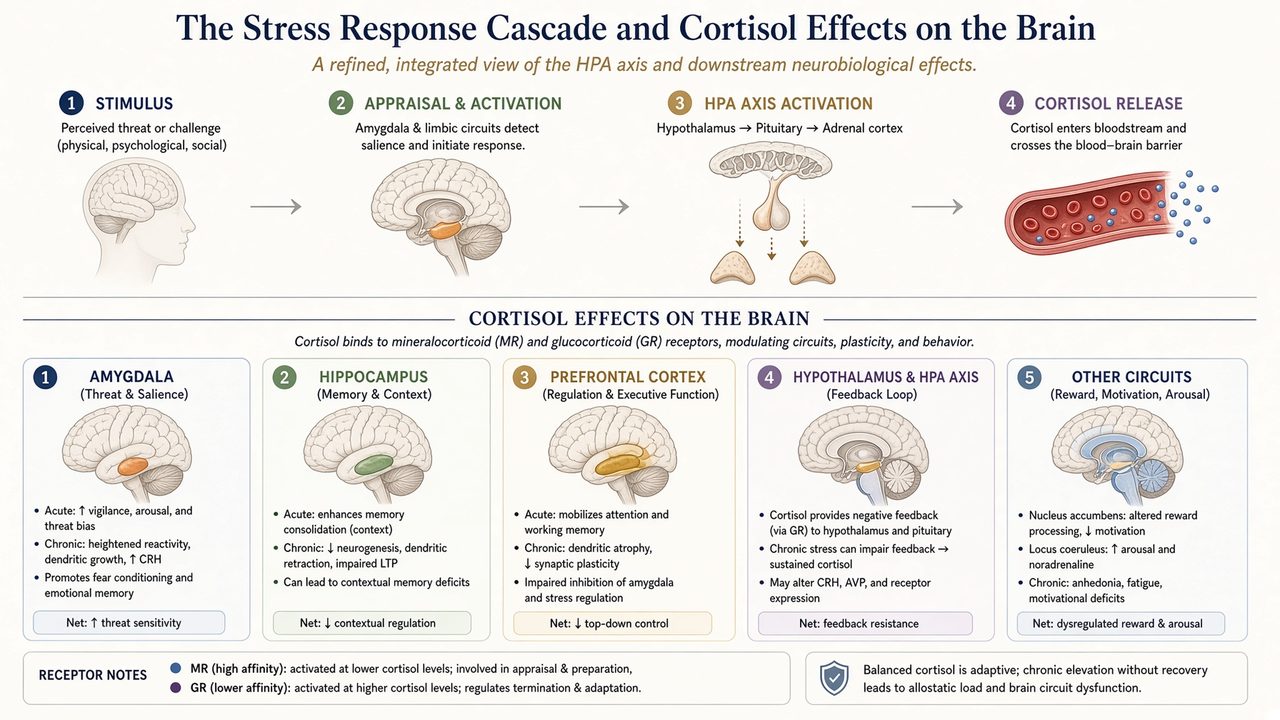
- Amygdala: triggers the fight-or-flight response.
- Periaqueductal gray and brainstem: produce defensive behaviors and autonomic arousal. Jaak Panksepp proposed that panic circuits link to separation distress systems.
- Hypothalamus: activates the sympathetic nervous system and adrenaline release.
- Insula and anterior cingulate cortex: monitor interoceptive signals such as heartbeat and breathing.
- Prefrontal cortex: normally regulates fear, but may be less effective in panic disorder.
- Chemical sensitivity: people with panic disorder can be more sensitive to carbon dioxide and sodium lactate, suggesting heightened brainstem sensitivity to suffocation signals, as Donald Klein's "false suffocation alarm" theory proposed.

The vicious cycle
David Clark's cognitive model describes how a normal sensation, such as a skipped heartbeat, is interpreted catastrophically ("I'm having a heart attack"), which causes fear, which intensifies sensations, which confirms the threat. Over-breathing lowers carbon dioxide and can cause lightheadedness and tingling, which add to the fear. People then avoid situations and use safety behaviors, which prevent them from learning that the feared outcome does not occur.
Treatments with evidence
- Cognitive behavioral therapy: includes education about panic, cognitive restructuring and interoceptive exposure, deliberately inducing harmless sensations such as spinning or breathing through a straw, so that the brain learns they are safe. Gradual exposure to avoided situations is also used. About 70 to 80 percent of patients improve.
- Medication: SSRIs and SNRIs are first-line. Benzodiazepines act quickly but have risks of dependence and can interfere with learning from exposure, so they are used cautiously.
- Breathing retraining: slow diaphragmatic breathing may reduce arousal, though it should not become a safety behavior. Capnometry-assisted training has shown some benefit.
- Exercise can reduce anxiety sensitivity.
During an attack
- Remind yourself: this is panic, it will peak and pass, usually within 10 minutes.
- Slow your breathing: breathe in for about four seconds and out for six.
- Ground yourself: notice objects around you.
- Stay in the situation if safe, instead of fleeing, so the brain learns that you can tolerate it.
- Do not fight the sensations: accept and let them pass.
Rule out medical causes
Chest pain, fainting or palpitations should be evaluated by a doctor the first time, since conditions such as heart rhythm problems, thyroid disease or asthma can mimic panic. Caffeine, stimulants, withdrawal and some medications can also cause panic-like symptoms. Seek emergency care if you are unsure.
Takeaway
Panic is a harmless but frightening misfire of a protective system. Understanding it and practicing facing the sensations helps the brain turn the alarm down.
Further reading from authoritative sources
- National Institute of Mental Health (NIMH)
- National Center for Complementary and Integrative Health (NCCIH)
This article is educational and does not replace advice from a licensed clinician. See the medical disclaimer. Looking for specialist care? Browse the neurology clinic directory.