Recovery and the Brain: How Neural Circuits Heal
When someone stops using alcohol or drugs, the brain begins a long process of adaptation. Imaging studies show that many of the changes associated with addiction are at least partially reversible, which gives people in recovery a scientific reason for hope.
What research shows about recovery
- Dopamine system: in a study by Nora Volkow and colleagues, methamphetamine users had markedly reduced dopamine transporter levels, and after 14 months of abstinence, these partly recovered. Dopamine D2 receptor availability in people with cocaine, alcohol and other addictions tends to increase with abstinence, though recovery varies by substance and person.
- Gray matter and prefrontal function: studies in alcohol use disorder show regrowth of gray matter and white matter over weeks to months of abstinence. Executive function, attention and memory often improve gradually, though not always fully.
- Stress systems: anxiety, irritability and sleep problems typically ease over weeks to months, though some symptoms known as post-acute withdrawal can persist for a while.
- Cue reactivity: cravings triggered by reminders can persist for years but usually decrease in frequency and intensity with time and coping skills.
- Variation: recovery depends on the substance, length and intensity of use, age, health, and access to treatment.
A rough timeline
Timelines vary, and these are generalizations rather than guarantees:
- First days to weeks: withdrawal symptoms, with medical support needed for alcohol, benzodiazepines and opioids in some cases. Sleep and mood are often disrupted.
- First months: mood and cognition begin to stabilize. Cravings may be strong, and relapse risk is high.
- Six months to two years: further recovery of cognitive function and brain structure, and consolidation of new routines.
- Beyond: continued gains, though cues can still trigger cravings, so maintaining supports matters.

What supports healing
- Treatment: behavioral therapy, medication for opioid, alcohol or tobacco use disorders, and treatment of co-occurring mental health conditions.
- Peer and social support: recovery communities, family, mutual-help groups.
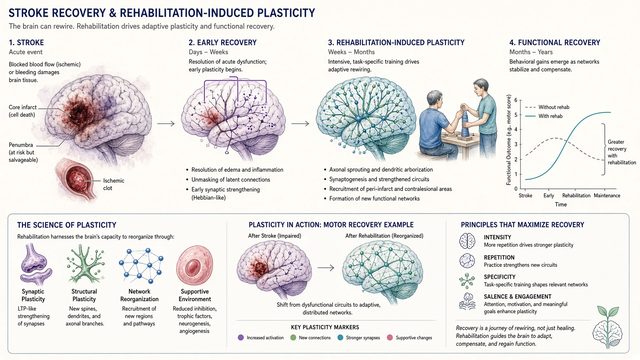
- Exercise: studies suggest that exercise can reduce cravings, improve mood and boost dopamine signaling and neuroplasticity.
- Sleep and nutrition: repair depends on rest and adequate nutrition. Thiamine is critical in alcohol use disorder.
- Structure and purpose: employment, meaningful goals, volunteering and hobbies provide natural rewards that rebuild reward circuitry.
- Stress management: mindfulness, relaxation, biofeedback and therapy help with the stress responses that drive relapse.
- Avoid triggers early, and develop plans for high-risk situations.
- Mindfulness-based relapse prevention has evidence for reducing craving and relapse.
- Learn from lapses, as relapse is common and does not mean treatment failed.
For families
Educate yourself, set healthy boundaries, avoid blame, and seek support for yourself through groups such as Al-Anon or Nar-Anon. Encourage treatment, and celebrate progress.
Getting help
In the United States, SAMHSA's National Helpline (1-800-662-4357) provides free, confidential 24-hour support. Medical supervision is important for detox from alcohol, benzodiazepines and other substances.
Takeaway
Recovery is a process of the brain relearning how to feel reward, handle stress and make choices. With time and support, the healing is real and measurable.
Further reading from authoritative sources
- National Institute of Mental Health (NIMH)
- National Center for Complementary and Integrative Health (NCCIH)
This article is educational and does not replace advice from a licensed clinician. See the medical disclaimer. Looking for specialist care? Browse the neurology clinic directory.